







Hegmataneh keeps unveiling Iran’s ancient past
Hegmataneh’s ancient history stretches back to the dawn of civilization in the region. The Aryans are believed to have chosen the area as their home, while the Medes later made it their summer capital. Neither could have imagined that Hegmataneh would one day be recognized as one of Iran’s oldest centers of civilization and gain global renown.
Known throughout history by names including Hegmataneh, Ecbatana and Hamadan, this ancient city has maintained an urban character since its earliest days. From the era of the Aryans and the Medes to the present, it has endured countless upheavals yet remained standing through the passage of time.
The Hegmataneh archaeological site was inscribed on Iran’s National Heritage List in 1931. Since then, generations of archaeologists, researchers, and cultural heritage specialists have worked to uncover its hidden secrets. Over the past decade, the sustained efforts of heritage experts and conservationists have also paved the way for the site’s inscription on the UNESCO World Heritage List.
Each excavation at ancient Hegmataneh has revealed remarkable discoveries from this enigmatic city. Archaeologists believe the site still holds many untold stories and countless secrets waiting to be uncovered.
Hegmataneh is widely regarded as one of Iran’s most magnificent archaeological landscapes and a powerful symbol of the country’s ancient history. Scientific excavations and archaeological research have uncovered evidence spanning several millennia, reflecting the civilization, culture, and achievements of the people of present-day Hamadan. It has justifiably earned the title of the “mother of the ancient cities of Persian civilization.”
Like many of Iran’s historic sites dating back to the Median period, Hegmataneh possesses distinctive characteristics that have attracted some of the most prominent archaeologists in Iran and around the world.
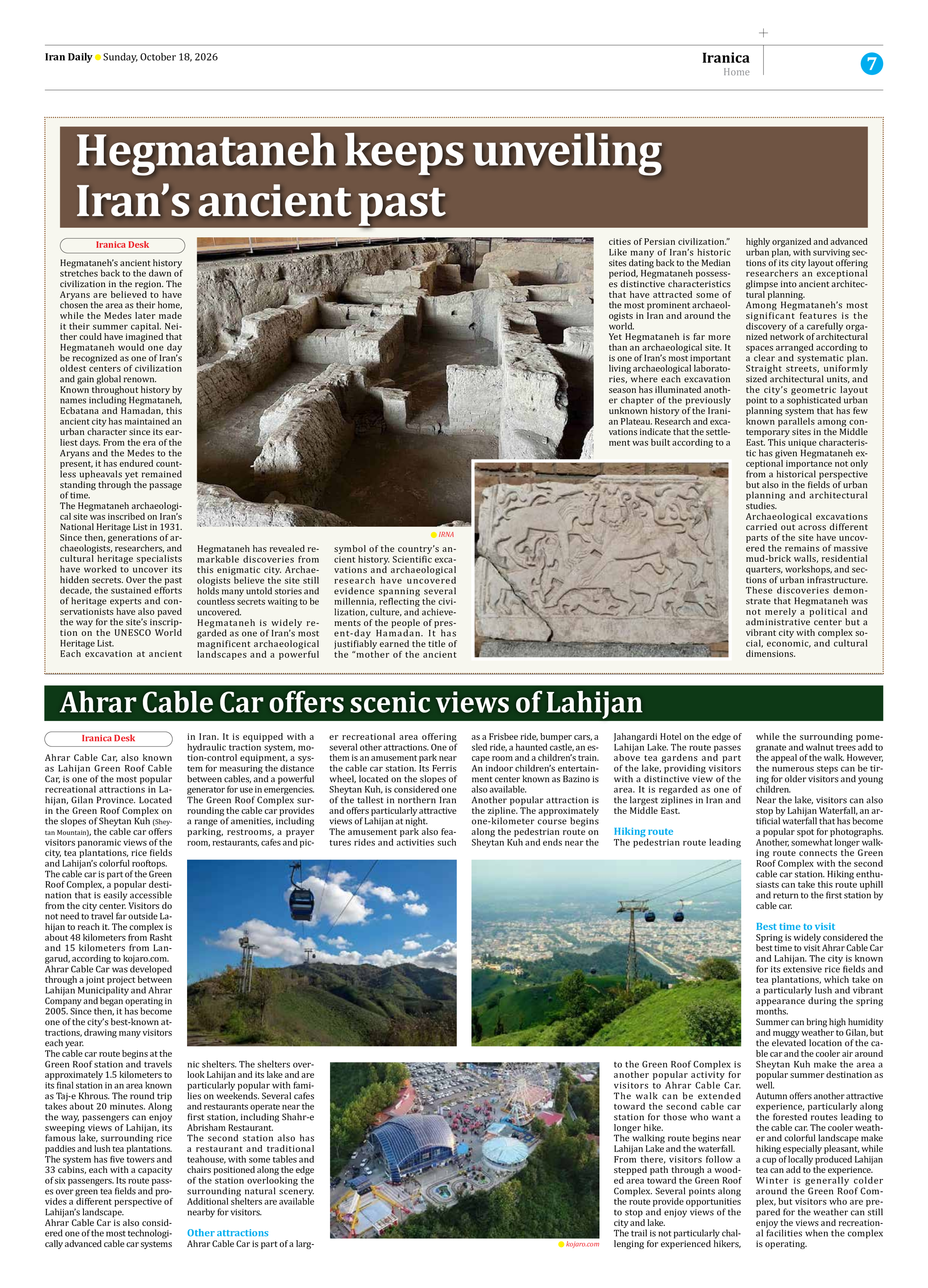
Yet Hegmataneh is far more than an archaeological site. It is one of Iran’s most important living archaeological laboratories, where each excavation season has illuminated another chapter of the previously unknown history of the Iranian Plateau. Research and excavations indicate that the settlement was built according to a highly organized and advanced urban plan, with surviving sections of its city layout offering researchers an exceptional glimpse into ancient architectural planning.
Among Hegmataneh’s most significant features is the discovery of a carefully organized network of architectural spaces arranged according to a clear and systematic plan. Straight streets, uniformly sized architectural units, and the city’s geometric layout point to a sophisticated urban planning system that has few known parallels among contemporary sites in the Middle East. This unique characteristic has given Hegmataneh exceptional importance not only from a historical perspective but also in the fields of urban planning and architectural studies.
Archaeological excavations carried out across different parts of the site have uncovered the remains of massive mud-brick walls, residential quarters, workshops, and sections of urban infrastructure. These discoveries demonstrate that Hegmataneh was not merely a political and administrative center but a vibrant city with complex social, economic, and cultural dimensions.