







Eshkevarat’s hazelnut orchards offer new opportunities for tourism
Tourism is no longer limited to visiting historic buildings and natural attractions. Sometimes, a journey winds through orchards and farmland, introducing visitors to the lives, culture and livelihoods of local communities. Known as agritourism, this connection between nature, agricultural production and rural life can offer visitors a distinctive experience while creating opportunities to boost local economies and preserve agricultural heritage.
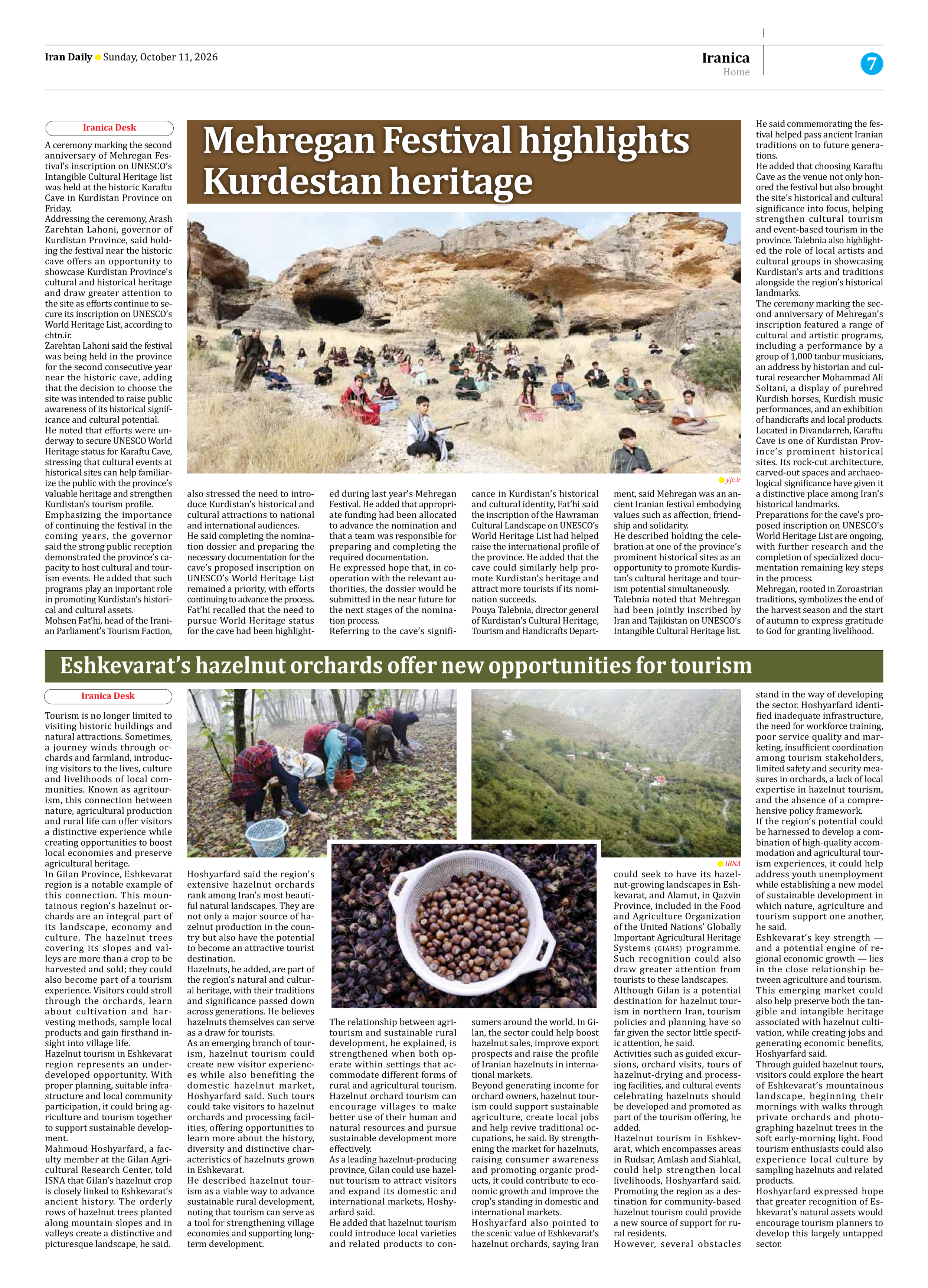
In Gilan Province, Eshkevarat region is a notable example of this connection. This mountainous region’s hazelnut orchards are an integral part of its landscape, economy and culture. The hazelnut trees covering its slopes and valleys are more than a crop to be harvested and sold; they could also become part of a tourism experience. Visitors could stroll through the orchards, learn about cultivation and harvesting methods, sample local products and gain firsthand insight into village life.
Hazelnut tourism in Eshkevarat region represents an underdeveloped opportunity. With proper planning, suitable infrastructure and local community participation, it could bring agriculture and tourism together to support sustainable development.
Mahmoud Hoshyarfard, a faculty member at the Gilan Agricultural Research Center, told ISNA that Gilan’s hazelnut crop is closely linked to Eshkevarat’s ancient history. The orderly rows of hazelnut trees planted along mountain slopes and in valleys create a distinctive and picturesque landscape, he said.
Hoshyarfard said the region’s extensive hazelnut orchards rank among Iran’s most beautiful natural landscapes. They are not only a major source of hazelnut production in the country but also have the potential to become an attractive tourist destination.
Hazelnuts, he added, are part of the region’s natural and cultural heritage, with their traditions and significance passed down across generations. He believes hazelnuts themselves can serve as a draw for tourists.
As an emerging branch of tourism, hazelnut tourism could create new visitor experiences while also benefiting the domestic hazelnut market, Hoshyarfard said. Such tours could take visitors to hazelnut orchards and processing facilities, offering opportunities to learn more about the history, diversity and distinctive characteristics of hazelnuts grown in Eshkevarat.
He described hazelnut tourism as a viable way to advance sustainable rural development, noting that tourism can serve as a tool for strengthening village economies and supporting long-term development.
The relationship between agritourism and sustainable rural development, he explained, is strengthened when both operate within settings that accommodate different forms of rural and agricultural tourism. Hazelnut orchard tourism can encourage villages to make better use of their human and natural resources and pursue sustainable development more effectively.
As a leading hazelnut-producing province, Gilan could use hazelnut tourism to attract visitors and expand its domestic and international markets, Hoshyarfard said.
He added that hazelnut tourism could introduce local varieties and related products to consumers around the world. In Gilan, the sector could help boost hazelnut sales, improve export prospects and raise the profile of Iranian hazelnuts in international markets.
Beyond generating income for orchard owners, hazelnut tourism could support sustainable agriculture, create local jobs and help revive traditional occupations, he said. By strengthening the market for hazelnuts, raising consumer awareness and promoting organic products, it could contribute to economic growth and improve the crop’s standing in domestic and international markets.
Hoshyarfard also pointed to the scenic value of Eshkevarat’s hazelnut orchards, saying Iran could seek to have its hazelnut-growing landscapes in Eshkevarat, and Alamut, in Qazvin Province, included in the Food and Agriculture Organization of the United Nations’ Globally Important Agricultural Heritage Systems (GIAHS) programme. Such recognition could also draw greater attention from tourists to these landscapes.
Although Gilan is a potential destination for hazelnut tourism in northern Iran, tourism policies and planning have so far given the sector little specific attention, he said.
Activities such as guided excursions, orchard visits, tours of hazelnut-drying and processing facilities, and cultural events celebrating hazelnuts should be developed and promoted as part of the tourism offering, he added.
Hazelnut tourism in Eshkevarat, which encompasses areas in Rudsar, Amlash and Siahkal, could help strengthen local livelihoods, Hoshyarfard said. Promoting the region as a destination for community-based hazelnut tourism could provide a new source of support for rural residents.
However, several obstacles stand in the way of developing the sector. Hoshyarfard identified inadequate infrastructure, the need for workforce training, poor service quality and marketing, insufficient coordination among tourism stakeholders, limited safety and security measures in orchards, a lack of local expertise in hazelnut tourism, and the absence of a comprehensive policy framework.
If the region’s potential could be harnessed to develop a combination of high-quality accommodation and agricultural tourism experiences, it could help address youth unemployment while establishing a new model of sustainable development in which nature, agriculture and tourism support one another, he said.
Eshkevarat’s key strength — and a potential engine of regional economic growth — lies in the close relationship between agriculture and tourism.
This emerging market could also help preserve both the tangible and intangible heritage associated with hazelnut cultivation, while creating jobs and generating economic benefits, Hoshyarfard said.
Through guided hazelnut tours, visitors could explore the heart of Eshkevarat’s mountainous landscape, beginning their mornings with walks through private orchards and photographing hazelnut trees in the soft early-morning light. Food tourism enthusiasts could also experience local culture by sampling hazelnuts and related products.
Hoshyarfard expressed hope that greater recognition of Eshkevarat’s natural assets would encourage tourism planners to develop this largely untapped sector.