







Copy in clipboard...
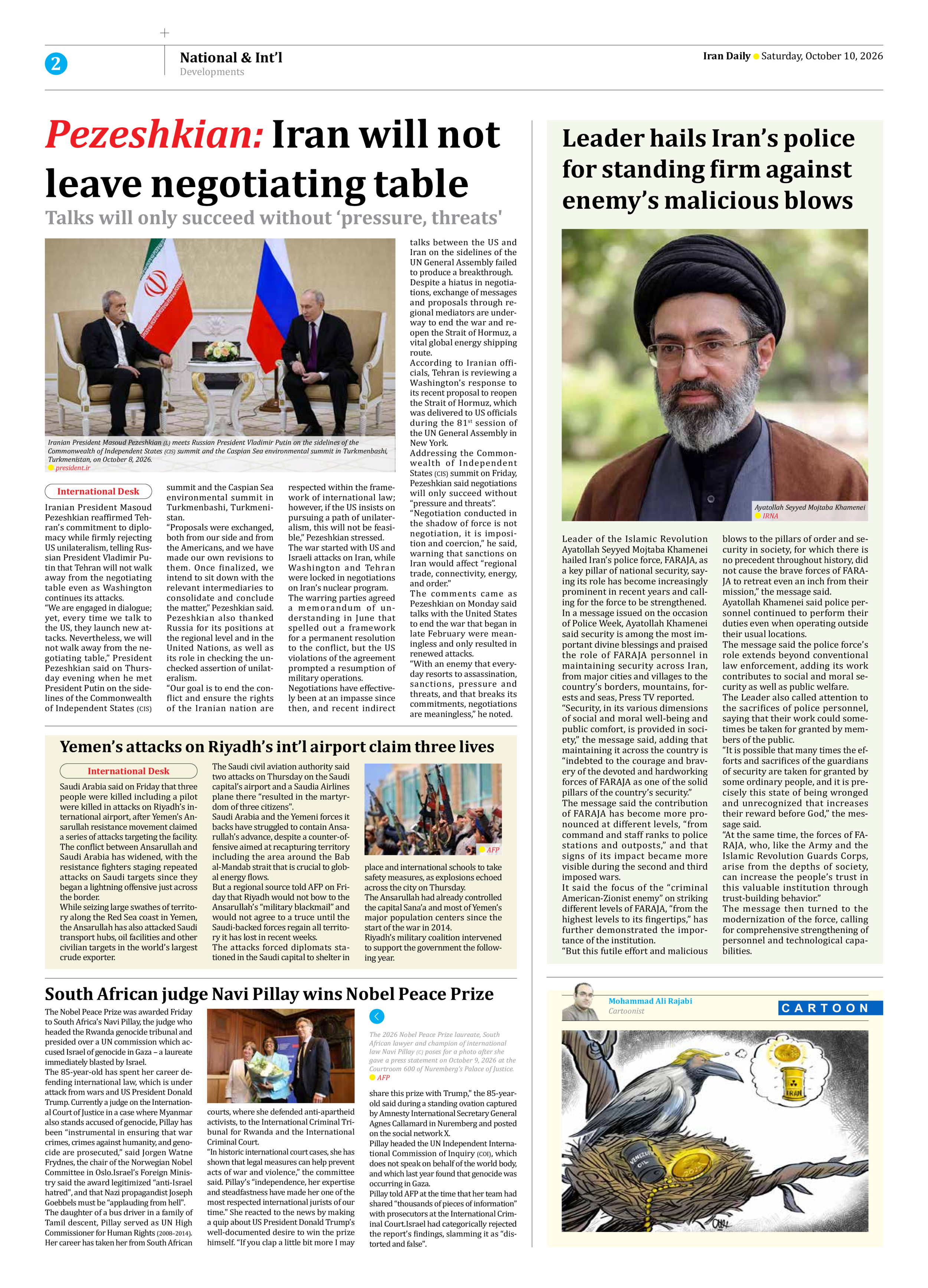
South African judge Navi Pillay wins Nobel Peace Prize
The 85-year-old has spent her career defending international law, which is under attack from wars and US President Donald Trump. Currently a judge on the International Court of Justice in a case where Myanmar also stands accused of genocide, Pillay has been “instrumental in ensuring that war crimes, crimes against humanity, and genocide are prosecuted,” said Jorgen Watne Frydnes, the chair of the Norwegian Nobel Committee in Oslo.Israel’s Foreign Ministry said the award legitimized “anti-Israel hatred", and that Nazi propagandist Joseph Goebbels must be “applauding from hell".
The daughter of a bus driver in a family of Tamil descent, Pillay served as UN High Commissioner for Human Rights (2008–2014).
Her career has taken her from South African courts, where she defended anti-apartheid activists, to the International Criminal Tribunal for Rwanda and the International Criminal Court.
“In historic international court cases, she has shown that legal measures can help prevent acts of war and violence,” the committee said. Pillay’s “independence, her expertise and steadfastness have made her one of the most respected international jurists of our time." She reacted to the news by making a quip about US President Donald Trump’s well-documented desire to win the prize himself. “If you clap a little bit more I may share this prize with Trump," the 85-year-old said during a standing ovation captured by Amnesty International Secretary General Agnes Callamard in Nuremberg and posted on the social network X.
Pillay headed the UN Independent International Commission of Inquiry (COI), which does not speak on behalf of the world body, and which last year found that genocide was occurring in Gaza.
Pillay told AFP at the time that her team had shared “thousands of pieces of information” with prosecutors at the International Criminal Court.Israel had categorically rejected the report’s findings, slamming it as “distorted and false".