







Discover hidden beauty of Jahanam Darreh
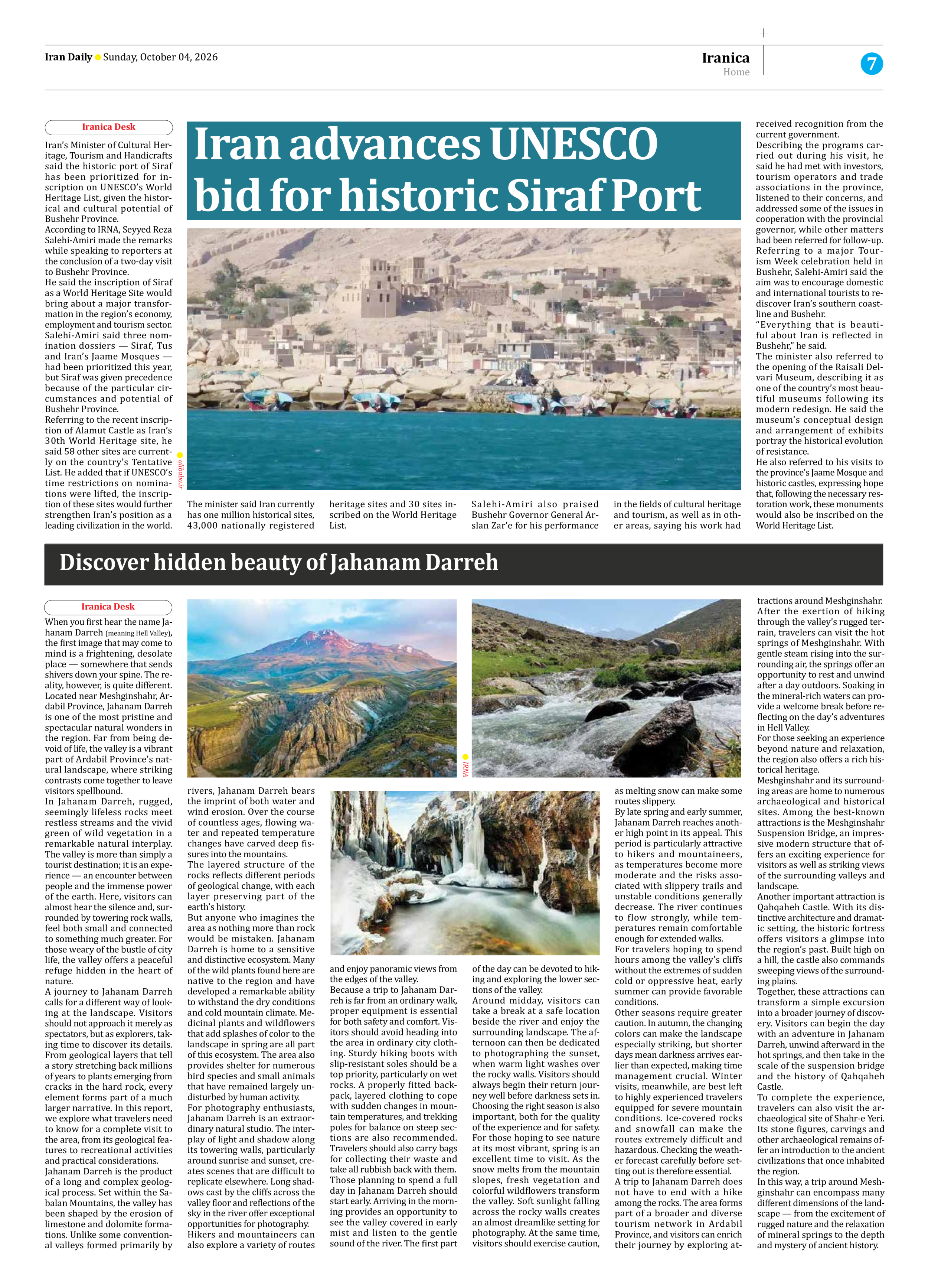
When you first hear the name Jahanam Darreh (meaning Hell Valley), the first image that may come to mind is a frightening, desolate place — somewhere that sends shivers down your spine. The reality, however, is quite different. Located near Meshginshahr, Ardabil Province, Jahanam Darreh is one of the most pristine and spectacular natural wonders in the region. Far from being devoid of life, the valley is a vibrant part of Ardabil Province’s natural landscape, where striking contrasts come together to leave visitors spellbound.
In Jahanam Darreh, rugged, seemingly lifeless rocks meet restless streams and the vivid green of wild vegetation in a remarkable natural interplay. The valley is more than simply a tourist destination; it is an experience — an encounter between people and the immense power of the earth. Here, visitors can almost hear the silence and, surrounded by towering rock walls, feel both small and connected to something much greater. For those weary of the bustle of city life, the valley offers a peaceful refuge hidden in the heart of nature.
A journey to Jahanam Darreh calls for a different way of looking at the landscape. Visitors should not approach it merely as spectators, but as explorers, taking time to discover its details. From geological layers that tell a story stretching back millions of years to plants emerging from cracks in the hard rock, every element forms part of a much larger narrative. In this report, we explore what travelers need to know for a complete visit to the area, from its geological features to recreational activities and practical considerations.
Jahanam Darreh is the product of a long and complex geological process. Set within the Sabalan Mountains, the valley has been shaped by the erosion of limestone and dolomite formations. Unlike some conventional valleys formed primarily by rivers, Jahanam Darreh bears the imprint of both water and wind erosion. Over the course of countless ages, flowing water and repeated temperature changes have carved deep fissures into the mountains.
The layered structure of the rocks reflects different periods of geological change, with each layer preserving part of the earth’s history.
But anyone who imagines the area as nothing more than rock would be mistaken. Jahanam Darreh is home to a sensitive and distinctive ecosystem. Many of the wild plants found here are native to the region and have developed a remarkable ability to withstand the dry conditions and cold mountain climate. Medicinal plants and wildflowers that add splashes of color to the landscape in spring are all part of this ecosystem. The area also provides shelter for numerous bird species and small animals that have remained largely undisturbed by human activity.
For photography enthusiasts, Jahanam Darreh is an extraordinary natural studio. The interplay of light and shadow along its towering walls, particularly around sunrise and sunset, creates scenes that are difficult to replicate elsewhere. Long shadows cast by the cliffs across the valley floor and reflections of the sky in the river offer exceptional opportunities for photography.
Hikers and mountaineers can also explore a variety of routes and enjoy panoramic views from the edges of the valley.
Because a trip to Jahanam Darreh is far from an ordinary walk, proper equipment is essential for both safety and comfort. Visitors should avoid heading into the area in ordinary city clothing. Sturdy hiking boots with slip-resistant soles should be a top priority, particularly on wet rocks. A properly fitted backpack, layered clothing to cope with sudden changes in mountain temperatures, and trekking poles for balance on steep sections are also recommended. Travelers should also carry bags for collecting their waste and take all rubbish back with them.
Those planning to spend a full day in Jahanam Darreh should start early. Arriving in the morning provides an opportunity to see the valley covered in early mist and listen to the gentle sound of the river. The first part of the day can be devoted to hiking and exploring the lower sections of the valley.
Around midday, visitors can take a break at a safe location beside the river and enjoy the surrounding landscape. The afternoon can then be dedicated to photographing the sunset, when warm light washes over the rocky walls. Visitors should always begin their return journey well before darkness sets in.
Choosing the right season is also important, both for the quality of the experience and for safety. For those hoping to see nature at its most vibrant, spring is an excellent time to visit. As the snow melts from the mountain slopes, fresh vegetation and colorful wildflowers transform the valley. Soft sunlight falling across the rocky walls creates an almost dreamlike setting for photography. At the same time, visitors should exercise caution, as melting snow can make some routes slippery.
By late spring and early summer, Jahanam Darreh reaches another high point in its appeal. This period is particularly attractive to hikers and mountaineers, as temperatures become more moderate and the risks associated with slippery trails and unstable conditions generally decrease. The river continues to flow strongly, while temperatures remain comfortable enough for extended walks.
For travelers hoping to spend hours among the valley’s cliffs without the extremes of sudden cold or oppressive heat, early summer can provide favorable conditions.
Other seasons require greater caution. In autumn, the changing colors can make the landscape especially striking, but shorter days mean darkness arrives earlier than expected, making time management crucial. Winter visits, meanwhile, are best left to highly experienced travelers equipped for severe mountain conditions. Ice-covered rocks and snowfall can make the routes extremely difficult and hazardous. Checking the weather forecast carefully before setting out is therefore essential.
A trip to Jahanam Darreh does not have to end with a hike among the rocks. The area forms part of a broader and diverse tourism network in Ardabil Province, and visitors can enrich their journey by exploring attractions around Meshginshahr.
After the exertion of hiking through the valley’s rugged terrain, travelers can visit the hot springs of Meshginshahr. With gentle steam rising into the surrounding air, the springs offer an opportunity to rest and unwind after a day outdoors. Soaking in the mineral-rich waters can provide a welcome break before reflecting on the day’s adventures in Hell Valley.
For those seeking an experience beyond nature and relaxation, the region also offers a rich historical heritage.
Meshginshahr and its surrounding areas are home to numerous archaeological and historical sites. Among the best-known attractions is the Meshginshahr Suspension Bridge, an impressive modern structure that offers an exciting experience for visitors as well as striking views of the surrounding valleys and landscape.
Another important attraction is Qahqaheh Castle. With its distinctive architecture and dramatic setting, the historic fortress offers visitors a glimpse into the region’s past. Built high on a hill, the castle also commands sweeping views of the surrounding plains.
Together, these attractions can transform a simple excursion into a broader journey of discovery. Visitors can begin the day with an adventure in Jahanam Darreh, unwind afterward in the hot springs, and then take in the scale of the suspension bridge and the history of Qahqaheh Castle.
To complete the experience, travelers can also visit the archaeological site of Shahr-e Yeri. Its stone figures, carvings and other archaeological remains offer an introduction to the ancient civilizations that once inhabited the region.
In this way, a trip around Meshginshahr can encompass many different dimensions of the landscape — from the excitement of rugged nature and the relaxation of mineral springs to the depth and mystery of ancient history.