







Iran coach Qalaneoi accepts mistakes, vows to rebuild team ahead of Asian Cup
Iran head coach Amir Qalaneoi has acknowledged shortcomings in the national team’s recent performances and vowed to rebuild the side ahead of the 2027 AFC Asian Cup in Saudi Arabia.
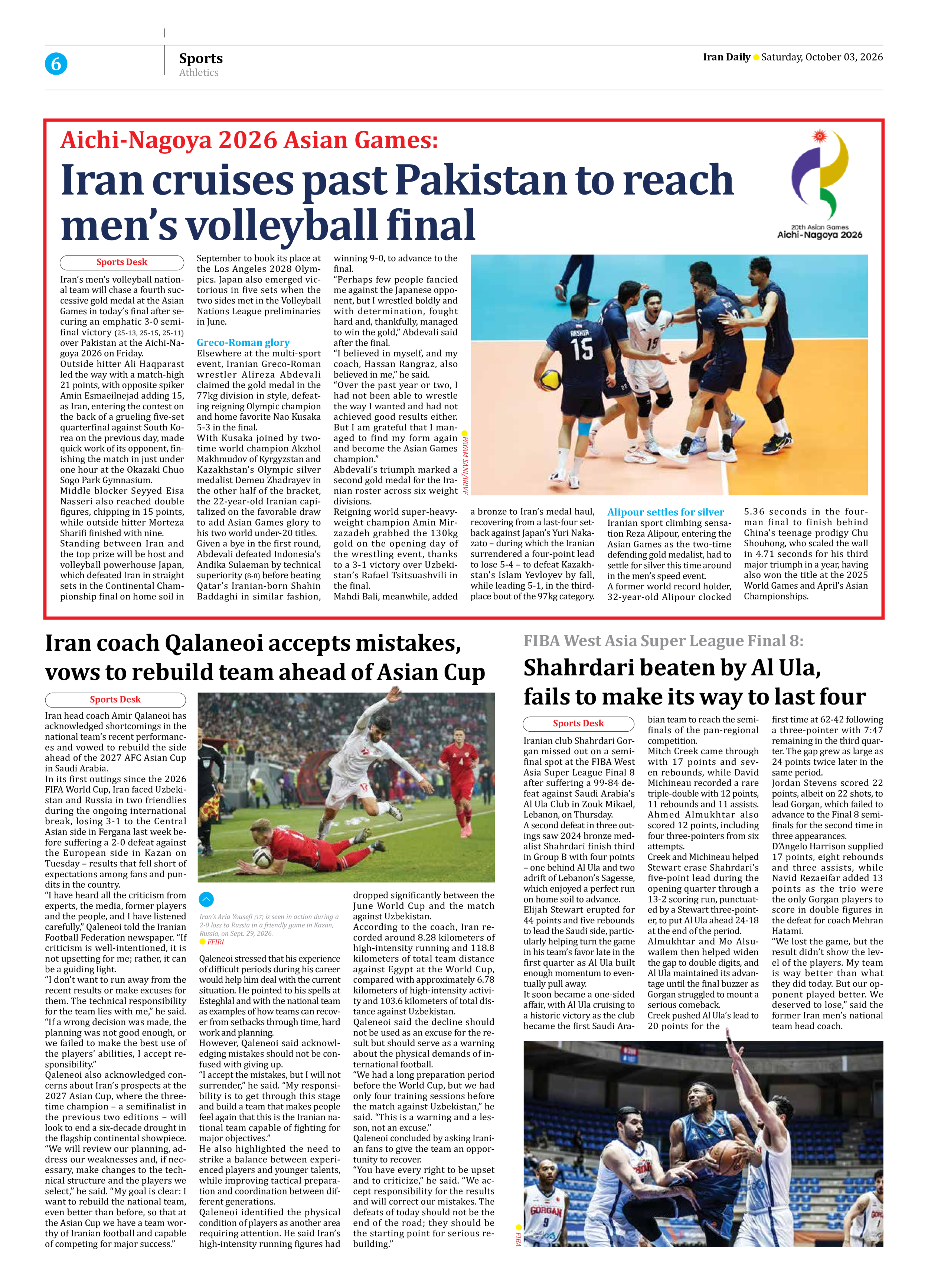
In its first outings since the 2026 FIFA World Cup, Iran faced Uzbekistan and Russia in two friendlies during the ongoing international break, losing 3-1 to the Central Asian side in Fergana last week before suffering a 2-0 defeat against the European side in Kazan on Tuesday – results that fell short of expectations among fans and pundits in the country.
“I have heard all the criticism from experts, the media, former players and the people, and I have listened carefully,” Qaleneoi told the Iranian Football Federation newspaper. “If criticism is well-intentioned, it is not upsetting for me; rather, it can be a guiding light.
“I don’t want to run away from the recent results or make excuses for them. The technical responsibility for the team lies with me,” he said. “If a wrong decision was made, the planning was not good enough, or we failed to make the best use of the players’ abilities, I accept responsibility.”
Qaleneoi also acknowledged concerns about Iran’s prospects at the 2027 Asian Cup, where the three-time champion – a semifinalist in the previous two editions – will look to end a six-decade drought in the flagship continental showpiece.
“We will review our planning, address our weaknesses and, if necessary, make changes to the technical structure and the players we select,” he said. “My goal is clear: I want to rebuild the national team, even better than before, so that at the Asian Cup we have a team worthy of Iranian football and capable of competing for major success.”
Qaleneoi stressed that his experience of difficult periods during his career would help him deal with the current situation. He pointed to his spells at Esteghlal and with the national team as examples of how teams can recover from setbacks through time, hard work and planning.
However, Qaleneoi said acknowledging mistakes should not be confused with giving up.
“I accept the mistakes, but I will not surrender,” he said. “My responsibility is to get through this stage and build a team that makes people feel again that this is the Iranian national team capable of fighting for major objectives.”
He also highlighted the need to strike a balance between experienced players and younger talents, while improving tactical preparation and coordination between different generations.
Qaleneoi identified the physical condition of players as another area requiring attention. He said Iran’s high-intensity running figures had dropped significantly between the June World Cup and the match against Uzbekistan.
According to the coach, Iran recorded around 8.28 kilometers of high-intensity running and 118.8 kilometers of total team distance against Egypt at the World Cup, compared with approximately 6.78 kilometers of high-intensity activity and 103.6 kilometers of total distance against Uzbekistan.
Qaleneoi said the decline should not be used as an excuse for the result but should serve as a warning about the physical demands of international football.
“We had a long preparation period before the World Cup, but we had only four training sessions before the match against Uzbekistan,” he said. “This is a warning and a lesson, not an excuse.”
Qaleneoi concluded by asking Iranian fans to give the team an opportunity to recover.
“You have every right to be upset and to criticize,” he said. “We accept responsibility for the results and will correct our mistakes. The defeats of today should not be the end of the road; they should be the starting point for serious rebuilding.”