







CBI to sell $2b in cash to ease pressure on foreign exchange market
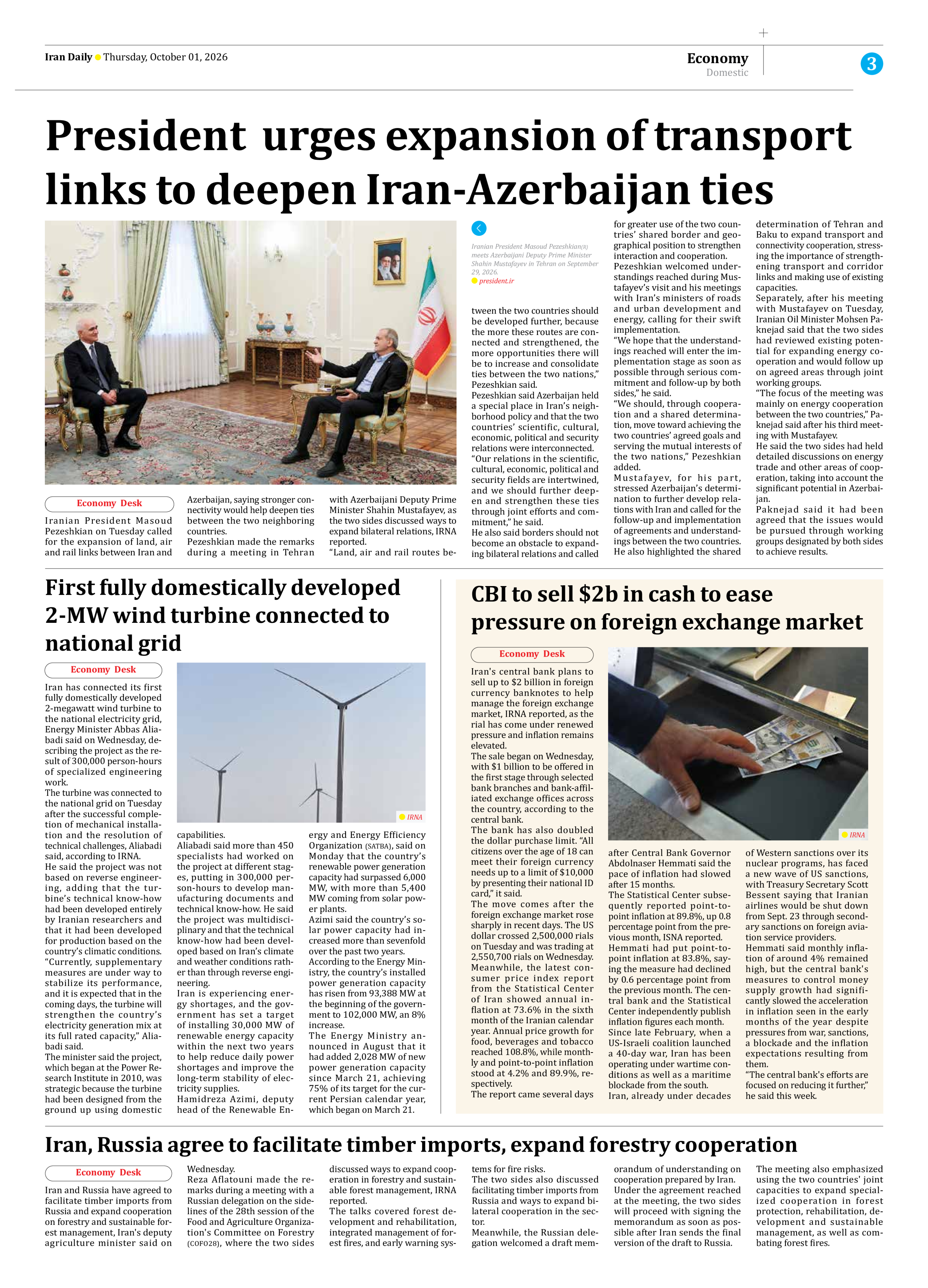
Iran's central bank plans to sell up to $2 billion in foreign currency banknotes to help manage the foreign exchange market, IRNA reported, as the rial has come under renewed pressure and inflation remains elevated.
The sale began on Wednesday, with $1 billion to be offered in the first stage through selected bank branches and bank-affiliated exchange offices across the country, according to the central bank.
The bank has also doubled the dollar purchase limit. “All citizens over the age of 18 can meet their foreign currency needs up to a limit of $10,000 by presenting their national ID card,” it said.
The move comes after the foreign exchange market rose sharply in recent days. The US dollar crossed 2,500,000 rials on Tuesday and was trading at 2,550,700 rials on Wednesday.
Meanwhile, the latest consumer price index report from the Statistical Center of Iran showed annual inflation at 73.6% in the sixth month of the Iranian calendar year. Annual price growth for food, beverages and tobacco reached 108.8%, while monthly and point-to-point inflation stood at 4.2% and 89.9%, respectively.
The report came several days after Central Bank Governor Abdolnaser Hemmati said the pace of inflation had slowed after 15 months.
The Statistical Center subsequently reported point-to-point inflation at 89.8%, up 0.8 percentage point from the previous month, ISNA reported.
Hemmati had put point-to-point inflation at 83.8%, saying the measure had declined by 0.6 percentage point from the previous month. The central bank and the Statistical Center independently publish inflation figures each month.
Since late February, when a US-Israeli coalition launched a 40-day war, Iran has been operating under wartime conditions as well as a maritime blockade from the south.
Iran, already under decades of Western sanctions over its nuclear programs, has faced a new wave of US sanctions, with Treasury Secretary Scott Bessent saying that Iranian airlines would be shut down from Sept. 23 through secondary sanctions on foreign aviation service providers.
Hemmati said monthly inflation of around 4% remained high, but the central bank's measures to control money supply growth had significantly slowed the acceleration in inflation seen in the early months of the year despite pressures from war, sanctions, a blockade and the inflation expectations resulting from them.
“The central bank's efforts are focused on reducing it further,” he said this week.