





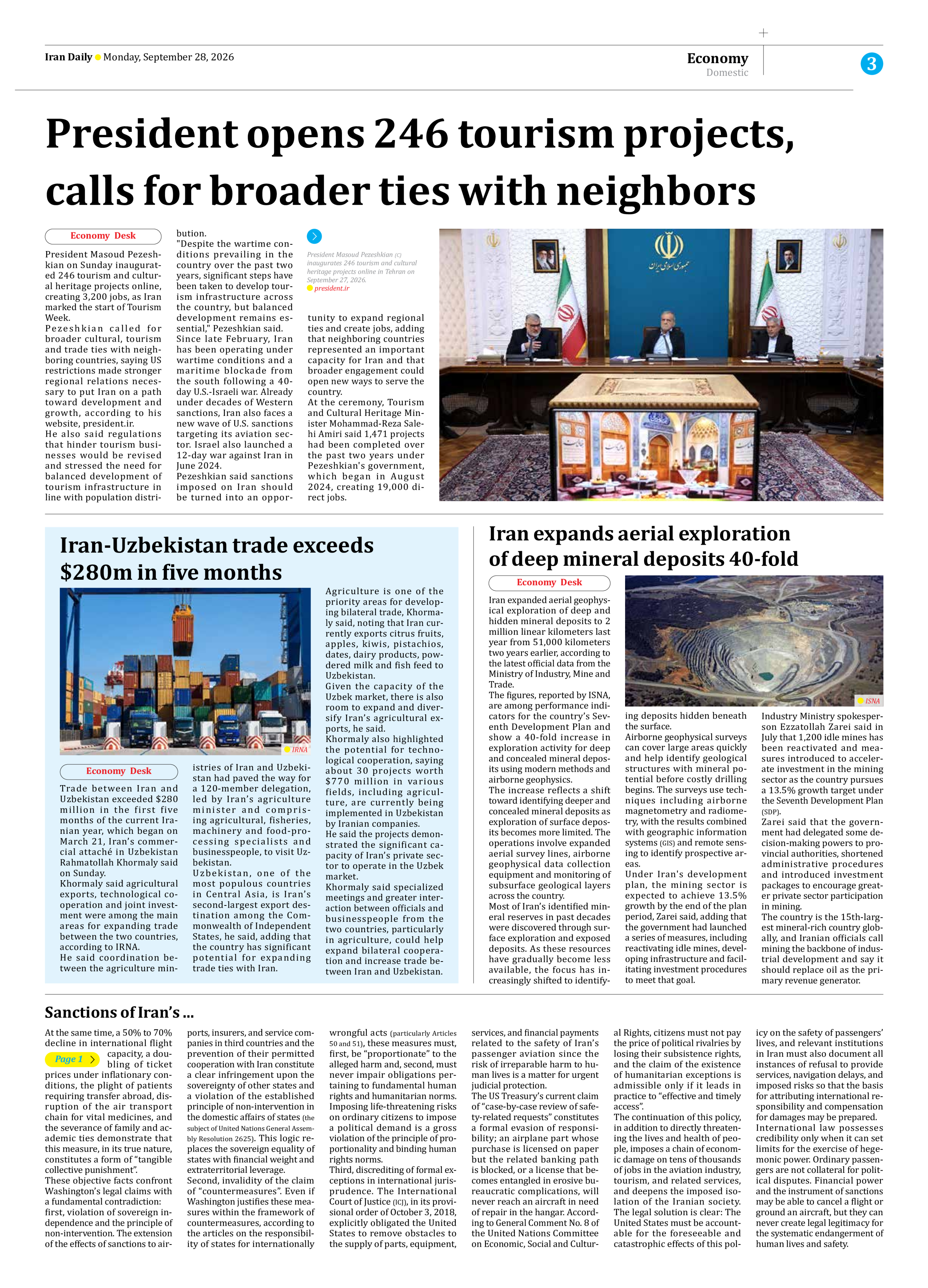


Iran expands aerial exploration of deep mineral deposits 40-fold
Iran expanded aerial geophysical exploration of deep and hidden mineral deposits to 2 million linear kilometers last year from 51,000 kilometers two years earlier, according to the latest official data from the Ministry of Industry, Mine and Trade.
The figures, reported by ISNA, are among performance indicators for the country’s Seventh Development Plan and show a 40-fold increase in exploration activity for deep and concealed mineral deposits using modern methods and airborne geophysics.
The increase reflects a shift toward identifying deeper and concealed mineral deposits as exploration of surface deposits becomes more limited. The operations involve expanded aerial survey lines, airborne geophysical data collection equipment and monitoring of subsurface geological layers across the country.
Most of Iran’s identified mineral reserves in past decades were discovered through surface exploration and exposed deposits. As these resources have gradually become less available, the focus has increasingly shifted to identifying deposits hidden beneath the surface.
Airborne geophysical surveys can cover large areas quickly and help identify geological structures with mineral potential before costly drilling begins. The surveys use techniques including airborne magnetometry and radiometry, with the results combined with geographic information systems (GIS) and remote sensing to identify prospective areas.
Under Iran's development plan, the mining sector is expected to achieve 13.5% growth by the end of the plan period, Zarei said, adding that the government had launched a series of measures, including reactivating idle mines, developing infrastructure and facilitating investment procedures to meet that goal.
Industry Ministry spokesperson Ezzatollah Zarei said in July that 1,200 idle mines has been reactivated and measures introduced to accelerate investment in the mining sector as the country pursues a 13.5% growth target under the Seventh Development Plan (SDP).
Zarei said that the government had delegated some decision-making powers to provincial authorities, shortened administrative procedures and introduced investment packages to encourage greater private sector participation in mining.
The country is the 15th-largest mineral-rich country globally, and Iranian officials call mining the backbone of industrial development and say it should replace oil as the primary revenue generator.