





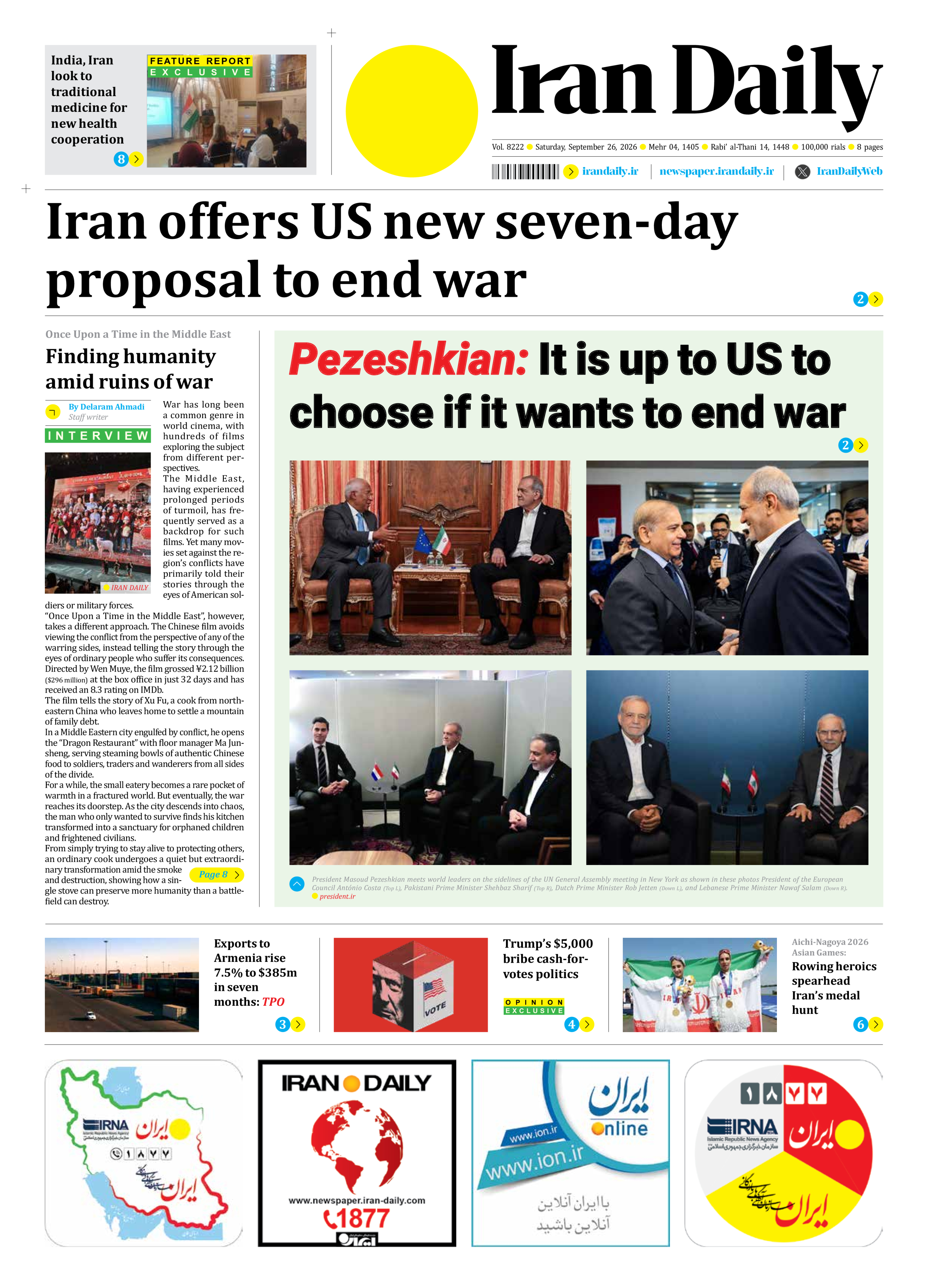


Once Upon a Time in the Middle East
Finding humanity amid ruins of war
By Delaram Ahmadi
Staff writer
War has long been a common genre in world cinema, with hundreds of films exploring the subject from different perspectives.
The Middle East, having experienced prolonged periods of turmoil, has frequently served as a backdrop for such films. Yet many movies set against the region’s conflicts have primarily told their stories through the eyes of American soldiers or military forces.
“Once Upon a Time in the Middle East”, however, takes a different approach. The Chinese film avoids viewing the conflict from the perspective of any of the warring sides, instead telling the story through the eyes of ordinary people who suffer its consequences.
Directed by Wen Muye, the film grossed ¥2.12 billion ($296 million) at the box office in just 32 days and has received an 8.3 rating on IMDb.
The film tells the story of Xu Fu, a cook from northeastern China who leaves home to settle a mountain of family debt.
In a Middle Eastern city engulfed by conflict, he opens the “Dragon Restaurant” with floor manager Ma Junsheng, serving steaming bowls of authentic Chinese food to soldiers, traders and wanderers from all sides of the divide.
For a while, the small eatery becomes a rare pocket of warmth in a fractured world. But eventually, the war reaches its doorstep. As the city descends into chaos, the man who only wanted to survive finds his kitchen transformed into a sanctuary for orphaned children and frightened civilians.
From simply trying to stay alive to protecting others, an ordinary cook undergoes a quiet but extraordinary transformation amid the smoke and destruction, showing how a single stove can preserve more humanity than a battlefield can destroy.
Page 8