







Chamber chief urges export plan for medicinal plants, organic products
The head of Iran's Chamber of Commerce, Industries, Mines and Agriculture criticized the lack of attention to the country's medicinal plants and organic products, calling for serious planning to boost exports and build global brands.
Samad Hassanzadeh, speaking at an international conference on the development of production and exports of Damask rose, organic medicinal plants and related products, said Iran had so far failed to make proper use of its significant potential in the sector or build suitable brands for its products in global markets, Tasnim news agency reported.
"Unfortunately, we have so far been unable to properly capitalize on the country's valuable resources and potential and establish suitable brands for these products in global markets," he said.
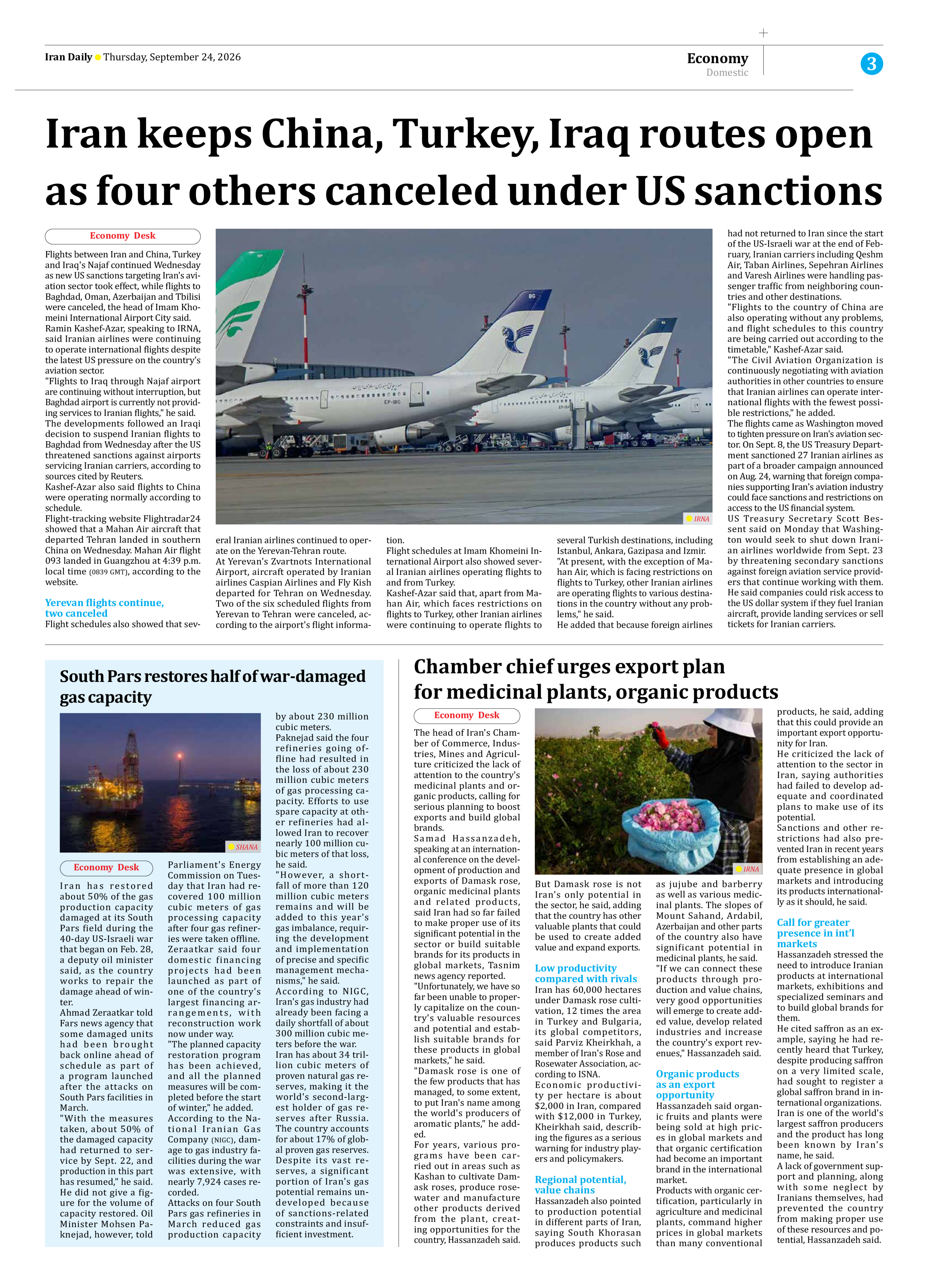
"Damask rose is one of the few products that has managed, to some extent, to put Iran's name among the world's producers of aromatic plants," he added.
For years, various programs have been carried out in areas such as Kashan to cultivate Damask roses, produce rosewater and manufacture other products derived from the plant, creating opportunities for the country, Hassanzadeh said.
But Damask rose is not Iran's only potential in the sector, he said, adding that the country has other valuable plants that could be used to create added value and expand exports.
Low productivity compared with rivals
Iran has 60,000 hectares under Damask rose cultivation, 12 times the area in Turkey and Bulgaria, its global competitors, said Parviz Kheirkhah, a member of Iran's Rose and Rosewater Association, according to ISNA.
Economic productivity per hectare is about $2,000 in Iran, compared with $12,000 in Turkey, Kheirkhah said, describing the figures as a serious warning for industry players and policymakers.
Regional potential, value chains
Hassanzadeh also pointed to production potential in different parts of Iran, saying South Khorasan produces products such as jujube and barberry as well as various medicinal plants. The slopes of Mount Sahand, Ardabil, Azerbaijan and other parts of the country also have significant potential in medicinal plants, he said.
"If we can connect these products through production and value chains, very good opportunities will emerge to create added value, develop related industries and increase the country's export revenues," Hassanzadeh said.
Organic products as an export opportunity
Hassanzadeh said organic fruits and plants were being sold at high prices in global markets and that organic certification had become an important brand in the international market.
Products with organic certification, particularly in agriculture and medicinal plants, command higher prices in global markets than many conventional products, he said, adding that this could provide an important export opportunity for Iran.
He criticized the lack of attention to the sector in Iran, saying authorities had failed to develop adequate and coordinated plans to make use of its potential.
Sanctions and other restrictions had also prevented Iran in recent years from establishing an adequate presence in global markets and introducing its products internationally as it should, he said.
Call for greater presence in int’l markets
Hassanzadeh stressed the need to introduce Iranian products at international markets, exhibitions and specialized seminars and to build global brands for them.
He cited saffron as an example, saying he had recently heard that Turkey, despite producing saffron on a very limited scale, had sought to register a global saffron brand in international organizations.
Iran is one of the world's largest saffron producers and the product has long been known by Iran's name, he said.
A lack of government support and planning, along with some neglect by Iranians themselves, had prevented the country from making proper use of these resources and potential, Hassanzadeh said.