







Copy in clipboard...
Diplomatic efforts underway to bring Iran, US back to negotiating table
Mediators are doing their utmost to bring Iran and the US back to the negotiating table as tensions between the two countries are again running high in the wake of Washington’s threats against Tehran.
Qatari Foreign Ministry spokesperson Majed Al-Ansari, whose country along with Pakistan has been mediating between Tehran and Washington, said on Sunday that Qatar is working with the United States and Iran to resume talks, noting that US officials have indicated that Washington wants a deal.
Speaking on the sidelines of the Qatar Economic Forum in New York, Al-Ansari said Qatar had been exchanging ideas with Washington and Tehran over the past few weeks in an effort to restart negotiations.
“We have been working together through our mediator team with both Tehran and the United States to see if we can get it restarted again. A lot of ideas have been thrown back and forth,” Al-Ansari said, adding that Qatar was trying to “bridge the gap and find the right moment to move forward."
“We have heard statements on the record from various administration officials who have confirmed that the United States wants a deal, and the United States wants a solution to this war,” he said.
Al-Ansari said any settlement should provide regional stability while establishing an international understanding to protect strategic waterways, including the Strait of Hormuz.
“Open the strait, stop the war. These are the two main objectives of everything that we’re doing right now,” he added.
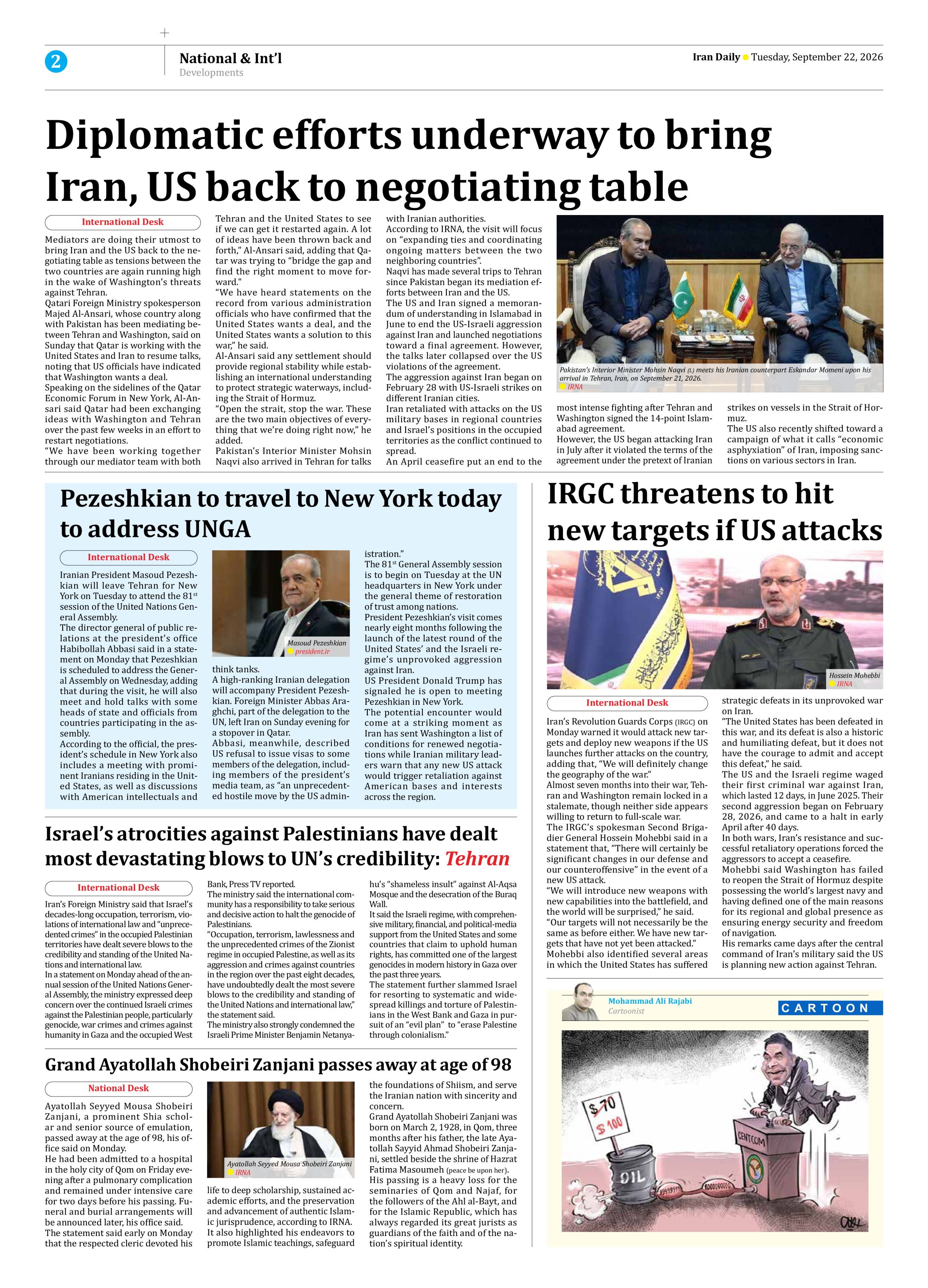
Pakistan’s Interior Minister Mohsin Naqvi also arrived in Tehran for talks with Iranian authorities.
According to IRNA, the visit will focus on “expanding ties and coordinating ongoing matters between the two neighboring countries”.
Naqvi has made several trips to Tehran since Pakistan began its mediation efforts between Iran and the US.
The US and Iran signed a memorandum of understanding in Islamabad in June to end the US-Israeli aggression against Iran and launched negotiations toward a final agreement. However, the talks later collapsed over the US violations of the agreement.
The aggression against Iran began on February 28 with US-Israeli strikes on different Iranian cities.
Iran retaliated with attacks on the US military bases in regional countries and Israel’s positions in the occupied territories as the conflict continued to spread.
An April ceasefire put an end to the most intense fighting after Tehran and Washington signed the 14-point Islamabad agreement.
However, the US began attacking Iran in July after it violated the terms of the agreement under the pretext of Iranian strikes on vessels in the Strait of Hormuz.
The US also recently shifted toward a campaign of what it calls “economic asphyxiation” of Iran, imposing sanctions on various sectors in Iran.