







Copy in clipboard...
Pentagon probe finds cascade of failures behind deadly Iran school strike
A Pentagon investigation into a US missile strike that killed more than 170 people at an Iranian school in February has identified a series of preventable failures, including outdated intelligence, gaps in civilian-protection staffing and an overreliance on artificial-intelligence systems, according to US officials involved in the probe.
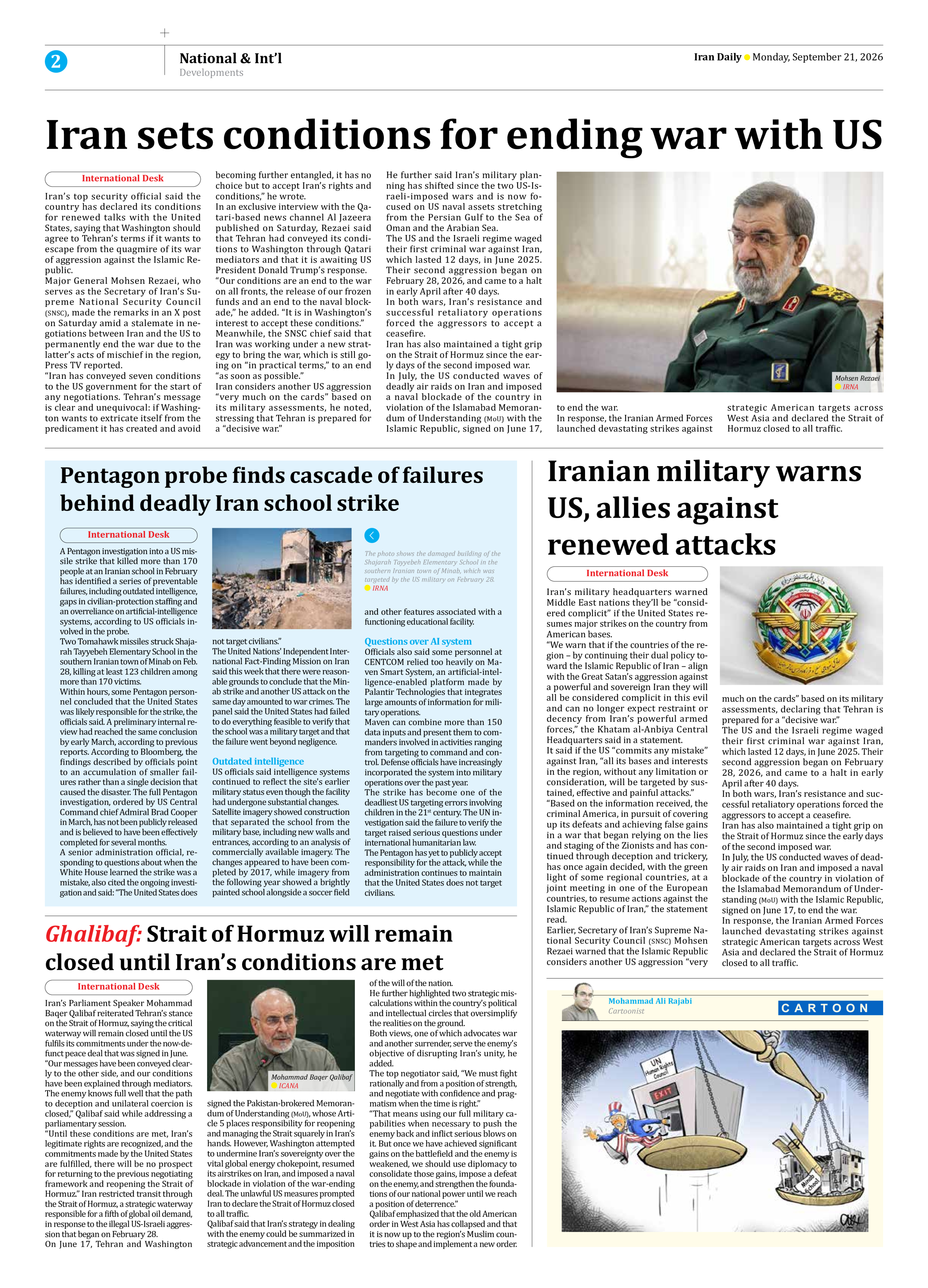
Two Tomahawk missiles struck Shajarah Tayyebeh Elementary School in the southern Iranian town of Minab on Feb. 28, killing at least 123 children among more than 170 victims.
Within hours, some Pentagon personnel concluded that the United States was likely responsible for the strike, the officials said. A preliminary internal review had reached the same conclusion by early March, according to previous reports. According to Bloomberg, the findings described by officials point to an accumulation of smaller failures rather than a single decision that caused the disaster. The full Pentagon investigation, ordered by US Central Command chief Admiral Brad Cooper in March, has not been publicly released and is believed to have been effectively completed for several months.
A senior administration official, responding to questions about when the White House learned the strike was a mistake, also cited the ongoing investigation and said: “The United States does not target civilians.”
The United Nations' Independent International Fact-Finding Mission on Iran said this week that there were reasonable grounds to conclude that the Minab strike and another US attack on the same day amounted to war crimes. The panel said the United States had failed to do everything feasible to verify that the school was a military target and that the failure went beyond negligence.
Outdated intelligence
US officials said intelligence systems continued to reflect the site's earlier military status even though the facility had undergone substantial changes.
Satellite imagery showed construction that separated the school from the military base, including new walls and entrances, according to an analysis of commercially available imagery. The changes appeared to have been completed by 2017, while imagery from the following year showed a brightly painted school alongside a soccer field and other features associated with a functioning educational facility.
Questions over AI system
Officials also said some personnel at CENTCOM relied too heavily on Maven Smart System, an artificial-intelligence-enabled platform made by Palantir Technologies that integrates large amounts of information for military operations.
Maven can combine more than 150 data inputs and present them to commanders involved in activities ranging from targeting to command and control. Defense officials have increasingly incorporated the system into military operations over the past year.
The strike has become one of the deadliest US targeting errors involving children in the 21st century. The UN investigation said the failure to verify the target raised serious questions under international humanitarian law.
The Pentagon has yet to publicly accept responsibility for the attack, while the administration continues to maintain that the United States does not target civilians.