







Bozorgmehr Qaeni’s tomb preserves centuries of culture
Qaen, a historic city in South Khorasan Province, boasts a rich legacy, reflected in its many architectural and cultural landmarks. From elaborately decorated water reservoirs and mosques to museums and historic buildings, the city stands as a living testimony to the region’s enduring heritage.
Southwest of Qaen, on the slopes of the Qohestan Mountains, rests a serene tomb that, with its pristine vistas and surrounding heights, stands out as a key cultural and tourist attraction of the province.
This tomb belongs to Bozorgmehr Qaeni, a poet, mystic, and statesman of the 4th and 5th centuries AH. It is not only a site of religious and historical significance, but also one of the most important cultural and recreational destinations in the region. Situated atop a mountain ridge that shares its name, the tomb offers sweeping views of the city and its surroundings, ISNA reported.
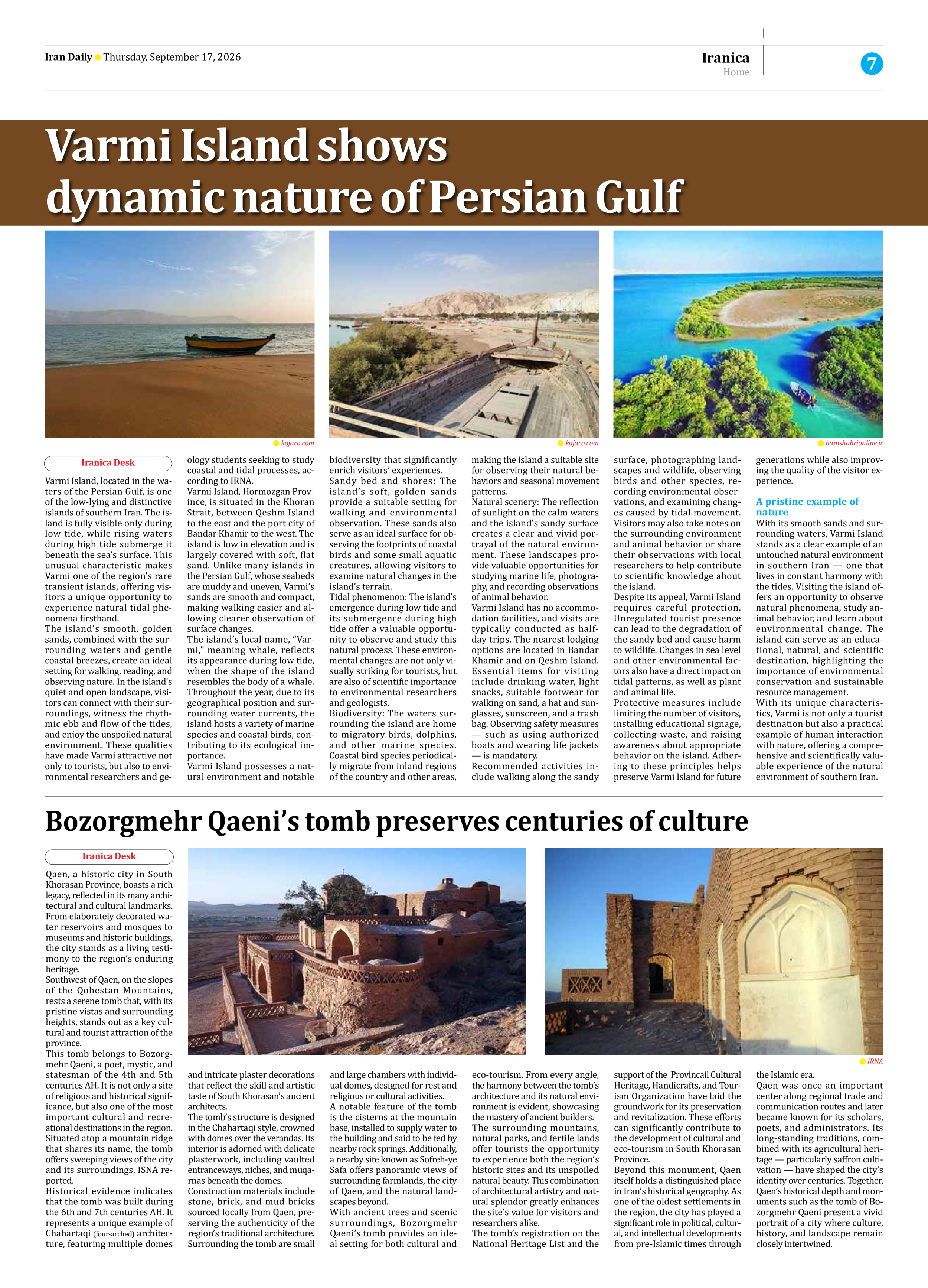
Historical evidence indicates that the tomb was built during the 6th and 7th centuries AH. It represents a unique example of Chahartaqi (four-arched) architecture, featuring multiple domes and intricate plaster decorations that reflect the skill and artistic taste of South Khorasan’s ancient architects.
The tomb’s structure is designed in the Chahartaqi style, crowned with domes over the verandas. Its interior is adorned with delicate plasterwork, including vaulted entranceways, niches, and muqarnas beneath the domes.
Construction materials include stone, brick, and mud bricks sourced locally from Qaen, preserving the authenticity of the region’s traditional architecture. Surrounding the tomb are small and large chambers with individual domes, designed for rest and religious or cultural activities.
A notable feature of the tomb is the cisterns at the mountain base, installed to supply water to the building and said to be fed by nearby rock springs. Additionally, a nearby site known as Sofreh-ye Safa offers panoramic views of surrounding farmlands, the city of Qaen, and the natural landscapes beyond.
With ancient trees and scenic surroundings, Bozorgmehr Qaeni’s tomb provides an ideal setting for both cultural and eco-tourism. From every angle, the harmony between the tomb’s architecture and its natural environment is evident, showcasing the mastery of ancient builders.
The surrounding mountains, natural parks, and fertile lands offer tourists the opportunity to experience both the region’s historic sites and its unspoiled natural beauty. This combination of architectural artistry and natural splendor greatly enhances the site’s value for visitors and researchers alike.
The tomb’s registration on the National Heritage List and the support of the Provincail Cultural Heritage, Handicrafts, and Tourism Organization have laid the groundwork for its preservation and revitalization. These efforts can significantly contribute to the development of cultural and eco-tourism in South Khorasan Province.
Beyond this monument, Qaen itself holds a distinguished place in Iran’s historical geography. As one of the oldest settlements in the region, the city has played a significant role in political, cultural, and intellectual developments from pre-Islamic times through the Islamic era.
Qaen was once an important center along regional trade and communication routes and later became known for its scholars, poets, and administrators. Its long-standing traditions, combined with its agricultural heritage — particularly saffron cultivation — have shaped the city’s identity over centuries. Together, Qaen’s historical depth and monuments such as the tomb of Bozorgmehr Qaeni present a vivid portrait of a city where culture, history, and landscape remain closely intertwined.