







Tehran, Tashkent chart new tourism roadmap built on Silk Road heritage
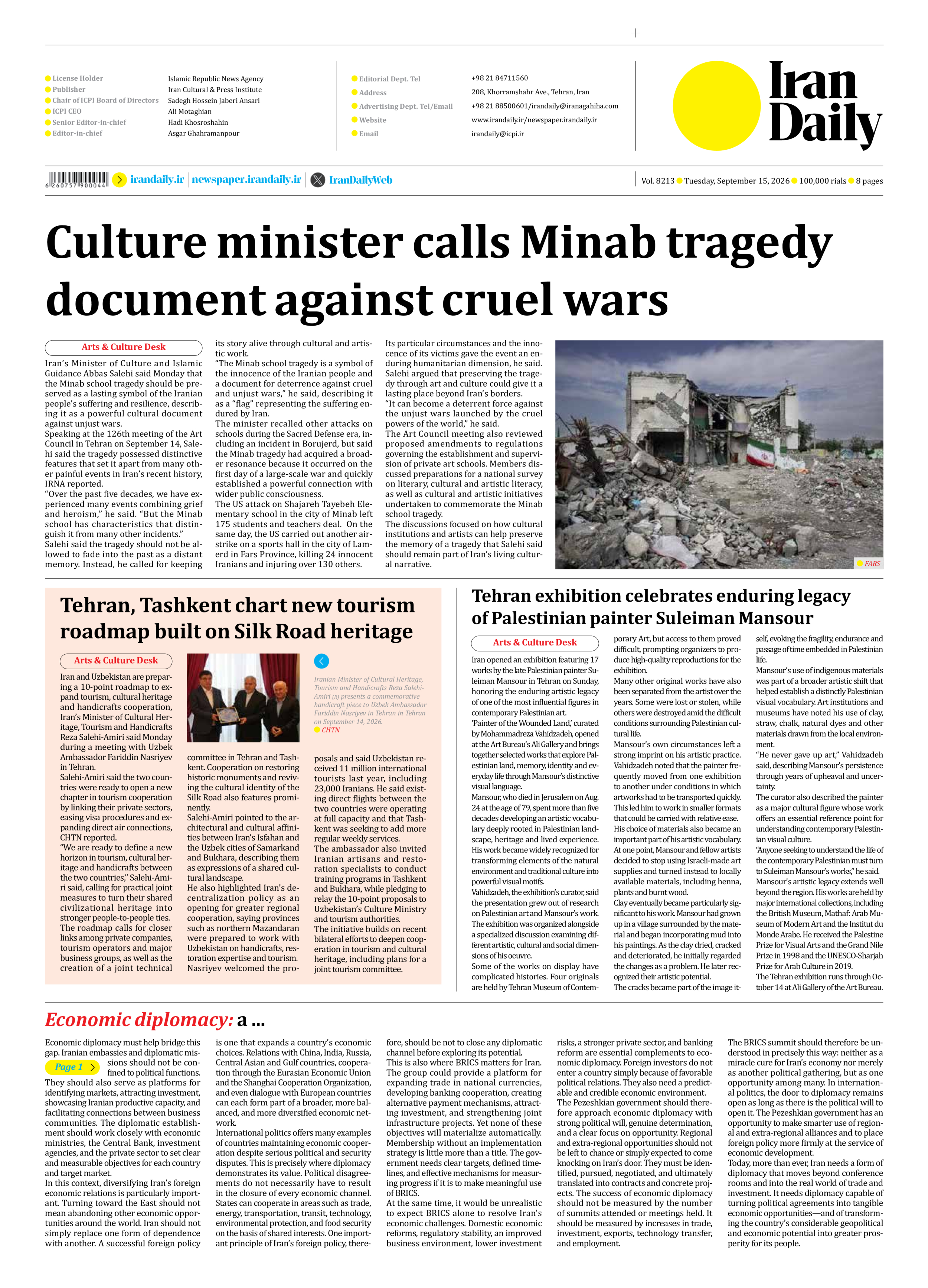
Iran and Uzbekistan are preparing a 10-point roadmap to expand tourism, cultural heritage and handicrafts cooperation, Iran’s Minister of Cultural Heritage, Tourism and Handicrafts Reza Salehi-Amiri said Monday during a meeting with Uzbek Ambassador Fariddin Nasriyev in Tehran.
Salehi-Amiri said the two countries were ready to open a new chapter in tourism cooperation by linking their private sectors, easing visa procedures and expanding direct air connections, CHTN reported.
“We are ready to define a new horizon in tourism, cultural heritage and handicrafts between the two countries,” Salehi-Amiri said, calling for practical joint measures to turn their shared civilizational heritage into stronger people-to-people ties.
The roadmap calls for closer links among private companies, tourism operators and major business groups, as well as the creation of a joint technical committee in Tehran and Tashkent. Cooperation on restoring historic monuments and reviving the cultural identity of the Silk Road also features prominently.
Salehi-Amiri pointed to the architectural and cultural affinities between Iran’s Isfahan and the Uzbek cities of Samarkand and Bukhara, describing them as expressions of a shared cultural landscape.
He also highlighted Iran’s decentralization policy as an opening for greater regional cooperation, saying provinces such as northern Mazandaran were prepared to work with Uzbekistan on handicrafts, restoration expertise and tourism.
Nasriyev welcomed the proposals and said Uzbekistan received 11 million international tourists last year, including 23,000 Iranians. He said existing direct flights between the two countries were operating at full capacity and that Tashkent was seeking to add more regular weekly services.
The ambassador also invited Iranian artisans and restoration specialists to conduct training programs in Tashkent and Bukhara, while pledging to relay the 10-point proposals to Uzbekistan’s Culture Ministry and tourism authorities.
The initiative builds on recent bilateral efforts to deepen cooperation in tourism and cultural heritage, including plans for a joint tourism committee.