







Pezeshkain says Iran, Oman to ink Hormuz shipping route deal on Monday
Muscat meeting key step toward regional security: Spox
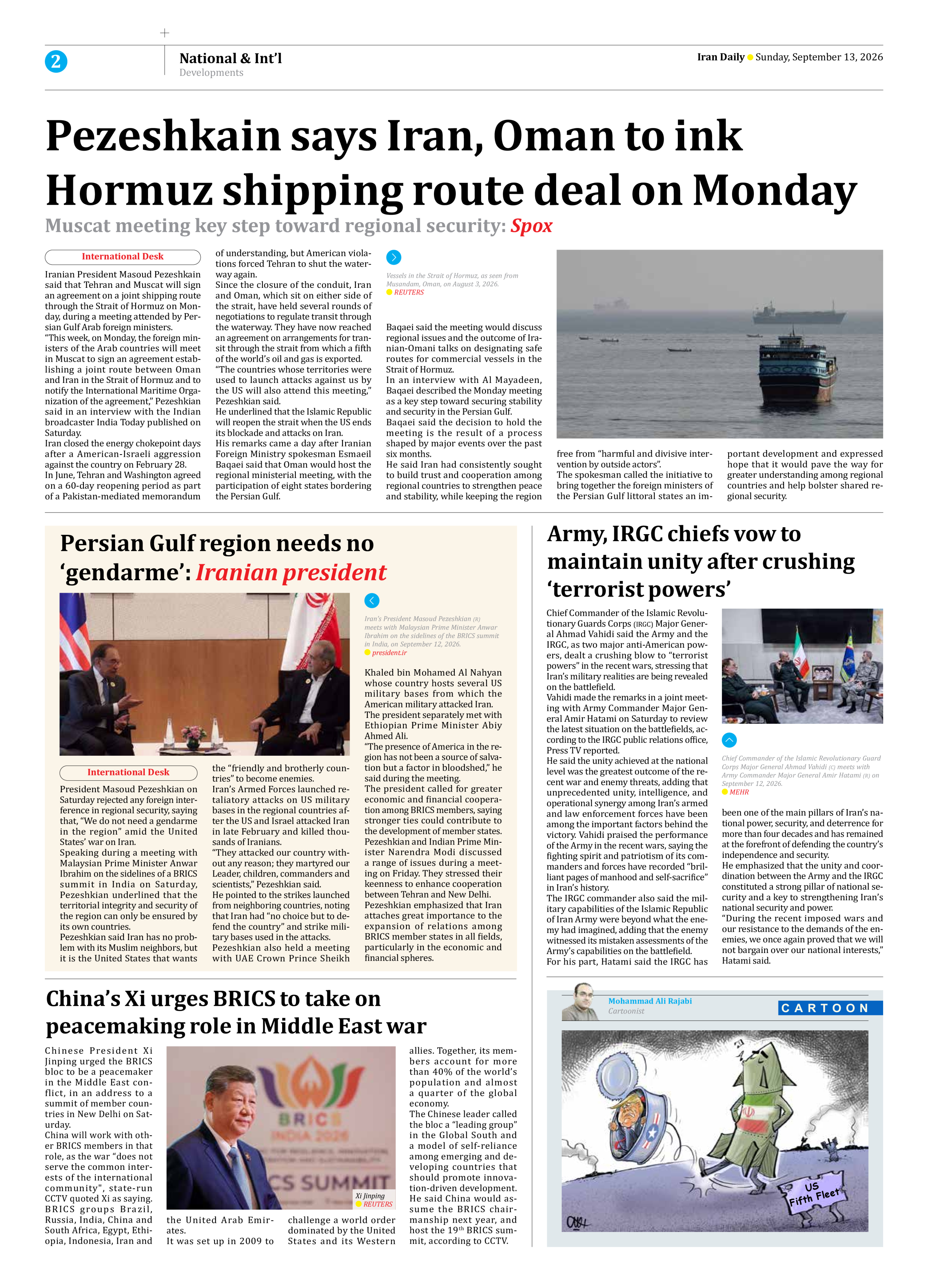
Iranian President Masoud Pezeshkain said that Tehran and Muscat will sign an agreement on a joint shipping route through the Strait of Hormuz on Monday, during a meeting attended by Persian Gulf Arab foreign ministers.
“This week, on Monday, the foreign ministers of the Arab countries will meet in Muscat to sign an agreement establishing a joint route between Oman and Iran in the Strait of Hormuz and to notify the International Maritime Organization of the agreement,” Pezeshkian said in an interview with the Indian broadcaster India Today published on Saturday.
Iran closed the energy chokepoint days after a American-Israeli aggression against the country on February 28.
In June, Tehran and Washington agreed on a 60-day reopening period as part of a Pakistan-mediated memorandum of understanding, but American violations forced Tehran to shut the waterway again.
Since the closure of the conduit, Iran and Oman, which sit on either side of the strait, have held several rounds of negotiations to regulate transit through the waterway. They have now reached an agreement on arrangements for transit through the strait from which a fifth of the world’s oil and gas is exported.
“The countries whose territories were used to launch attacks against us by the US will also attend this meeting,” Pezeshkian said.
He underlined that the Islamic Republic will reopen the strait when the US ends its blockade and attacks on Iran.
His remarks came a day after Iranian Foreign Ministry spokesman Esmaeil Baqaei said that Oman would host the regional ministerial meeting, with the participation of eight states bordering the Persian Gulf.
Baqaei said the meeting would discuss regional issues and the outcome of Iranian-Omani talks on designating safe routes for commercial vessels in the Strait of Hormuz.
In an interview with Al Mayadeen, Baqaei described the Monday meeting as a key step toward securing stability and security in the Persian Gulf.
Baqaei said the decision to hold the meeting is the result of a process shaped by major events over the past six months.
He said Iran had consistently sought to build trust and cooperation among regional countries to strengthen peace and stability, while keeping the region free from “harmful and divisive intervention by outside actors”.
The spokesman called the initiative to bring together the foreign ministers of the Persian Gulf littoral states an important development and expressed hope that it would pave the way for greater understanding among regional countries and help bolster shared regional security.