







Copy in clipboard...
Iran seeks national archive for its living history
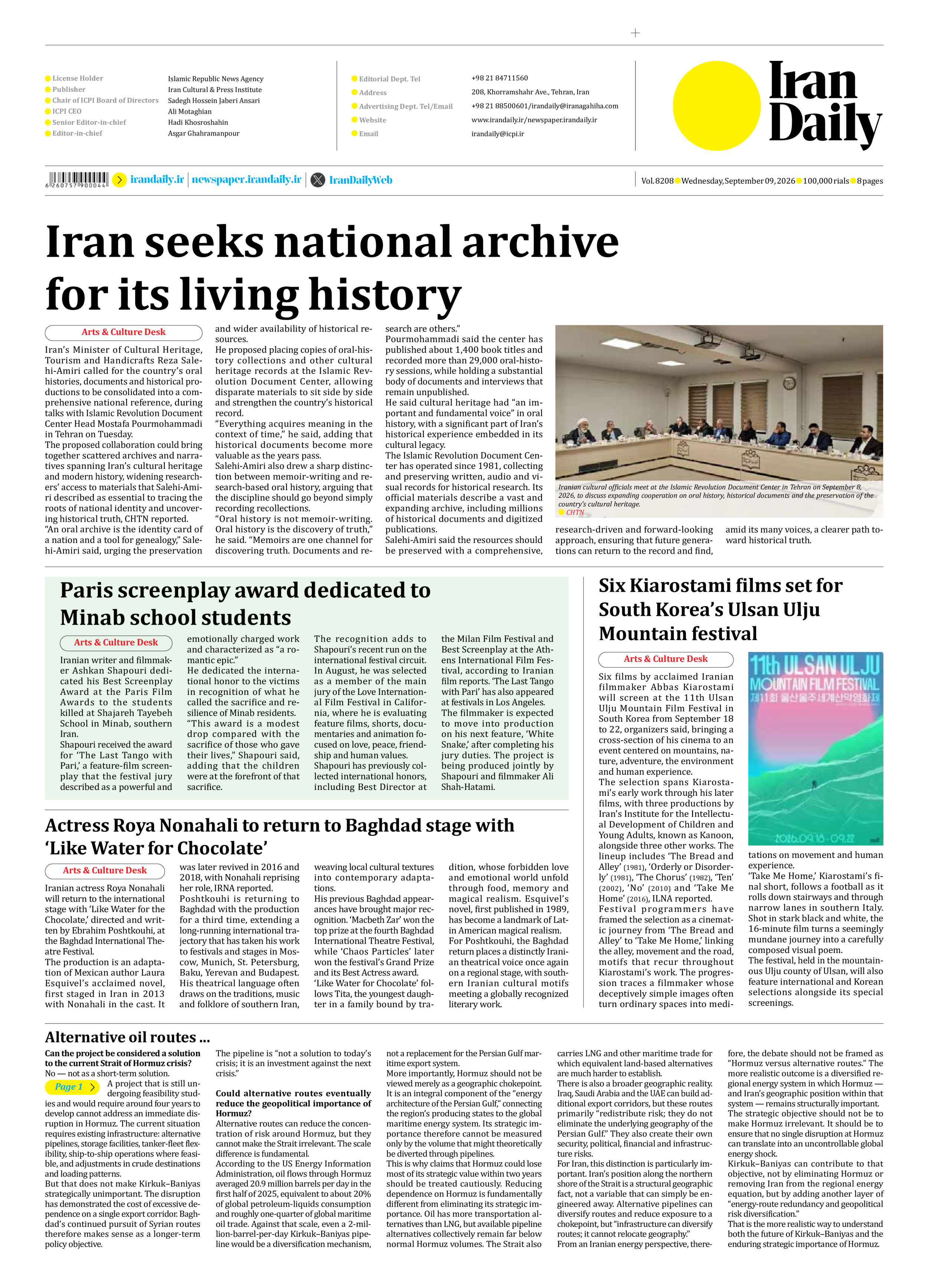
Iran’s Minister of Cultural Heritage, Tourism and Handicrafts Reza Salehi-Amiri called for the country’s oral histories, documents and historical productions to be consolidated into a comprehensive national reference, during talks with Islamic Revolution Document Center Head Mostafa Pourmohammadi in Tehran on Tuesday.
The proposed collaboration could bring together scattered archives and narratives spanning Iran’s cultural heritage and modern history, widening researchers’ access to materials that Salehi-Amiri described as essential to tracing the roots of national identity and uncovering historical truth, CHTN reported.
“An oral archive is the identity card of a nation and a tool for genealogy,” Salehi-Amiri said, urging the preservation and wider availability of historical resources.
He proposed placing copies of oral-history collections and other cultural heritage records at the Islamic Revolution Document Center, allowing disparate materials to sit side by side and strengthen the country’s historical record.
“Everything acquires meaning in the context of time,” he said, adding that historical documents become more valuable as the years pass.
Salehi-Amiri also drew a sharp distinction between memoir-writing and research-based oral history, arguing that the discipline should go beyond simply recording recollections.
“Oral history is not memoir-writing. Oral history is the discovery of truth,” he said. “Memoirs are one channel for discovering truth. Documents and research are others.”
Pourmohammadi said the center has published about 1,400 book titles and recorded more than 29,000 oral-history sessions, while holding a substantial body of documents and interviews that remain unpublished.
He said cultural heritage had “an important and fundamental voice” in oral history, with a significant part of Iran’s historical experience embedded in its cultural legacy.
The Islamic Revolution Document Center has operated since 1981, collecting and preserving written, audio and visual records for historical research. Its official materials describe a vast and expanding archive, including millions of historical documents and digitized publications.
Salehi-Amiri said the resources should be preserved with a comprehensive, research-driven and forward-looking approach, ensuring that future generations can return to the record and find, amid its many voices, a clearer path toward historical truth.