







Minister: Russian, Kazakh investment in Incheh Borun strengthens Iran’s transit outlook
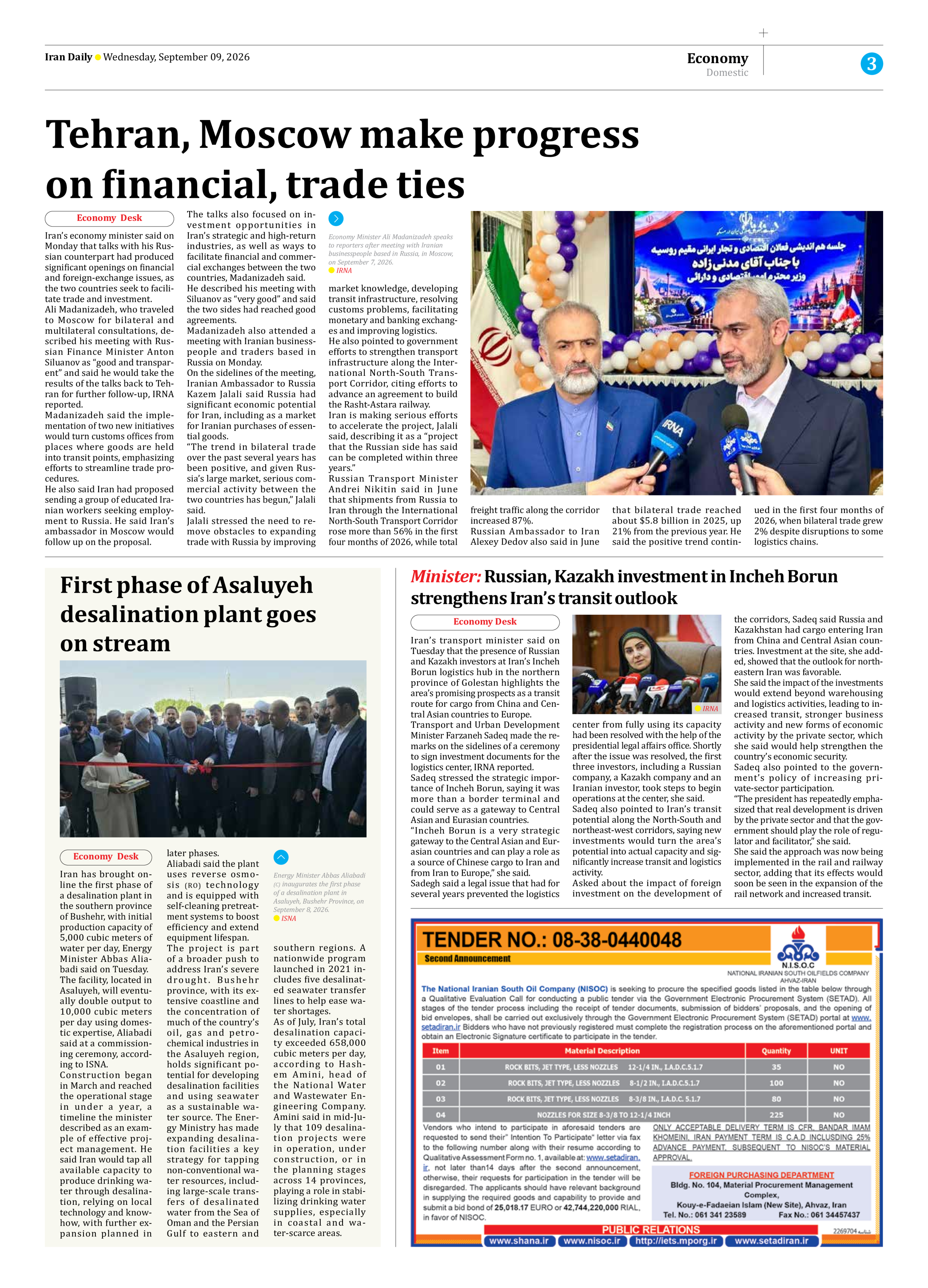
Iran’s transport minister said on Tuesday that the presence of Russian and Kazakh investors at Iran’s Incheh Borun logistics hub in the northern province of Golestan highlights the area’s promising prospects as a transit route for cargo from China and Central Asian countries to Europe.
Transport and Urban Development Minister Farzaneh Sadeq made the remarks on the sidelines of a ceremony to sign investment documents for the logistics center, IRNA reported.
Sadeq stressed the strategic importance of Incheh Borun, saying it was more than a border terminal and could serve as a gateway to Central Asian and Eurasian countries.
“Incheh Borun is a very strategic gateway to the Central Asian and Eurasian countries and can play a role as a source of Chinese cargo to Iran and from Iran to Europe,” she said.
Sadegh said a legal issue that had for several years prevented the logistics center from fully using its capacity had been resolved with the help of the presidential legal affairs office. Shortly after the issue was resolved, the first three investors, including a Russian company, a Kazakh company and an Iranian investor, took steps to begin operations at the center, she said.
Sadeq also pointed to Iran’s transit potential along the North-South and northeast-west corridors, saying new investments would turn the area’s potential into actual capacity and significantly increase transit and logistics activity.
Asked about the impact of foreign investment on the development of the corridors, Sadeq said Russia and Kazakhstan had cargo entering Iran from China and Central Asian countries. Investment at the site, she added, showed that the outlook for northeastern Iran was favorable.
She said the impact of the investments would extend beyond warehousing and logistics activities, leading to increased transit, stronger business activity and new forms of economic activity by the private sector, which she said would help strengthen the country’s economic security.
Sadeq also pointed to the government’s policy of increasing private-sector participation.
“The president has repeatedly emphasized that real development is driven by the private sector and that the government should play the role of regulator and facilitator,” she said.
She said the approach was now being implemented in the rail and railway sector, adding that its effects would soon be seen in the expansion of the rail network and increased transit.