







Economy minister begins Russia, India visits to ‘counter sanctions, economic war’
Iran’s economy minister began a two-leg trip to Russia and India on Sunday aimed at “using foreign relations to counter sanctions and economic war,” while boosting domestic production, trade and investment, the ministry said.
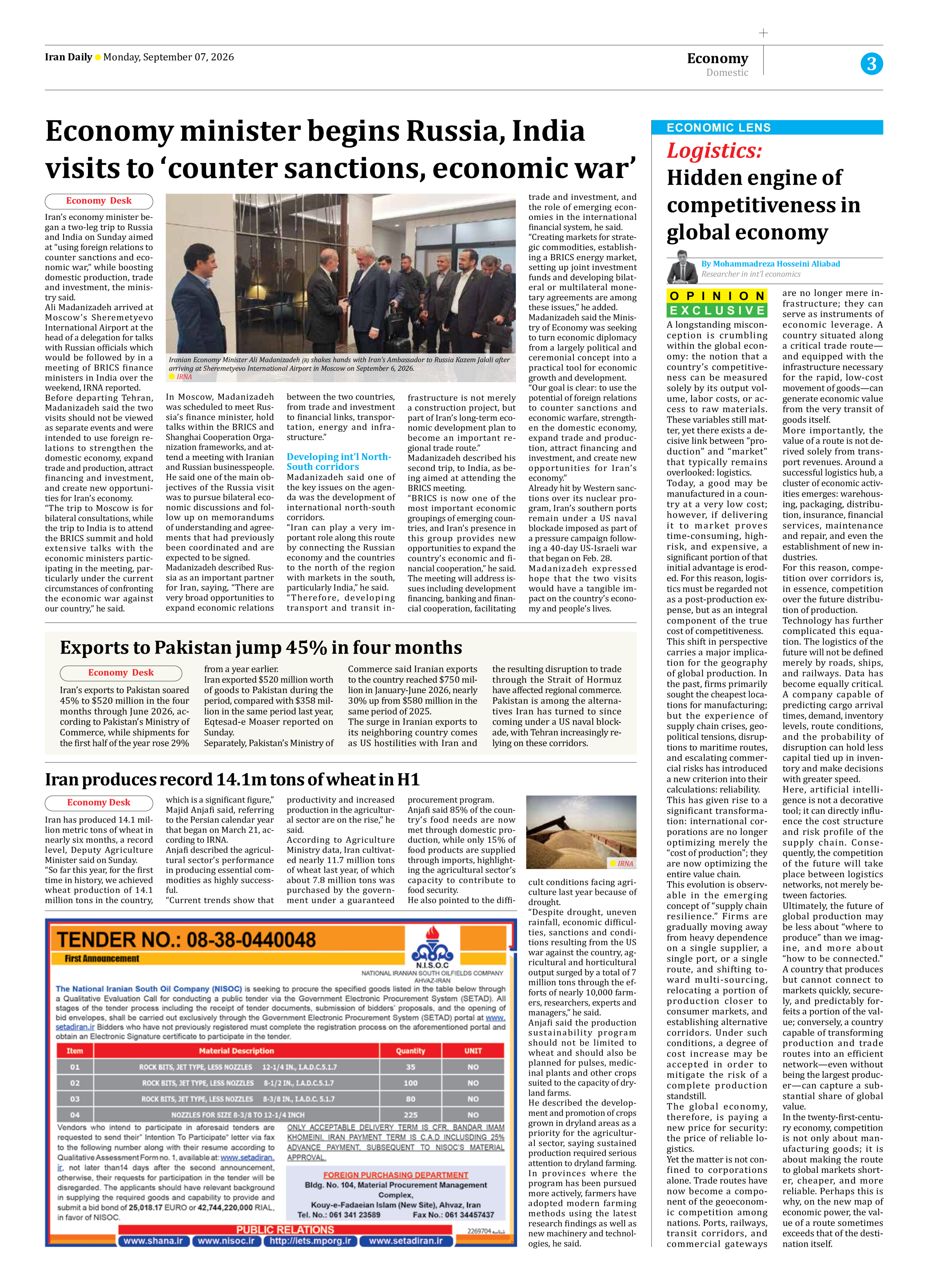
Ali Madanizadeh arrived at Moscow’s Sheremetyevo International Airport at the head of a delegation for talks with Russian officials which would be followed by in a meeting of BRICS finance ministers in India over the weekend, IRNA reported.
Before departing Tehran, Madanizadeh said the two visits should not be viewed as separate events and were intended to use foreign relations to strengthen the domestic economy, expand trade and production, attract financing and investment, and create new opportunities for Iran’s economy.
“The trip to Moscow is for bilateral consultations, while the trip to India is to attend the BRICS summit and hold extensive talks with the economic ministers participating in the meeting, particularly under the current circumstances of confronting the economic war against our country,” he said.
In Moscow, Madanizadeh was scheduled to meet Russia’s finance minister, hold talks within the BRICS and Shanghai Cooperation Organization frameworks, and attend a meeting with Iranian and Russian businesspeople.
He said one of the main objectives of the Russia visit was to pursue bilateral economic discussions and follow up on memorandums of understanding and agreements that had previously been coordinated and are expected to be signed.
Madanizadeh described Russia as an important partner for Iran, saying, “There are very broad opportunities to expand economic relations between the two countries, from trade and investment to financial links, transportation, energy and infrastructure.”
Developing int’l North-South corridors
Madanizadeh said one of the key issues on the agenda was the development of international north-south corridors.
“Iran can play a very important role along this route by connecting the Russian economy and the countries to the north of the region with markets in the south, particularly India,” he said.
“Therefore, developing transport and transit infrastructure is not merely a construction project, but part of Iran’s long-term economic development plan to become an important regional trade route.”
Madanizadeh described his second trip, to India, as being aimed at attending the BRICS meeting.
“BRICS is now one of the most important economic groupings of emerging countries, and Iran’s presence in this group provides new opportunities to expand the country’s economic and financial cooperation,” he said.
The meeting will address issues including development financing, banking and financial cooperation, facilitating trade and investment, and the role of emerging economies in the international financial system, he said.
“Creating markets for strategic commodities, establishing a BRICS energy market, setting up joint investment funds and developing bilateral or multilateral monetary agreements are among these issues,” he added.
Madanizadeh said the Ministry of Economy was seeking to turn economic diplomacy from a largely political and ceremonial concept into a practical tool for economic growth and development.
“Our goal is clear: to use the potential of foreign relations to counter sanctions and economic warfare, strengthen the domestic economy, expand trade and production, attract financing and investment, and create new opportunities for Iran’s economy.”
Already hit by Western sanctions over its nuclear program, Iran’s southern ports remain under a US naval blockade imposed as part of a pressure campaign following a 40-day US-Israeli war that began on Feb. 28.
Madanizadeh expressed hope that the two visits would have a tangible impact on the country’s economy and people’s lives.