







TPO weighs rial-based mechanism to ease trade with neighbors
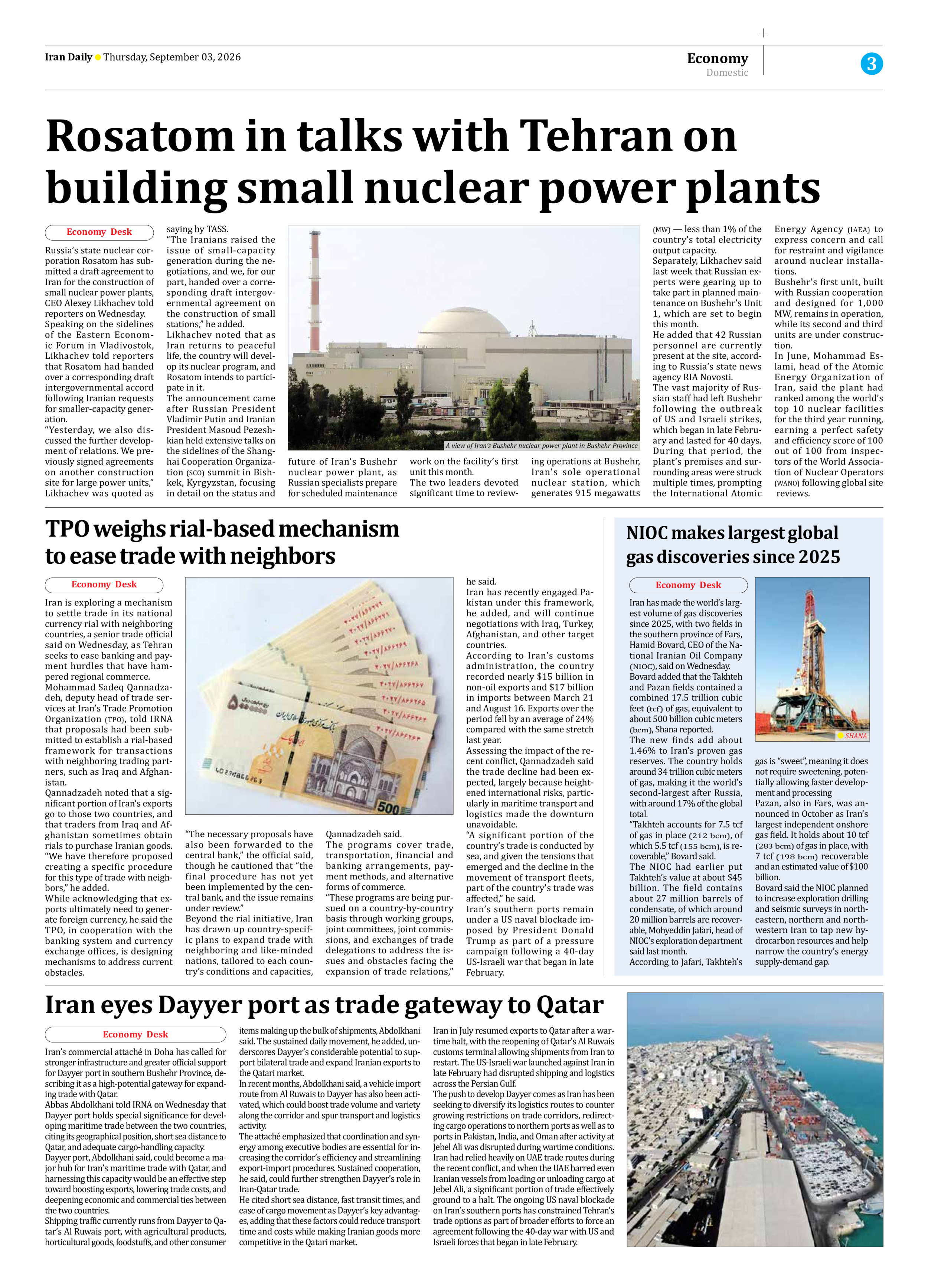
Iran is exploring a mechanism to settle trade in its national currency rial with neighboring countries, a senior trade official said on Wednesday, as Tehran seeks to ease banking and payment hurdles that have hampered regional commerce.
Mohammad Sadeq Qannadzadeh, deputy head of trade services at Iran’s Trade Promotion Organization (TPO), told IRNA that proposals had been submitted to establish a rial-based framework for transactions with neighboring trading partners, such as Iraq and Afghanistan.
Qannadzadeh noted that a significant portion of Iran’s exports go to those two countries, and that traders from Iraq and Afghanistan sometimes obtain rials to purchase Iranian goods. “We have therefore proposed creating a specific procedure for this type of trade with neighbors,” he added.
While acknowledging that exports ultimately need to generate foreign currency, he said the TPO, in cooperation with the banking system and currency exchange offices, is designing mechanisms to address current obstacles.
“The necessary proposals have also been forwarded to the central bank,” the official said, though he cautioned that “the final procedure has not yet been implemented by the central bank, and the issue remains under review.”
Beyond the rial initiative, Iran has drawn up country-specific plans to expand trade with neighboring and like-minded nations, tailored to each country’s conditions and capacities, Qannadzadeh said.
The programs cover trade, transportation, financial and banking arrangements, payment methods, and alternative forms of commerce.
“These programs are being pursued on a country-by-country basis through working groups, joint committees, joint commissions, and exchanges of trade delegations to address the issues and obstacles facing the expansion of trade relations,” he said.
Iran has recently engaged Pakistan under this framework, he added, and will continue negotiations with Iraq, Turkey, Afghanistan, and other target countries.
According to Iran’s customs administration, the country recorded nearly $15 billion in non-oil exports and $17 billion in imports between March 21 and August 16. Exports over the period fell by an average of 24% compared with the same stretch last year.
Assessing the impact of the recent conflict, Qannadzadeh said the trade decline had been expected, largely because heightened international risks, particularly in maritime transport and logistics made the downturn unavoidable.
“A significant portion of the country’s trade is conducted by sea, and given the tensions that emerged and the decline in the movement of transport fleets, part of the country’s trade was affected,” he said.
Iran’s southern ports remain under a US naval blockade imposed by President Donald Trump as part of a pressure campaign following a 40-day US-Israeli war that began in late February.