







Minister says strategic food reserves grew despite war, sanctions
Iran has not drawn down its strategic reserves of essential goods since the start of the US-Israeli conflict in late February, and has instead increased those stockpiles while continuing imports to replenish them, the agriculture minister said on Sunday.
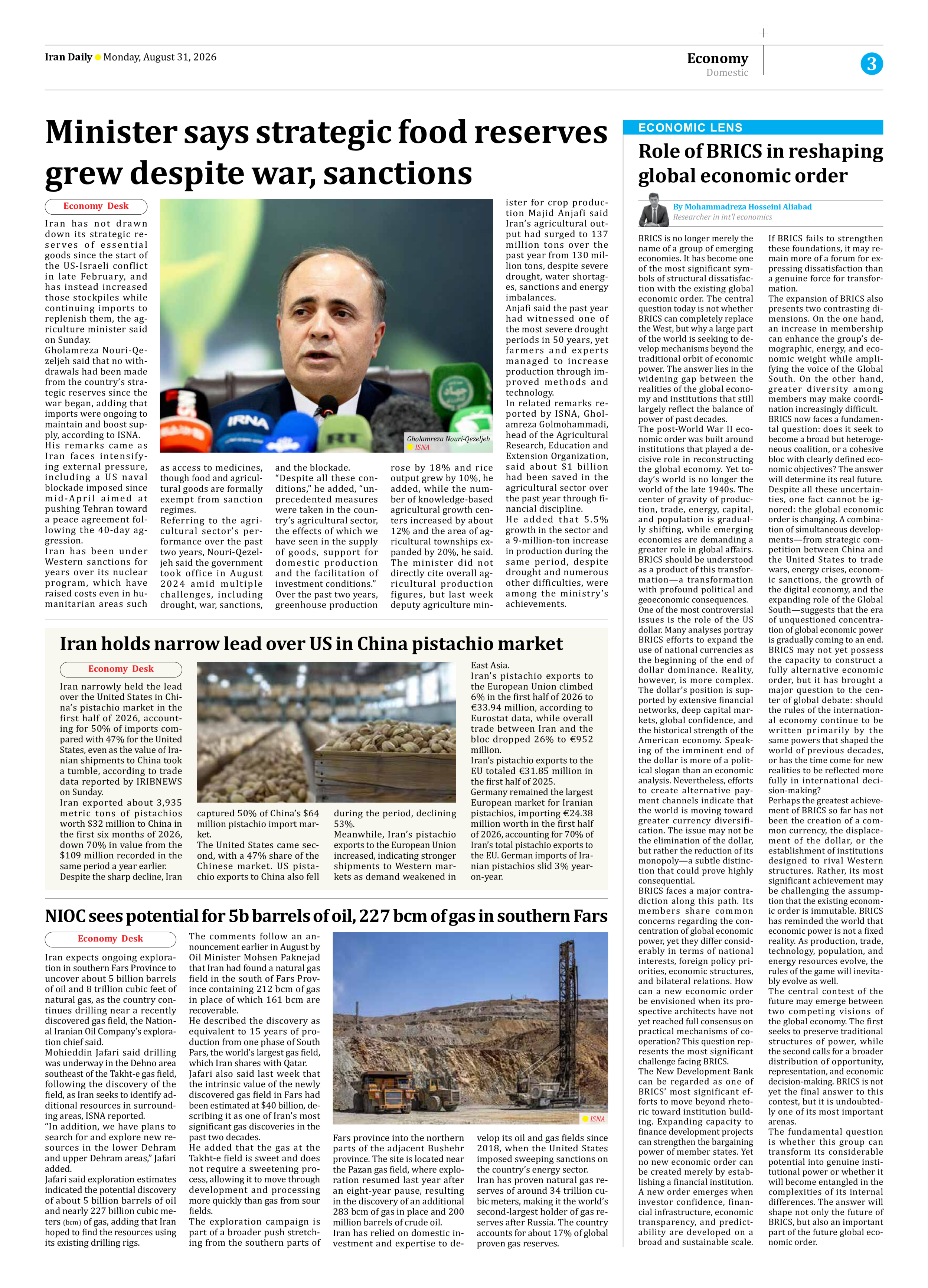
Gholamreza Nouri-Qezeljeh said that no withdrawals had been made from the country’s strategic reserves since the war began, adding that imports were ongoing to maintain and boost supply, according to ISNA.
His remarks came as Iran faces intensifying external pressure, including a US naval blockade imposed since mid-April aimed at pushing Tehran toward a peace agreement following the 40-day aggression.
Iran has been under Western sanctions for years over its nuclear program, which have raised costs even in humanitarian areas such as access to medicines, though food and agricultural goods are formally exempt from sanction regimes.
Referring to the agricultural sector’s performance over the past two years, Nouri-Qezeljeh said the government took office in August 2024 amid multiple challenges, including drought, war, sanctions, and the blockade.
“Despite all these conditions,” he added, “unprecedented measures were taken in the country’s agricultural sector, the effects of which we have seen in the supply of goods, support for domestic production and the facilitation of investment conditions.”
Over the past two years, greenhouse production rose by 18% and rice output grew by 10%, he added, while the number of knowledge-based agricultural growth centers increased by about 12% and the area of agricultural townships expanded by 20%, he said.
The minister did not directly cite overall agricultural production figures, but last week deputy agriculture minister for crop production Majid Anjafi said Iran’s agricultural output had surged to 137 million tons over the past year from 130 million tons, despite severe drought, water shortages, sanctions and energy imbalances.
Anjafi said the past year had witnessed one of the most severe drought periods in 50 years, yet farmers and experts managed to increase production through improved methods and technology.
In related remarks reported by ISNA, Gholamreza Golmohammadi, head of the Agricultural Research, Education and Extension Organization, said about $1 billion had been saved in the agricultural sector over the past year through financial discipline.
He added that 5.5% growth in the sector and a 9-million-ton increase in production during the same period, despite drought and numerous other difficulties, were among the ministry’s achievements.