







Salehi: Tourism offers gateway to Iran’s cultural heritage
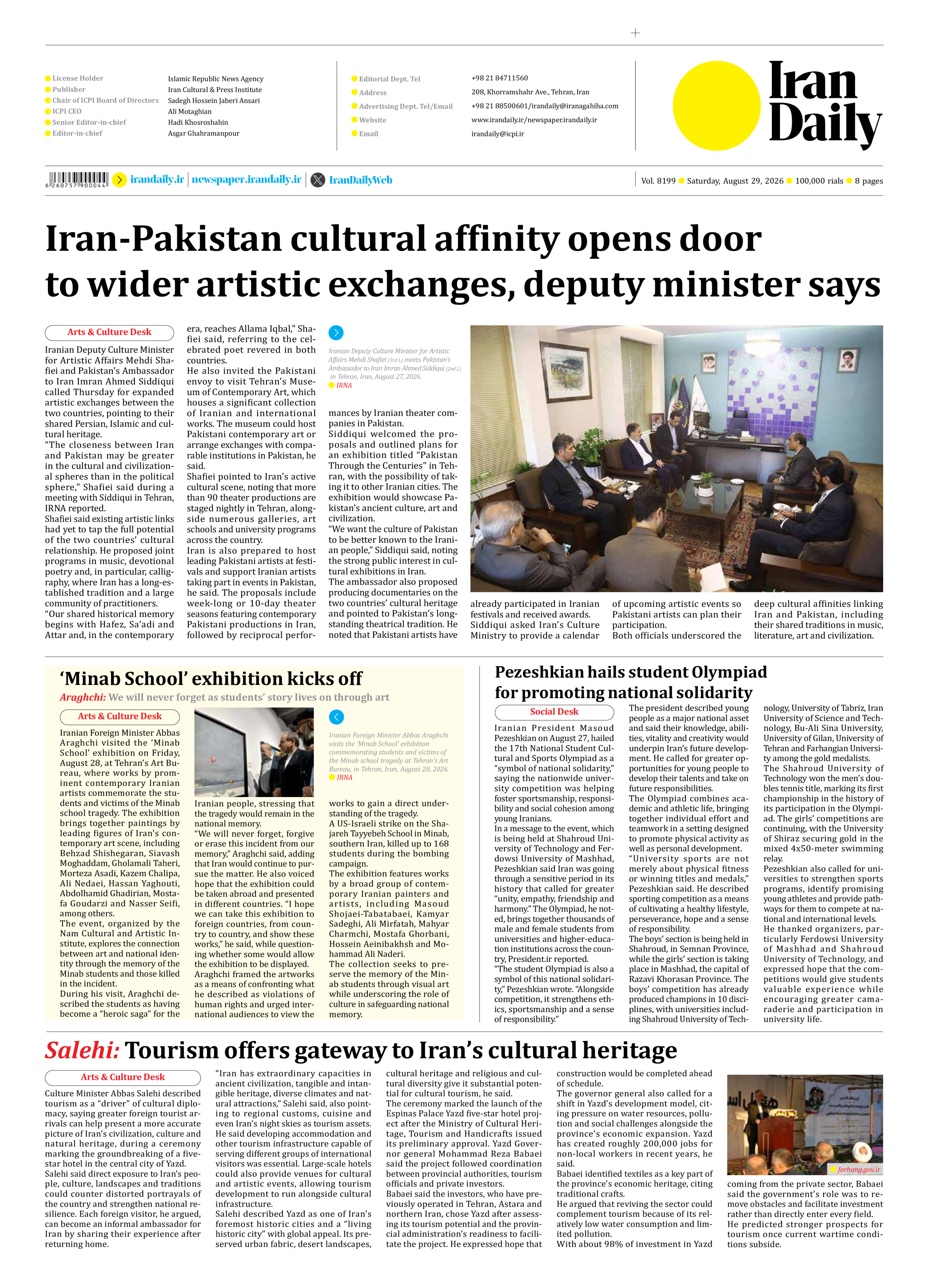
Culture Minister Abbas Salehi described tourism as a “driver” of cultural diplomacy, saying greater foreign tourist arrivals can help present a more accurate picture of Iran’s civilization, culture and natural heritage, during a ceremony marking the groundbreaking of a five-star hotel in the central city of Yazd.
Salehi said direct exposure to Iran’s people, culture, landscapes and traditions could counter distorted portrayals of the country and strengthen national resilience. Each foreign visitor, he argued, can become an informal ambassador for Iran by sharing their experience after returning home.
“Iran has extraordinary capacities in ancient civilization, tangible and intangible heritage, diverse climates and natural attractions,” Salehi said, also pointing to regional customs, cuisine and even Iran’s night skies as tourism assets.
He said developing accommodation and other tourism infrastructure capable of serving different groups of international visitors was essential. Large-scale hotels could also provide venues for cultural and artistic events, allowing tourism development to run alongside cultural infrastructure.
Salehi described Yazd as one of Iran’s foremost historic cities and a “living historic city” with global appeal. Its preserved urban fabric, desert landscapes, cultural heritage and religious and cultural diversity give it substantial potential for cultural tourism, he said.
The ceremony marked the launch of the Espinas Palace Yazd five-star hotel project after the Ministry of Cultural Heritage, Tourism and Handicrafts issued its preliminary approval. Yazd Governor general Mohammad Reza Babaei said the project followed coordination between provincial authorities, tourism officials and private investors.
Babaei said the investors, who have previously operated in Tehran, Astara and northern Iran, chose Yazd after assessing its tourism potential and the provincial administration’s readiness to facilitate the project. He expressed hope that construction would be completed ahead of schedule.
The governor general also called for a shift in Yazd’s development model, citing pressure on water resources, pollution and social challenges alongside the province’s economic expansion. Yazd has created roughly 200,000 jobs for non-local workers in recent years, he said.
Babaei identified textiles as a key part of the province’s economic heritage, citing traditional crafts.
He argued that reviving the sector could complement tourism because of its relatively low water consumption and limited pollution.
With about 98% of investment in Yazd coming from the private sector, Babaei said the government’s role was to remove obstacles and facilitate investment rather than directly enter every field.
He predicted stronger prospects for tourism once current wartime conditions subside.