







100m cubic meters of war-hit gas capacity expected to return by October
Iran expects around 100 million cubic meters of lost gas production capacity to be restored to the national grid by October as war-damaged gas refineries return to operation, an official with the National Iranian Gas Company said Wednesday.
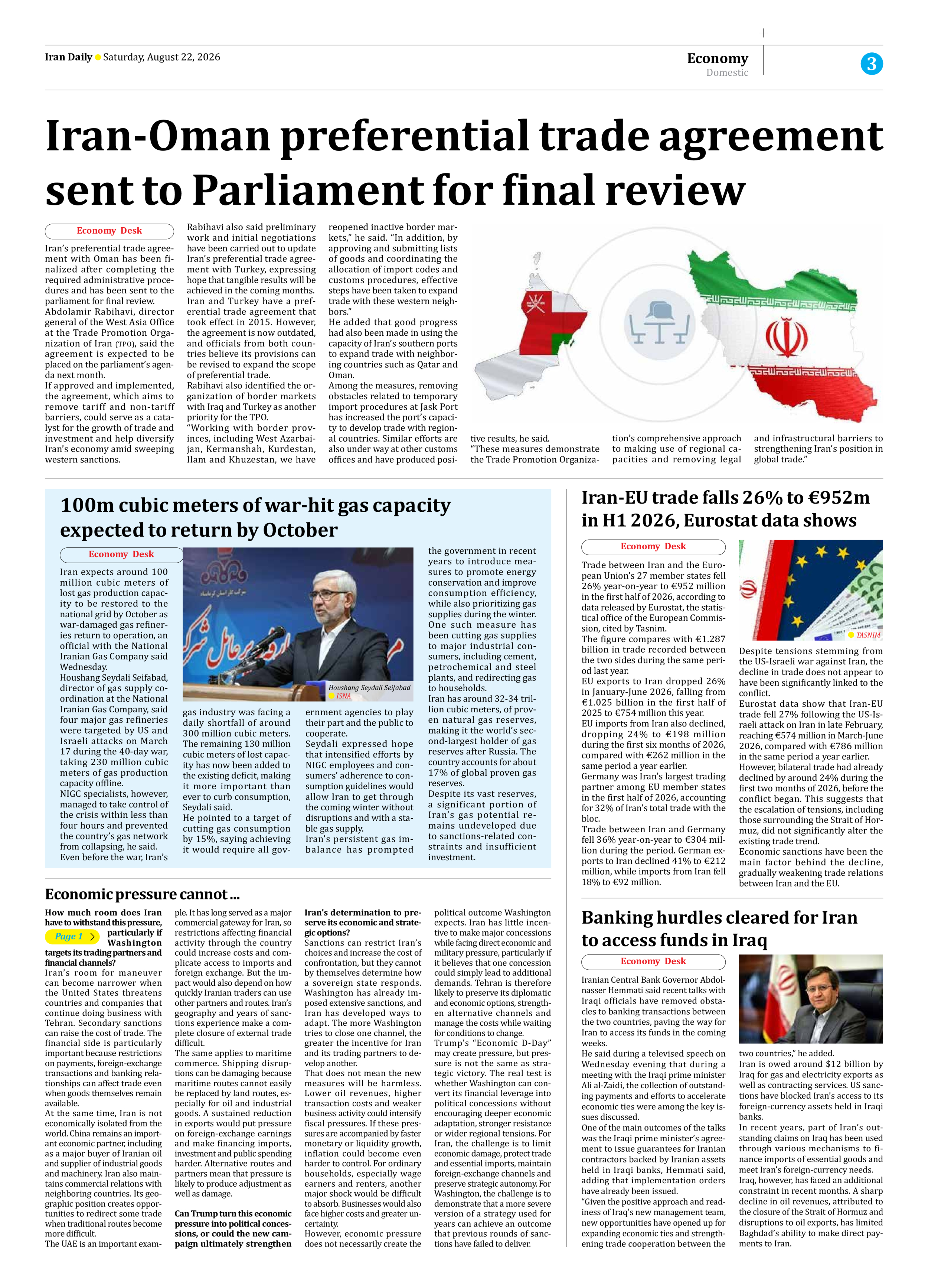
Houshang Seydali Seifabad, director of gas supply coordination at the National Iranian Gas Company, said four major gas refineries were targeted by US and Israeli attacks on March 17 during the 40-day war, taking 230 million cubic meters of gas production capacity offline.
NIGC specialists, however, managed to take control of the crisis within less than four hours and prevented the country’s gas network from collapsing, he said.
Even before the war, Iran’s gas industry was facing a daily shortfall of around 300 million cubic meters. The remaining 130 million cubic meters of lost capacity has now been added to the existing deficit, making it more important than ever to curb consumption, Seydali said.
He pointed to a target of cutting gas consumption by 15%, saying achieving it would require all government agencies to play their part and the public to cooperate.
Seydali expressed hope that intensified efforts by NIGC employees and consumers’ adherence to consumption guidelines would allow Iran to get through the coming winter without disruptions and with a stable gas supply.
Iran’s persistent gas imbalance has prompted the government in recent years to introduce measures to promote energy conservation and improve consumption efficiency, while also prioritizing gas supplies during the winter.
One such measure has been cutting gas supplies to major industrial consumers, including cement, petrochemical and steel plants, and redirecting gas to households.
Iran has around 32-34 trillion cubic meters, of proven natural gas reserves, making it the world’s second-largest holder of gas reserves after Russia. The country accounts for about 17% of global proven gas reserves.
Despite its vast reserves, a significant portion of Iran’s gas potential remains undeveloped due to sanctions-related constraints and insufficient investment.