





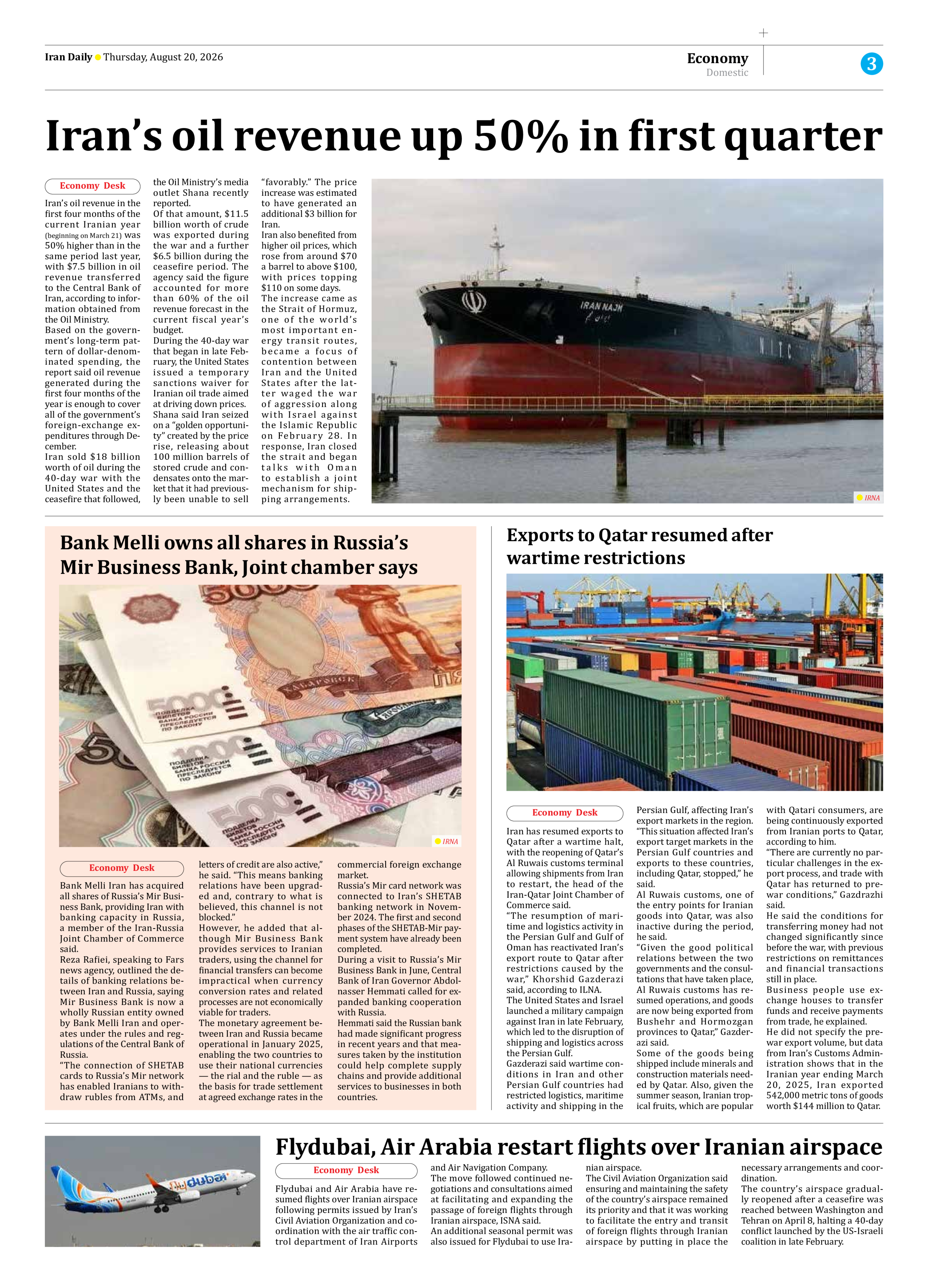


Iran’s oil revenue up 50% in first quarter
Iran’s oil revenue in the first four months of the current Iranian year (beginning on March 21) was 50% higher than in the same period last year, with $7.5 billion in oil revenue transferred to the Central Bank of Iran, according to information obtained from the Oil Ministry.
Based on the government’s long-term pattern of dollar-denominated spending, the report said oil revenue generated during the first four months of the year is enough to cover all of the government’s foreign-exchange expenditures through December.
Iran sold $18 billion worth of oil during the 40-day war with the United States and the ceasefire that followed, the Oil Ministry’s media outlet Shana recently reported.
Of that amount, $11.5 billion worth of crude was exported during the war and a further $6.5 billion during the ceasefire period. The agency said the figure accounted for more than 60% of the oil revenue forecast in the current fiscal year’s budget.
During the 40-day war that began in late February, the United States issued a temporary sanctions waiver for Iranian oil trade aimed at driving down prices.
Shana said Iran seized on a “golden opportunity” created by the price rise, releasing about 100 million barrels of stored crude and condensates onto the market that it had previously been unable to sell “favorably.” The price increase was estimated to have generated an additional $3 billion for Iran.
Iran also benefited from higher oil prices, which rose from around $70 a barrel to above $100, with prices topping $110 on some days.
The increase came as the Strait of Hormuz, one of the world’s most important energy transit routes, became a focus of contention between Iran and the United States after the latter waged the war of aggression along with Israel against the Islamic Republic on February 28. In response, Iran closed the strait and began talks with Oman to establish a joint mechanism for shipping arrangements.