







Pezeshkian calls for development plans based on Iran’s territorial advantages, limits
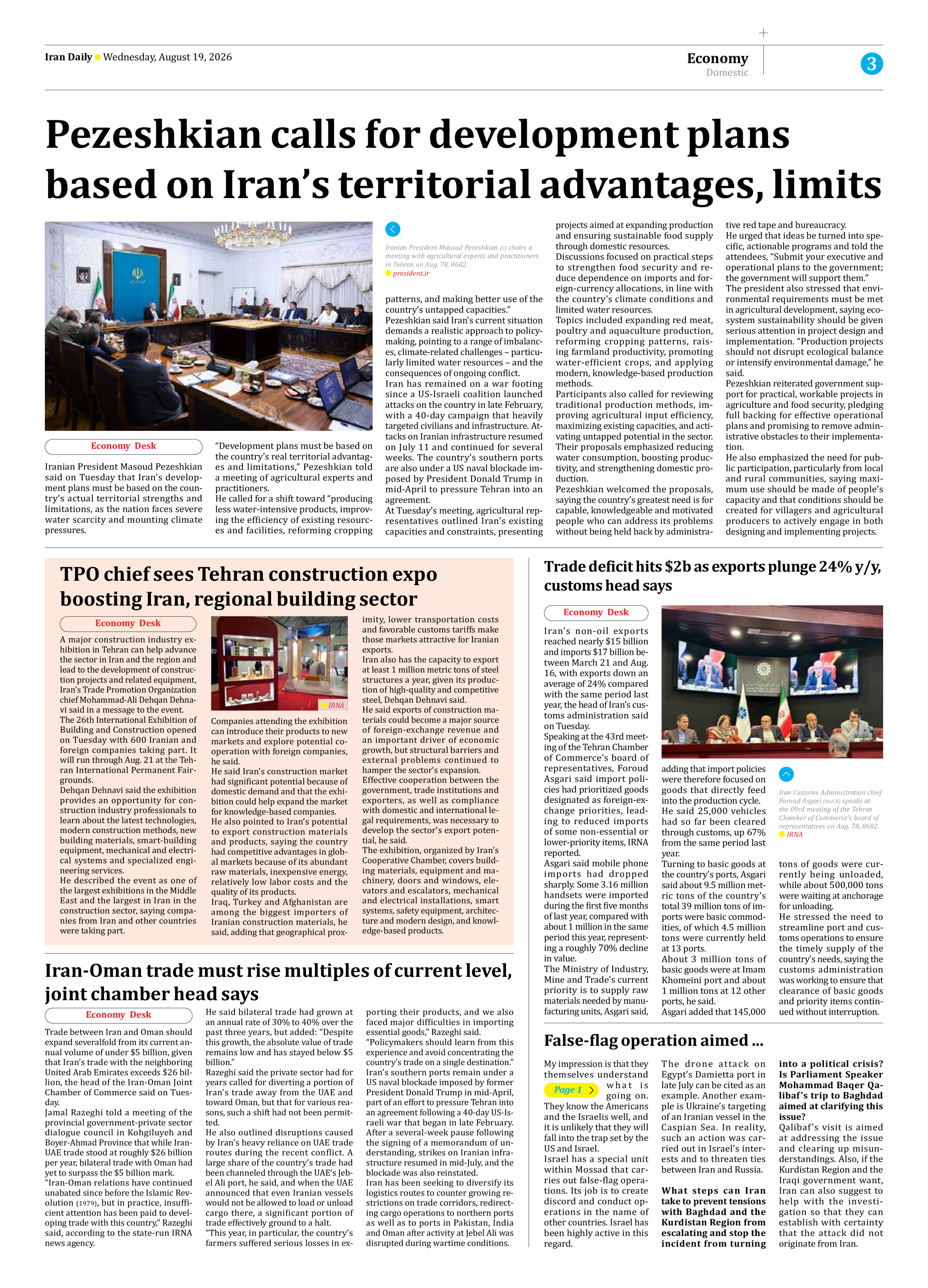
Iranian President Masoud Pezeshkian said on Tuesday that Iran’s development plans must be based on the country’s actual territorial strengths and limitations, as the nation faces severe water scarcity and mounting climate pressures.
“Development plans must be based on the country’s real territorial advantages and limitations,” Pezeshkian told a meeting of agricultural experts and practitioners.
He called for a shift toward “producing less water-intensive products, improving the efficiency of existing resources and facilities, reforming cropping patterns, and making better use of the country’s untapped capacities.”
Pezeshkian said Iran’s current situation demands a realistic approach to policymaking, pointing to a range of imbalances, climate-related challenges – particularly limited water resources – and the consequences of ongoing conflict.
Iran has remained on a war footing since a US-Israeli coalition launched attacks on the country in late February, with a 40-day campaign that heavily targeted civilians and infrastructure. Attacks on Iranian infrastructure resumed on July 11 and continued for several weeks. The country’s southern ports are also under a US naval blockade imposed by President Donald Trump in mid-April to pressure Tehran into an agreement.
At Tuesday’s meeting, agricultural representatives outlined Iran’s existing capacities and constraints, presenting projects aimed at expanding production and ensuring sustainable food supply through domestic resources.
Discussions focused on practical steps to strengthen food security and reduce dependence on imports and foreign-currency allocations, in line with the country’s climate conditions and limited water resources.
Topics included expanding red meat, poultry and aquaculture production, reforming cropping patterns, raising farmland productivity, promoting water-efficient crops, and applying modern, knowledge-based production methods.
Participants also called for reviewing traditional production methods, improving agricultural input efficiency, maximizing existing capacities, and activating untapped potential in the sector. Their proposals emphasized reducing water consumption, boosting productivity, and strengthening domestic production.
Pezeshkian welcomed the proposals, saying the country’s greatest need is for capable, knowledgeable and motivated people who can address its problems without being held back by administrative red tape and bureaucracy.
He urged that ideas be turned into specific, actionable programs and told the attendees, “Submit your executive and operational plans to the government; the government will support them.”
The president also stressed that environmental requirements must be met in agricultural development, saying ecosystem sustainability should be given serious attention in project design and implementation. “Production projects should not disrupt ecological balance or intensify environmental damage,” he said.
Pezeshkian reiterated government support for practical, workable projects in agriculture and food security, pledging full backing for effective operational plans and promising to remove administrative obstacles to their implementation.
He also emphasized the need for public participation, particularly from local and rural communities, saying maximum use should be made of people’s capacity and that conditions should be created for villagers and agricultural producers to actively engage in both designing and implementing projects.