







Strait of Hormuz to remain shut until US meets Islamabad MoU conditions: Qalibaf
The Strait of Hormuz will remain shut until the US meets the conditions of an interim deal signed with Iran in June, the top Iranian negotiator Mohammad Baqer Qalibaf said on Tuesday.
These conditions include the US lifting its blockade of Iranian ports, lifting oil sanctions, releasing Tehran’s frozen assets, and ending threats and military operations on all fronts, Qalibaf told parliament.
The memorandum of understanding, clinched on June 17, quickly unraveled over a dispute about control of the Strait of Hormuz, the narrow waterway through which a fifth of global oil and liquefied natural gas flowed before the war.
Under the MoU, Iran and the US had committed to negotiating a final deal — covering broader issues such as the fate of Iran’s nuclear program and sanctions — in a maximum of 60 days, extendable by mutual consent.
The US began attacking Iran in July after Washington violated the terms of the Islamabad Memorandum of Understanding, which was meant to permanently end the war that the US and Israeli regime unleashed against Iran in late February.
The understanding had recognized Iran’s rights and sovereignty over the Strait of Hormuz, and said Iran was responsible for removing restrictions that it has imposed over the Strait of Hormuz for vessels affiliated with aggressors and their supporters since the start of the aggression on February 28. However, the US attempted to undermine Iran’s sovereignty by establishing an unsafe corridor near the Omani shores.
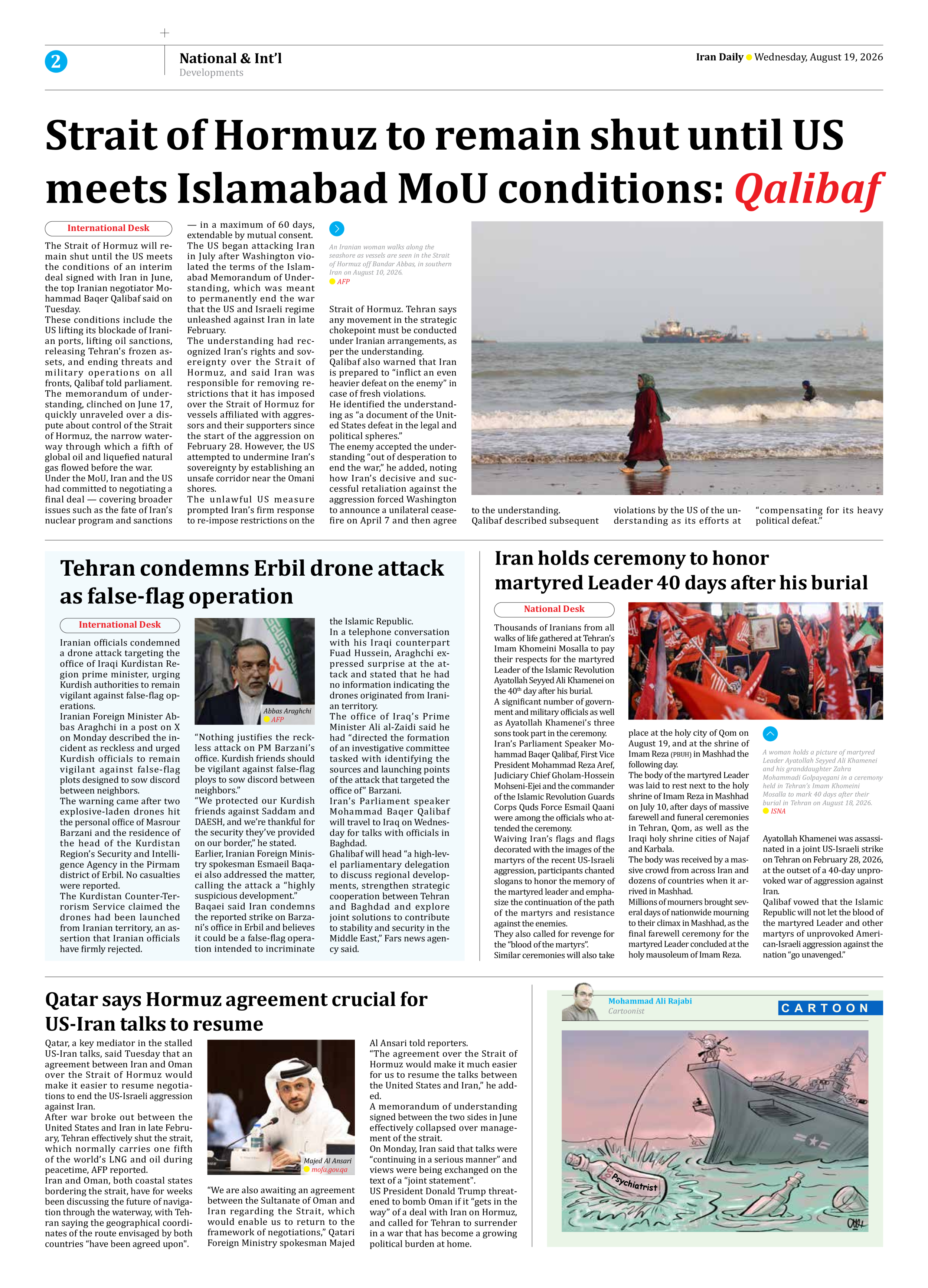
The unlawful US measure prompted Iran’s firm response to re-impose restrictions on the Strait of Hormuz. Tehran says any movement in the strategic chokepoint must be conducted under Iranian arrangements, as per the understanding.
Qalibaf also warned that Iran is prepared to “inflict an even heavier defeat on the enemy” in case of fresh violations.
He identified the understanding as “a document of the United States defeat in the legal and political spheres.”
The enemy accepted the understanding “out of desperation to end the war,” he added, noting how Iran’s decisive and successful retaliation against the aggression forced Washington to announce a unilateral ceasefire on April 7 and then agree to the understanding.
Qalibaf described subsequent violations by the US of the understanding as its efforts at “compensating for its heavy political defeat.”