







Yazd demonstrates Iran’s living heritage, desert culture
Sometimes, “understanding Iran does not require traveling all across the country. It is enough to walk through Yazd’s mud-brick alleys, rest beneath the shade of a centuries-old Sabat, a covered passageway, feel the breeze from a traditional windcatcher and spend a night beneath the star-filled desert sky. Then it becomes clear that Yazd is more than a tourist destination: it is a living story of Iran, preserved in every brick, windcatcher, Sabat, Persian garden and in the hands of the region’s artisans.
Seyyed Mohammad Rostami, director general of Yazd’s Cultural Heritage, Tourism and Handicrafts Department, said the province represents Iranian ingenuity in adapting to the desert climate and is one of the world’s most authentic cultural tourism destinations, according to chtn.ir.
“Yazd is known not only for its historic sites and world heritage inscriptions, but also as a living expression of Iranian culture, civilization, architecture, handicrafts, rituals and way of life,” he said. “From the World Heritage city of Yazd to Persian gardens, historic caravanserais, tourism villages, tranquil desert nights and the craftsmanship of local artisans, the province offers visitors an enduring experience.”
Yazd, he said, is the product of centuries of intelligent coexistence between people and the desert environment. Its residents have drawn on knowledge, creativity and a deep understanding of the local climate to turn wind into windcatchers, water into qanats, earth into enduring architecture and art into an inseparable part of the region’s identity.
“Today, the province is not only a valuable legacy from the past, but also a living model of Iranian culture, sustainability and way of life,” Rostami said.
He noted that the inscription of the historic city of Yazd on UNESCO’s World Heritage List represented more than the recognition of a city.
“It was also the recognition of a way of life, climate-adapted architecture, intelligent water management and a culture that has preserved its authenticity over centuries and continues to inspire people around the world,” he said.
Yazd, he added, should not simply be viewed but experienced. From walking through mud-brick alleys and narrow passages known locally as Koocheh-ye Ashti-Konan to passing through cool Sabats, visitors can see windcatchers that still channel breezes into historic homes and explore markets and neighborhoods where everyday life continues.
Rostami pointed to the province’s potential for summer tourism, saying that although the desert is associated with heat, Yazd’s traditional architecture developed sophisticated ways of coping with the climate centuries ago.
At sunset, the city takes on a different character, Rostami said. The gentle desert breeze, illuminated historic buildings, quiet mud-brick alleys and star-filled sky create exceptional conditions for nighttime tourism, combining tranquility, authenticity and beauty.
He said Yazd offers a different face of Iran in every season, adding that the current period of desert travel and clear, starry nights provides an especially appealing opportunity to experience the province.
“As the heat of the day subsides, the historic district comes alive again,” Rostami said. “The warm glow of its earthen walls, the quiet of the Sabats, life in the historic neighborhoods and the star-filled desert sky offer visitors a unique experience of tranquility and authenticity.”
The official added that Yazd’s architecture was not simply a legacy of the past but the product of centuries of knowledge, experience and adaptation to the desert climate.
“Windcatchers, Sabats, water reservoirs, qanats and mud-brick houses represent Iranian ingenuity in creating sustainable habitats,” he said, adding that the heritage continues to fascinate and inspire both domestic and international visitors.
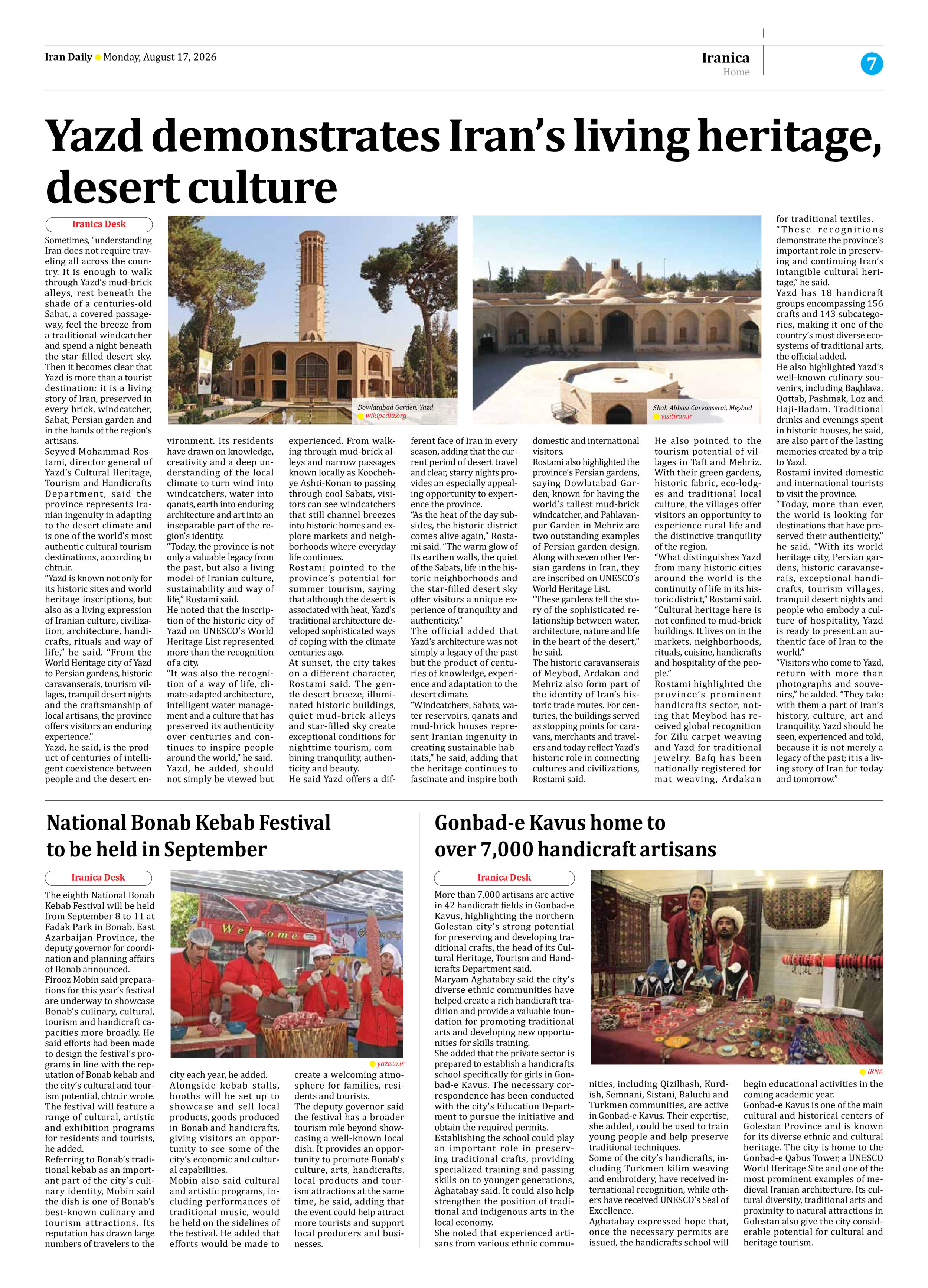
Rostami also highlighted the province’s Persian gardens, saying Dowlatabad Garden, known for having the world’s tallest mud-brick windcatcher, and Pahlavanpur Garden in Mehriz are two outstanding examples of Persian garden design. Along with seven other Persian gardens in Iran, they are inscribed on UNESCO’s World Heritage List.
“These gardens tell the story of the sophisticated relationship between water, architecture, nature and life in the heart of the desert,” he said.
The historic caravanserais of Meybod, Ardakan and Mehriz also form part of the identity of Iran’s historic trade routes. For centuries, the buildings served as stopping points for caravans, merchants and travelers and today reflect Yazd’s historic role in connecting cultures and civilizations, Rostami said.
He also pointed to the tourism potential of villages in Taft and Mehriz. With their green gardens, historic fabric, eco-lodges and traditional local culture, the villages offer visitors an opportunity to experience rural life and the distinctive tranquility of the region.
“What distinguishes Yazd from many historic cities around the world is the continuity of life in its historic district,” Rostami said. “Cultural heritage here is not confined to mud-brick buildings. It lives on in the markets, neighborhoods, rituals, cuisine, handicrafts and hospitality of the people.”
Rostami highlighted the province’s prominent handicrafts sector, noting that Meybod has received global recognition for Zilu carpet weaving and Yazd for traditional jewelry. Bafq has been nationally registered for mat weaving, Ardakan for traditional textiles.
“These recognitions demonstrate the province’s important role in preserving and continuing Iran’s intangible cultural heritage,” he said.
Yazd has 18 handicraft groups encompassing 156 crafts and 143 subcategories, making it one of the country’s most diverse ecosystems of traditional arts, the official added.
He also highlighted Yazd’s well-known culinary souvenirs, including Baghlava, Qottab, Pashmak, Loz and Haji-Badam. Traditional drinks and evenings spent in historic houses, he said, are also part of the lasting memories created by a trip to Yazd.
Rostami invited domestic and international tourists to visit the province.
“Today, more than ever, the world is looking for destinations that have preserved their authenticity,” he said. “With its world heritage city, Persian gardens, historic caravanserais, exceptional handicrafts, tourism villages, tranquil desert nights and people who embody a culture of hospitality, Yazd is ready to present an authentic face of Iran to the world.”
“Visitors who come to Yazd, return with more than photographs and souvenirs,” he added. “They take with them a part of Iran’s history, culture, art and tranquility. Yazd should be seen, experienced and told, because it is not merely a legacy of the past; it is a living story of Iran for today and tomorrow.”