







Islamabad MoU calls for ‘end to war’, not ceasefire: Araghchi
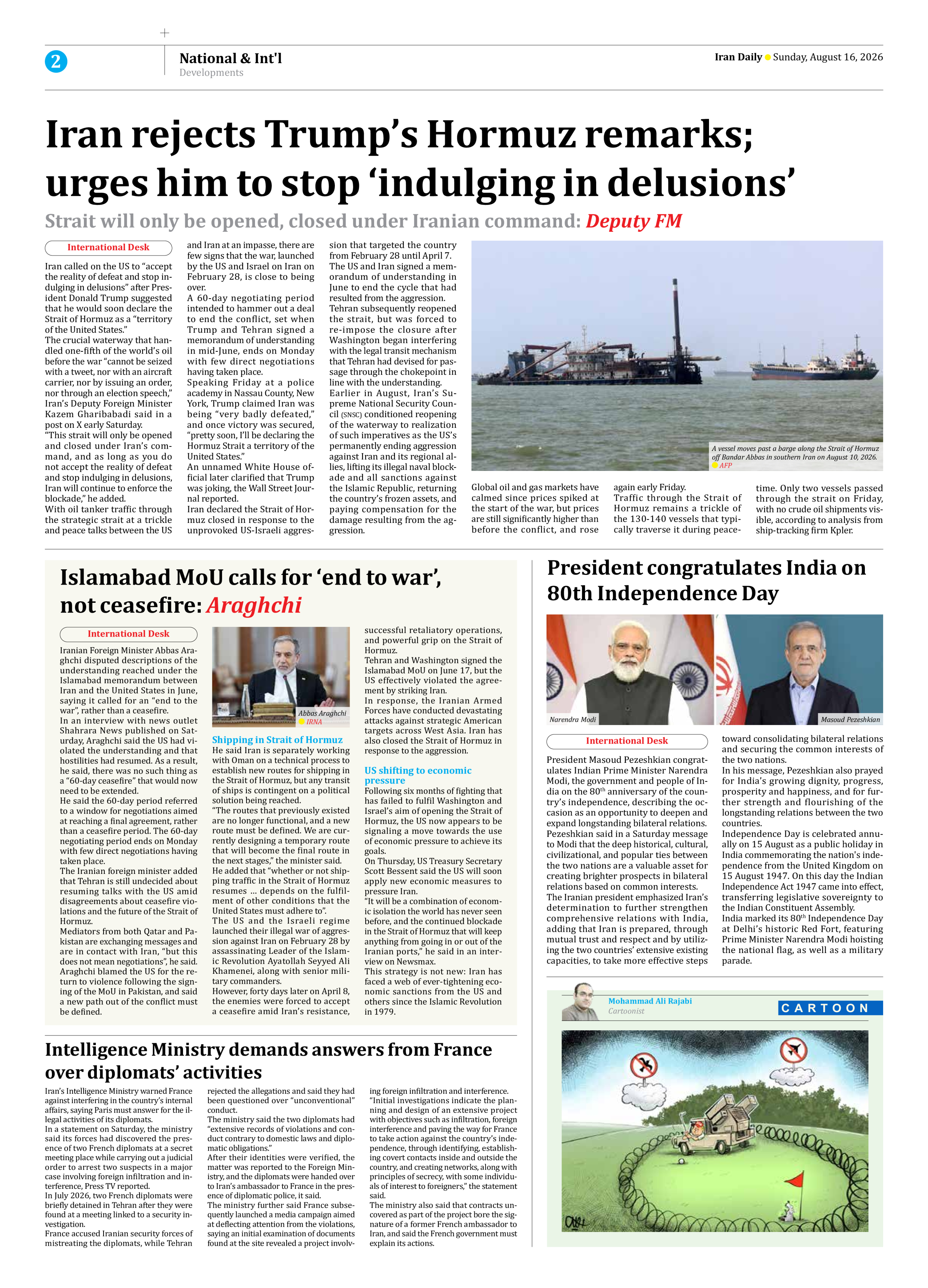
Iranian Foreign Minister Abbas Araghchi disputed descriptions of the understanding reached under the Islamabad memorandum between Iran and the United States in June, saying it called for an “end to the war”, rather than a ceasefire.
In an interview with news outlet Shahrara News published on Saturday, Araghchi said the US had violated the understanding and that hostilities had resumed. As a result, he said, there was no such thing as a “60-day ceasefire” that would now need to be extended.
He said the 60-day period referred to a window for negotiations aimed at reaching a final agreement, rather than a ceasefire period. The 60-day negotiating period ends on Monday with few direct negotiations having taken place.
The Iranian foreign minister added that Tehran is still undecided about resuming talks with the US amid disagreements about ceasefire violations and the future of the Strait of Hormuz.
Mediators from both Qatar and Pakistan are exchanging messages and are in contact with Iran, “but this does not mean negotiations”, he said.
Araghchi blamed the US for the return to violence following the signing of the MoU in Pakistan, and said a new path out of the conflict must be defined.
Shipping in Strait of Hormuz
He said Iran is separately working with Oman on a technical process to establish new routes for shipping in the Strait of Hormuz, but any transit of ships is contingent on a political solution being reached.
“The routes that previously existed are no longer functional, and a new route must be defined. We are currently designing a temporary route that will become the final route in the next stages,” the minister said.
He added that “whether or not shipping traffic in the Strait of Hormuz resumes … depends on the fulfilment of other conditions that the United States must adhere to”.
The US and the Israeli regime launched their illegal war of aggression against Iran on February 28 by assassinating Leader of the Islamic Revolution Ayatollah Seyyed Ali Khamenei, along with senior military commanders.
However, forty days later on April 8, the enemies were forced to accept a ceasefire amid Iran’s resistance, successful retaliatory operations, and powerful grip on the Strait of Hormuz.
Tehran and Washington signed the Islamabad MoU on June 17, but the US effectively violated the agreement by striking Iran.
In response, the Iranian Armed Forces have conducted devastating attacks against strategic American targets across West Asia. Iran has also closed the Strait of Hormuz in response to the aggression.
US shifting to economic pressure
Following six months of fighting that has failed to fulfil Washington and Israel’s aim of opening the Strait of Hormuz, the US now appears to be signaling a move towards the use of economic pressure to achieve its goals.
On Thursday, US Treasury Secretary Scott Bessent said the US will soon apply new economic measures to pressure Iran.
“It will be a combination of economic isolation the world has never seen before, and the continued blockade in the Strait of Hormuz that will keep anything from going in or out of the Iranian ports,” he said in an interview on Newsmax.
This strategy is not new: Iran has faced a web of ever-tightening economic sanctions from the US and others since the Islamic Revolution in 1979.