





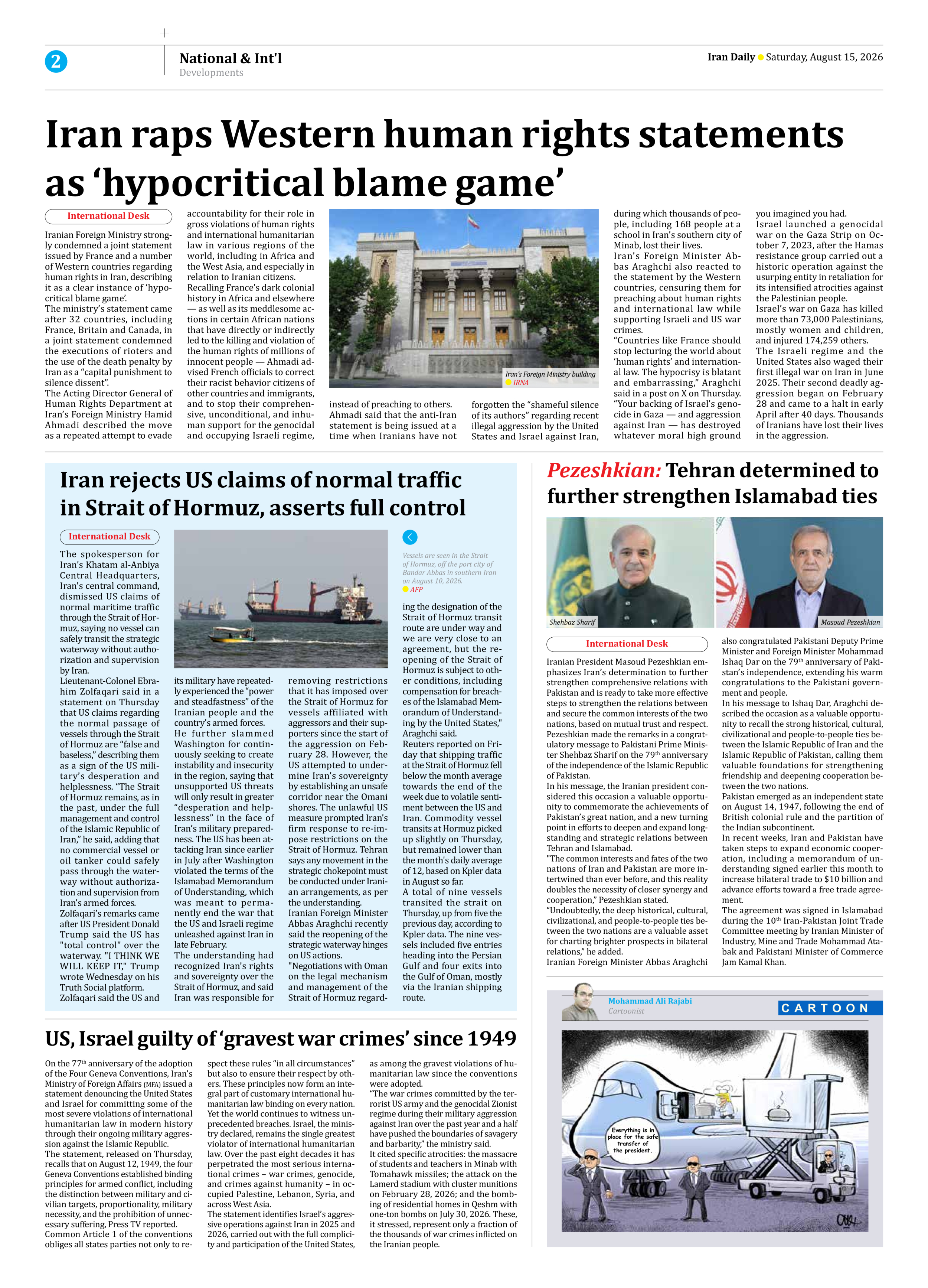


Iran rejects US claims of normal traffic in Strait of Hormuz, asserts full control
The spokesperson for Iran’s Khatam al-Anbiya Central Headquarters, Iran's central command, dismissed US claims of normal maritime traffic through the Strait of Hormuz, saying no vessel can safely transit the strategic waterway without authorization and supervision by Iran.
Lieutenant-Colonel Ebrahim Zolfaqari said in a statement on Thursday that US claims regarding the normal passage of vessels through the Strait of Hormuz are “false and baseless,” describing them as a sign of the US military’s desperation and helplessness. “The Strait of Hormuz remains, as in the past, under the full management and control of the Islamic Republic of Iran,” he said, adding that no commercial vessel or oil tanker could safely pass through the waterway without authorization and supervision from Iran’s armed forces.
Zolfaqari’s remarks came after US President Donald Trump said the US has "total control" over the waterway. "I THINK WE WILL KEEP IT," Trump wrote Wednesday on his Truth Social platform.
Zolfaqari said the US and its military have repeatedly experienced the “power and steadfastness” of the Iranian people and the country’s armed forces.
He further slammed Washington for continuously seeking to create instability and insecurity in the region, saying that unsupported US threats will only result in greater “desperation and helplessness” in the face of Iran’s military preparedness. The US has been attacking Iran since earlier in July after Washington violated the terms of the Islamabad Memorandum of Understanding, which was meant to permanently end the war that the US and Israeli regime unleashed against Iran in late February.
The understanding had recognized Iran’s rights and sovereignty over the Strait of Hormuz, and said Iran was responsible for removing restrictions that it has imposed over the Strait of Hormuz for vessels affiliated with aggressors and their supporters since the start of the aggression on February 28. However, the US attempted to undermine Iran’s sovereignty by establishing an unsafe corridor near the Omani shores. The unlawful US measure prompted Iran’s firm response to re-impose restrictions on the Strait of Hormuz. Tehran says any movement in the strategic chokepoint must be conducted under Iranian arrangements, as per the understanding.
Iranian Foreign Minister Abbas Araghchi recently said the reopening of the strategic waterway hinges on US actions.
"Negotiations with Oman on the legal mechanism and management of the Strait of Hormuz regarding the designation of the Strait of Hormuz transit route are under way and we are very close to an agreement, but the reopening of the Strait of Hormuz is subject to other conditions, including compensation for breaches of the Islamabad Memorandum of Understanding by the United States," Araghchi said.
Reuters reported on Friday that shipping traffic at the Strait of Hormuz fell below the month average towards the end of the week due to volatile sentiment between the US and Iran. Commodity vessel transits at Hormuz picked up slightly on Thursday, but remained lower than the month's daily average of 12, based on Kpler data in August so far.
A total of nine vessels transited the strait on Thursday, up from five the previous day, according to Kpler data. The nine vessels included five entries heading into the Persian Gulf and four exits into the Gulf of Oman, mostly via the Iranian shipping route.