







FAO forecasts Iran’s grain output at 21.6m tons in 2026
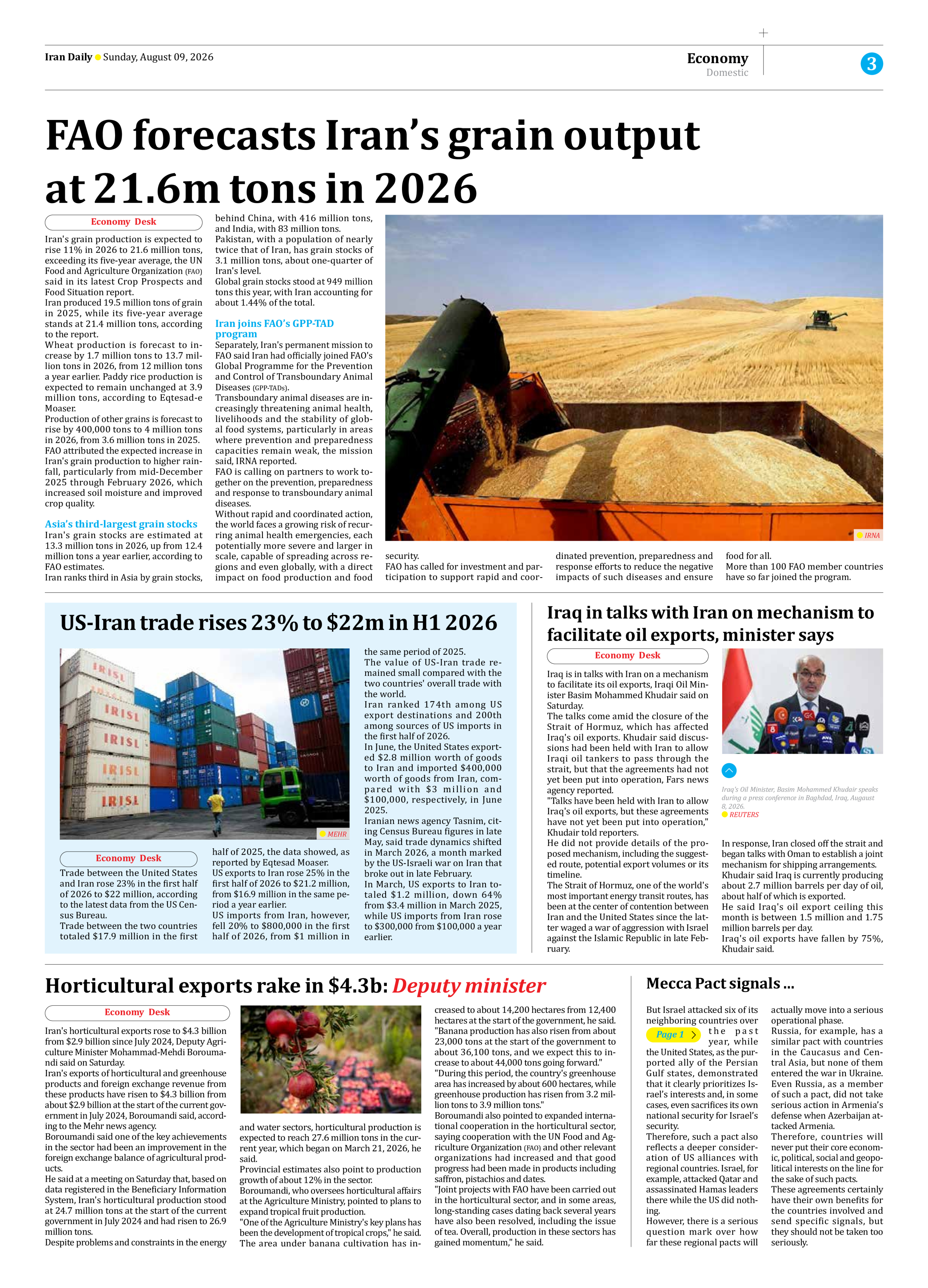
Iran's grain production is expected to rise 11% in 2026 to 21.6 million tons, exceeding its five-year average, the UN Food and Agriculture Organization (FAO) said in its latest Crop Prospects and Food Situation report.
Iran produced 19.5 million tons of grain in 2025, while its five-year average stands at 21.4 million tons, according to the report.
Wheat production is forecast to increase by 1.7 million tons to 13.7 million tons in 2026, from 12 million tons a year earlier. Paddy rice production is expected to remain unchanged at 3.9 million tons, according to Eqtesad-e Moaser.
Production of other grains is forecast to rise by 400,000 tons to 4 million tons in 2026, from 3.6 million tons in 2025.
FAO attributed the expected increase in Iran's grain production to higher rainfall, particularly from mid-December 2025 through February 2026, which increased soil moisture and improved crop quality.
Asia’s third-largest grain stocks
Iran's grain stocks are estimated at 13.3 million tons in 2026, up from 12.4 million tons a year earlier, according to FAO estimates.
Iran ranks third in Asia by grain stocks, behind China, with 416 million tons, and India, with 83 million tons.
Pakistan, with a population of nearly twice that of Iran, has grain stocks of 3.1 million tons, about one-quarter of Iran's level.
Global grain stocks stood at 949 million tons this year, with Iran accounting for about 1.44% of the total.
Iran joins FAO’s GPP-TAD program
Separately, Iran's permanent mission to FAO said Iran had officially joined FAO's Global Programme for the Prevention and Control of Transboundary Animal Diseases (GPP-TADs).
Transboundary animal diseases are increasingly threatening animal health, livelihoods and the stability of global food systems, particularly in areas where prevention and preparedness capacities remain weak, the mission said, IRNA reported.
FAO is calling on partners to work together on the prevention, preparedness and response to transboundary animal diseases.
Without rapid and coordinated action, the world faces a growing risk of recurring animal health emergencies, each potentially more severe and larger in scale, capable of spreading across regions and even globally, with a direct impact on food production and food security.
FAO has called for investment and participation to support rapid and coordinated prevention, preparedness and response efforts to reduce the negative impacts of such diseases and ensure food for all.
More than 100 FAO member countries have so far joined the program.