







Copy in clipboard...
Diplomacy continues in wartime, with language suited to new realities: Deputy FM
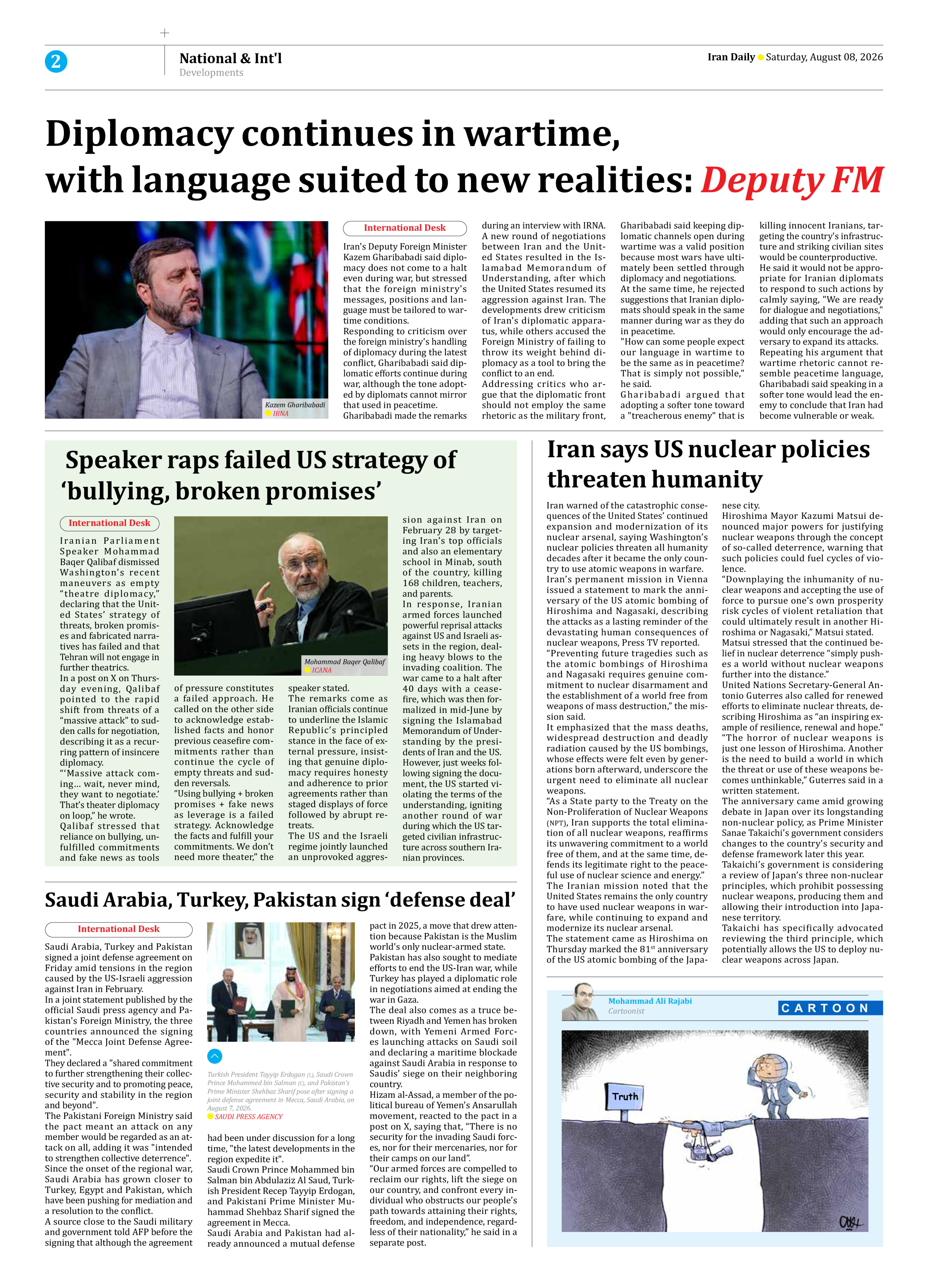
Iran's Deputy Foreign Minister Kazem Gharibabadi said diplomacy does not come to a halt even during war, but stressed that the foreign ministry's messages, positions and language must be tailored to wartime conditions.
Responding to criticism over the foreign ministry's handling of diplomacy during the latest conflict, Gharibabadi said diplomatic efforts continue during war, although the tone adopted by diplomats cannot mirror that used in peacetime.
Gharibabadi made the remarks during an interview with IRNA.
A new round of negotiations between Iran and the United States resulted in the Islamabad Memorandum of Understanding, after which the United States resumed its aggression against Iran. The developments drew criticism of Iran's diplomatic apparatus, while others accused the Foreign Ministry of failing to throw its weight behind diplomacy as a tool to bring the conflict to an end.
Addressing critics who argue that the diplomatic front should not employ the same rhetoric as the military front, Gharibabadi said keeping diplomatic channels open during wartime was a valid position because most wars have ultimately been settled through diplomacy and negotiations.
At the same time, he rejected suggestions that Iranian diplomats should speak in the same manner during war as they do in peacetime.
"How can some people expect our language in wartime to be the same as in peacetime? That is simply not possible," he said.
Gharibabadi argued that adopting a softer tone toward a "treacherous enemy" that is killing innocent Iranians, targeting the country's infrastructure and striking civilian sites would be counterproductive.
He said it would not be appropriate for Iranian diplomats to respond to such actions by calmly saying, "We are ready for dialogue and negotiations," adding that such an approach would only encourage the adversary to expand its attacks.
Repeating his argument that wartime rhetoric cannot resemble peacetime language, Gharibabadi said speaking in a softer tone would lead the enemy to conclude that Iran had become vulnerable or weak.