







Population tops 87m as Iran gears up for first digital census
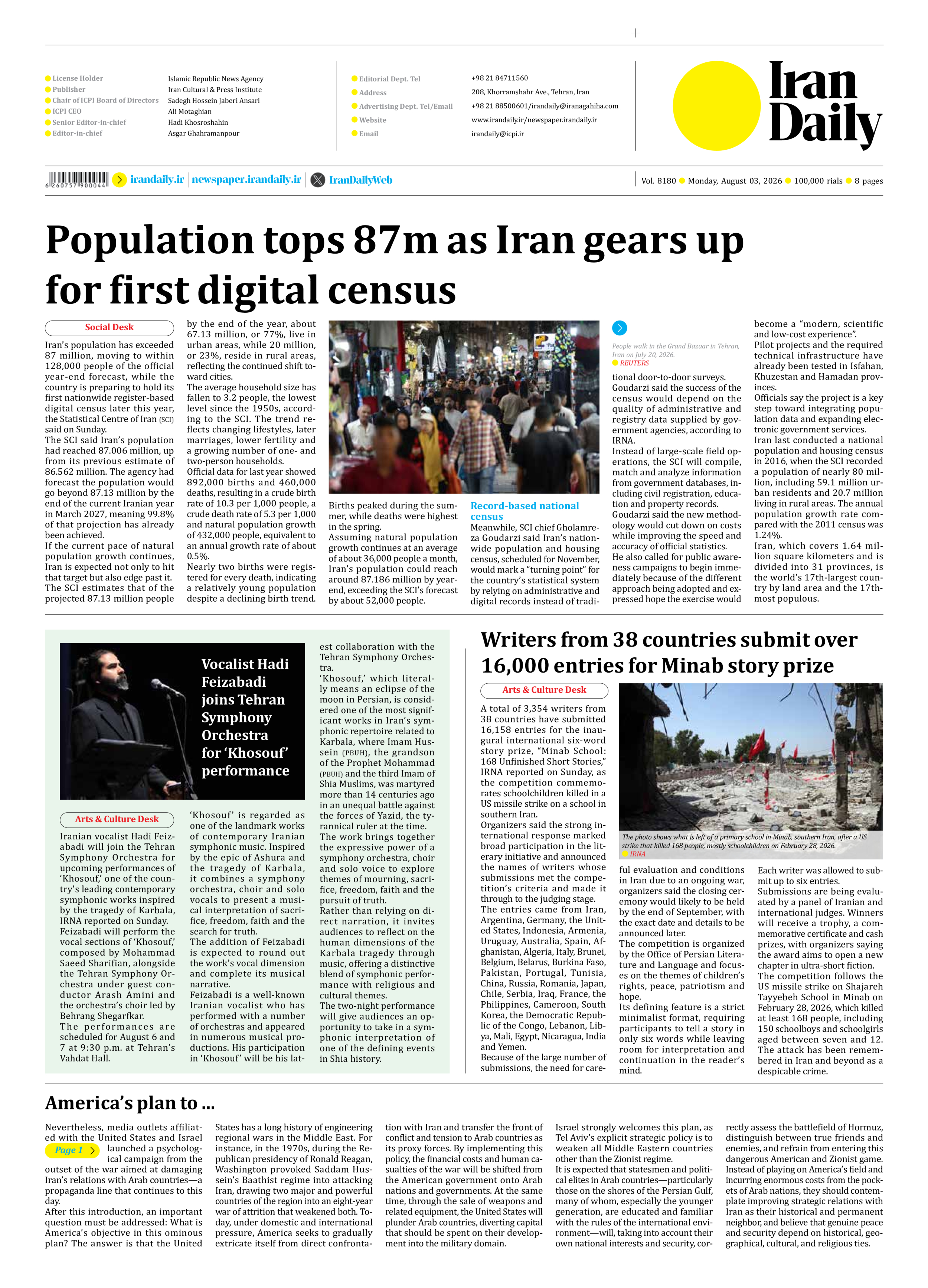
Iran’s population has exceeded 87 million, moving to within 128,000 people of the official year-end forecast, while the country is preparing to hold its first nationwide register-based digital census later this year, the Statistical Centre of Iran (SCI) said on Sunday.
The SCI said Iran’s population had reached 87.006 million, up from its previous estimate of 86.562 million. The agency had forecast the population would go beyond 87.13 million by the end of the current Iranian year in March 2027, meaning 99.8% of that projection has already been achieved.
If the current pace of natural population growth continues, Iran is expected not only to hit that target but also edge past it.
The SCI estimates that of the projected 87.13 million people by the end of the year, about 67.13 million, or 77%, live in urban areas, while 20 million, or 23%, reside in rural areas, reflecting the continued shift toward cities.
The average household size has fallen to 3.2 people, the lowest level since the 1950s, according to the SCI. The trend reflects changing lifestyles, later marriages, lower fertility and a growing number of one- and two-person households.
Official data for last year showed 892,000 births and 460,000 deaths, resulting in a crude birth rate of 10.3 per 1,000 people, a crude death rate of 5.3 per 1,000 and natural population growth of 432,000 people, equivalent to an annual growth rate of about 0.5%.
Nearly two births were registered for every death, indicating a relatively young population despite a declining birth trend. Births peaked during the summer, while deaths were highest in the spring.
Assuming natural population growth continues at an average of about 36,000 people a month, Iran’s population could reach around 87.186 million by year-end, exceeding the SCI’s forecast by about 52,000 people.
Record-based national census
Meanwhile, SCI chief Gholamreza Goudarzi said Iran’s nationwide population and housing census, scheduled for November, would mark a “turning point” for the country’s statistical system by relying on administrative and digital records instead of traditional door-to-door surveys.
Goudarzi said the success of the census would depend on the quality of administrative and registry data supplied by government agencies, according to IRNA.
Instead of large-scale field operations, the SCI will compile, match and analyze information from government databases, including civil registration, education and property records.
Goudarzi said the new methodology would cut down on costs while improving the speed and accuracy of official statistics.
He also called for public awareness campaigns to begin immediately because of the different approach being adopted and expressed hope the exercise would become a “modern, scientific and low-cost experience”.
Pilot projects and the required technical infrastructure have already been tested in Isfahan, Khuzestan and Hamadan provinces.
Officials say the project is a key step toward integrating population data and expanding electronic government services.
Iran last conducted a national population and housing census in 2016, when the SCI recorded a population of nearly 80 million, including 59.1 million urban residents and 20.7 million living in rural areas. The annual population growth rate compared with the 2011 census was 1.24%.
Iran, which covers 1.64 million square kilometers and is divided into 31 provinces, is the world’s 17th-largest country by land area and the 17th-most populous.