





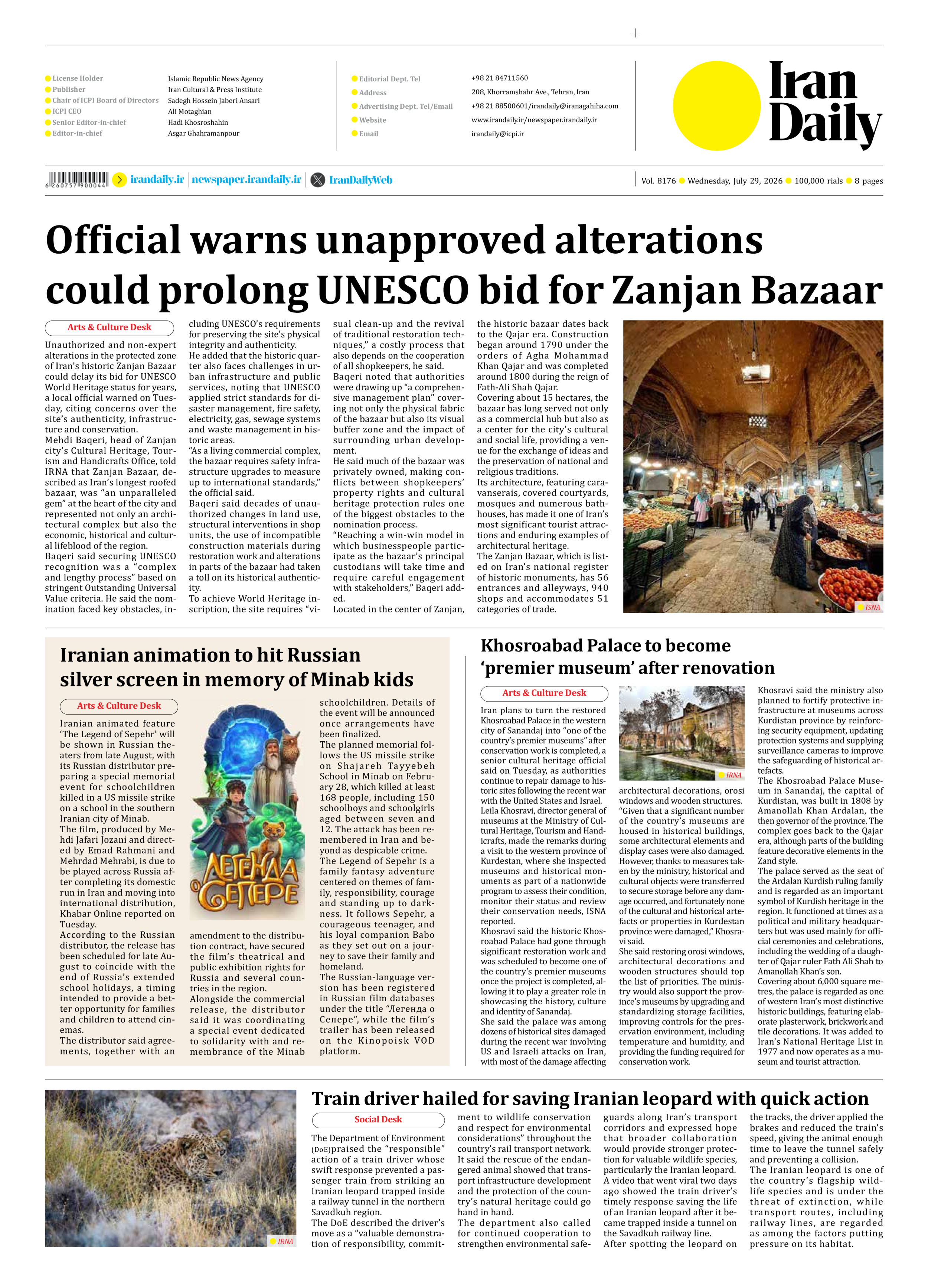


Official warns unapproved alterations could prolong UNESCO bid for Zanjan Bazaar
Unauthorized and non-expert alterations in the protected zone of Iran’s historic Zanjan Bazaar could delay its bid for UNESCO World Heritage status for years, a local official warned on Tuesday, citing concerns over the site’s authenticity, infrastructure and conservation.
Mehdi Baqeri, head of Zanjan city’s Cultural Heritage, Tourism and Handicrafts Office, told IRNA that Zanjan Bazaar, described as Iran’s longest roofed bazaar, was “an unparalleled gem” at the heart of the city and represented not only an architectural complex but also the economic, historical and cultural lifeblood of the region.
Baqeri said securing UNESCO recognition was a “complex and lengthy process” based on stringent Outstanding Universal Value criteria. He said the nomination faced key obstacles, including UNESCO’s requirements for preserving the site’s physical integrity and authenticity.
He added that the historic quarter also faces challenges in urban infrastructure and public services, noting that UNESCO applied strict standards for disaster management, fire safety, electricity, gas, sewage systems and waste management in historic areas.
“As a living commercial complex, the bazaar requires safety infrastructure upgrades to measure up to international standards,” the official said.
Baqeri said decades of unauthorized changes in land use, structural interventions in shop units, the use of incompatible construction materials during restoration work and alterations in parts of the bazaar had taken a toll on its historical authenticity.
To achieve World Heritage inscription, the site requires “visual clean-up and the revival of traditional restoration techniques,” a costly process that also depends on the cooperation of all shopkeepers, he said.
Baqeri noted that authorities were drawing up “a comprehensive management plan” covering not only the physical fabric of the bazaar but also its visual buffer zone and the impact of surrounding urban development.
He said much of the bazaar was privately owned, making conflicts between shopkeepers’ property rights and cultural heritage protection rules one of the biggest obstacles to the nomination process.
“Reaching a win-win model in which businesspeople participate as the bazaar’s principal custodians will take time and require careful engagement with stakeholders,” Baqeri added.
Located in the center of Zanjan, the historic bazaar dates back to the Qajar era. Construction began around 1790 under the orders of Agha Mohammad Khan Qajar and was completed around 1800 during the reign of Fath-Ali Shah Qajar.
Covering about 15 hectares, the bazaar has long served not only as a commercial hub but also as a center for the city’s cultural and social life, providing a venue for the exchange of ideas and the preservation of national and religious traditions.
Its architecture, featuring caravanserais, covered courtyards, mosques and numerous bathhouses, has made it one of Iran’s most significant tourist attractions and enduring examples of architectural heritage.
The Zanjan Bazaar, which is listed on Iran’s national register of historic monuments, has 56 entrances and alleyways, 940 shops and accommodates 51 categories of trade.