







Ancient finds rewrite early human migration
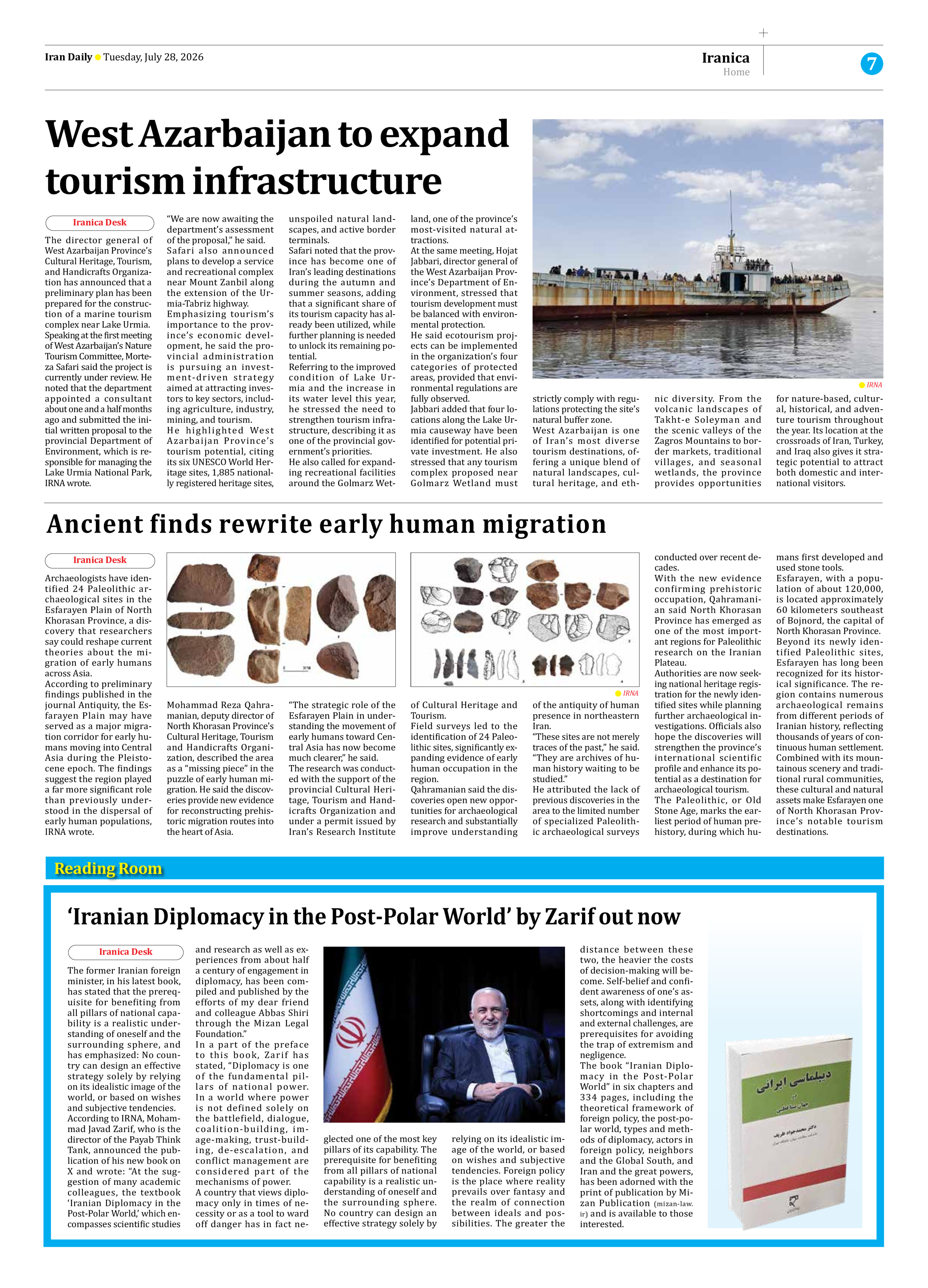
Archaeologists have identified 24 Paleolithic archaeological sites in the Esfarayen Plain of North Khorasan Province, a discovery that researchers say could reshape current theories about the migration of early humans across Asia.
According to preliminary findings published in the journal Antiquity, the Esfarayen Plain may have served as a major migration corridor for early humans moving into Central Asia during the Pleistocene epoch. The findings suggest the region played a far more significant role than previously understood in the dispersal of early human populations, IRNA wrote.
Mohammad Reza Qahramanian, deputy director of North Khorasan Province’s Cultural Heritage, Tourism and Handicrafts Organization, described the area as a “missing piece” in the puzzle of early human migration. He said the discoveries provide new evidence for reconstructing prehistoric migration routes into the heart of Asia.
“The strategic role of the Esfarayen Plain in understanding the movement of early humans toward Central Asia has now become much clearer,” he said.
The research was conducted with the support of the provincial Cultural Heritage, Tourism and Handicrafts Organization and under a permit issued by Iran’s Research Institute of Cultural Heritage and Tourism.
Field surveys led to the identification of 24 Paleolithic sites, significantly expanding evidence of early human occupation in the region.
Qahramanian said the discoveries open new opportunities for archaeological research and substantially improve understanding of the antiquity of human presence in northeastern Iran.
“These sites are not merely traces of the past,” he said. “They are archives of human history waiting to be studied.”
He attributed the lack of previous discoveries in the area to the limited number of specialized Paleolithic archaeological surveys conducted over recent decades.
With the new evidence confirming prehistoric occupation, Qahramanian said North Khorasan Province has emerged as one of the most important regions for Paleolithic research on the Iranian Plateau.
Authorities are now seeking national heritage registration for the newly identified sites while planning further archaeological investigations. Officials also hope the discoveries will strengthen the province’s international scientific profile and enhance its potential as a destination for archaeological tourism.
The Paleolithic, or Old Stone Age, marks the earliest period of human prehistory, during which humans first developed and used stone tools.
Esfarayen, with a population of about 120,000, is located approximately 60 kilometers southeast of Bojnord, the capital of North Khorasan Province.
Beyond its newly identified Paleolithic sites, Esfarayen has long been recognized for its historical significance. The region contains numerous archaeological remains from different periods of Iranian history, reflecting thousands of years of continuous human settlement. Combined with its mountainous scenery and traditional rural communities, these cultural and natural assets make Esfarayen one of North Khorasan Province’s notable tourism destinations.