





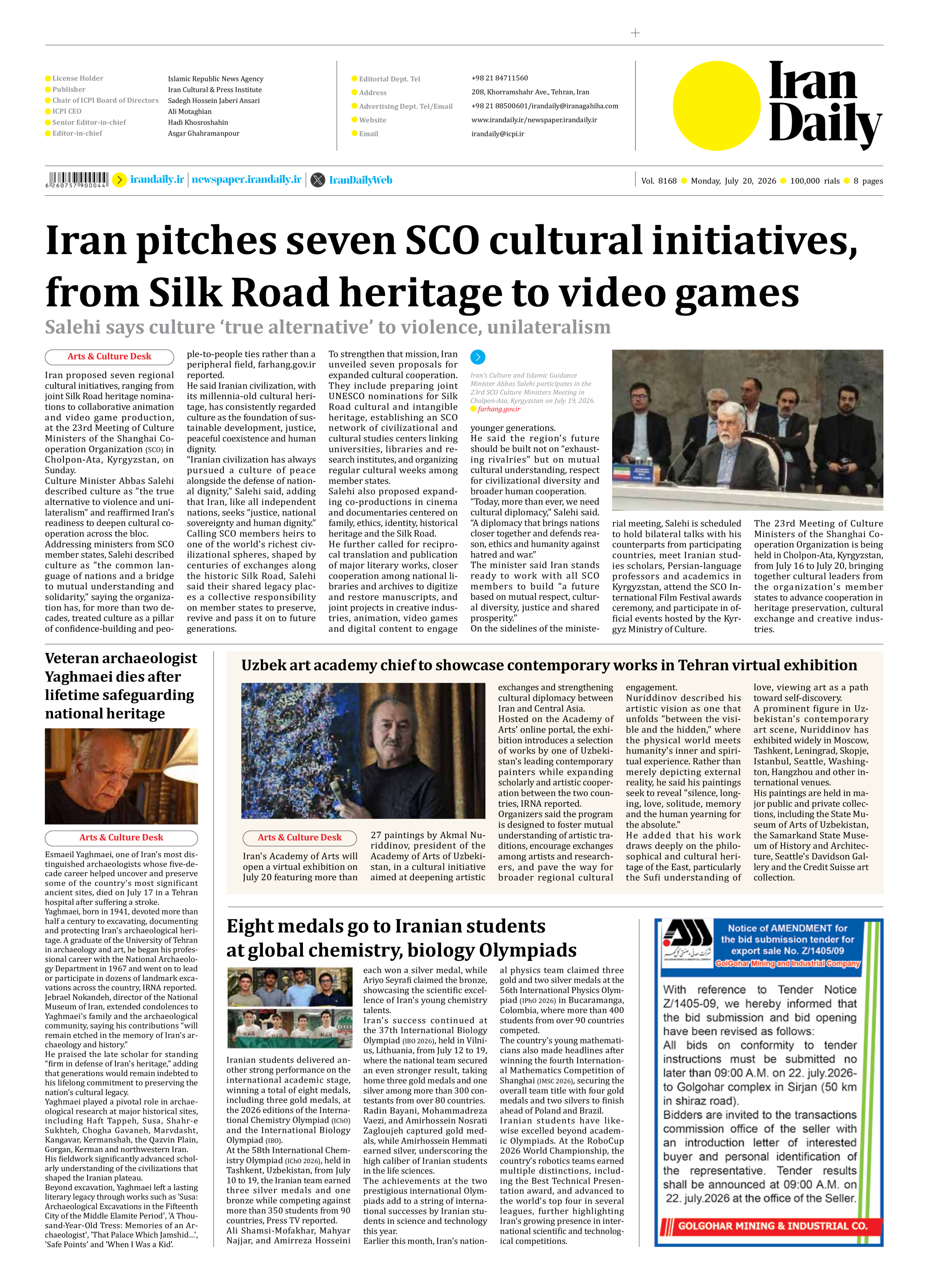


Veteran archaeologist Yaghmaei dies after lifetime safeguarding national heritage
Esmaeil Yaghmaei, one of Iran’s most distinguished archaeologists whose five-decade career helped uncover and preserve some of the country’s most significant ancient sites, died on July 17 in a Tehran hospital after suffering a stroke.
Yaghmaei, born in 1941, devoted more than half a century to excavating, documenting and protecting Iran’s archaeological heritage. A graduate of the University of Tehran in archaeology and art, he began his professional career with the National Archaeology Department in 1967 and went on to lead or participate in dozens of landmark excavations across the country, IRNA reported.
Jebrael Nokandeh, director of the National Museum of Iran, extended condolences to Yaghmaei’s family and the archaeological community, saying his contributions “will remain etched in the memory of Iran’s archaeology and history.”
He praised the late scholar for standing “firm in defense of Iran’s heritage,” adding that generations would remain indebted to his lifelong commitment to preserving the nation’s cultural legacy.
Yaghmaei played a pivotal role in archaeological research at major historical sites, including Haft Tappeh, Susa, Shahr-e Sukhteh, Chogha Gavaneh, Marvdasht, Kangavar, Kermanshah, the Qazvin Plain, Gorgan, Kerman and northwestern Iran.
His fieldwork significantly advanced scholarly understanding of the civilizations that shaped the Iranian plateau.
Beyond excavation, Yaghmaei left a lasting literary legacy through works such as 'Susa: Archaeological Excavations in the Fifteenth City of the Middle Elamite Period', 'A Thousand-Year-Old Tress: Memories of an Archaeologist', 'That Palace Which Jamshid…', 'Safe Points' and 'When I Was a Kid’.