







Joint chamber: Tajikistan could become Iran’s trade hub in Central Asia
By Sadeq Dehqan
Staff writer
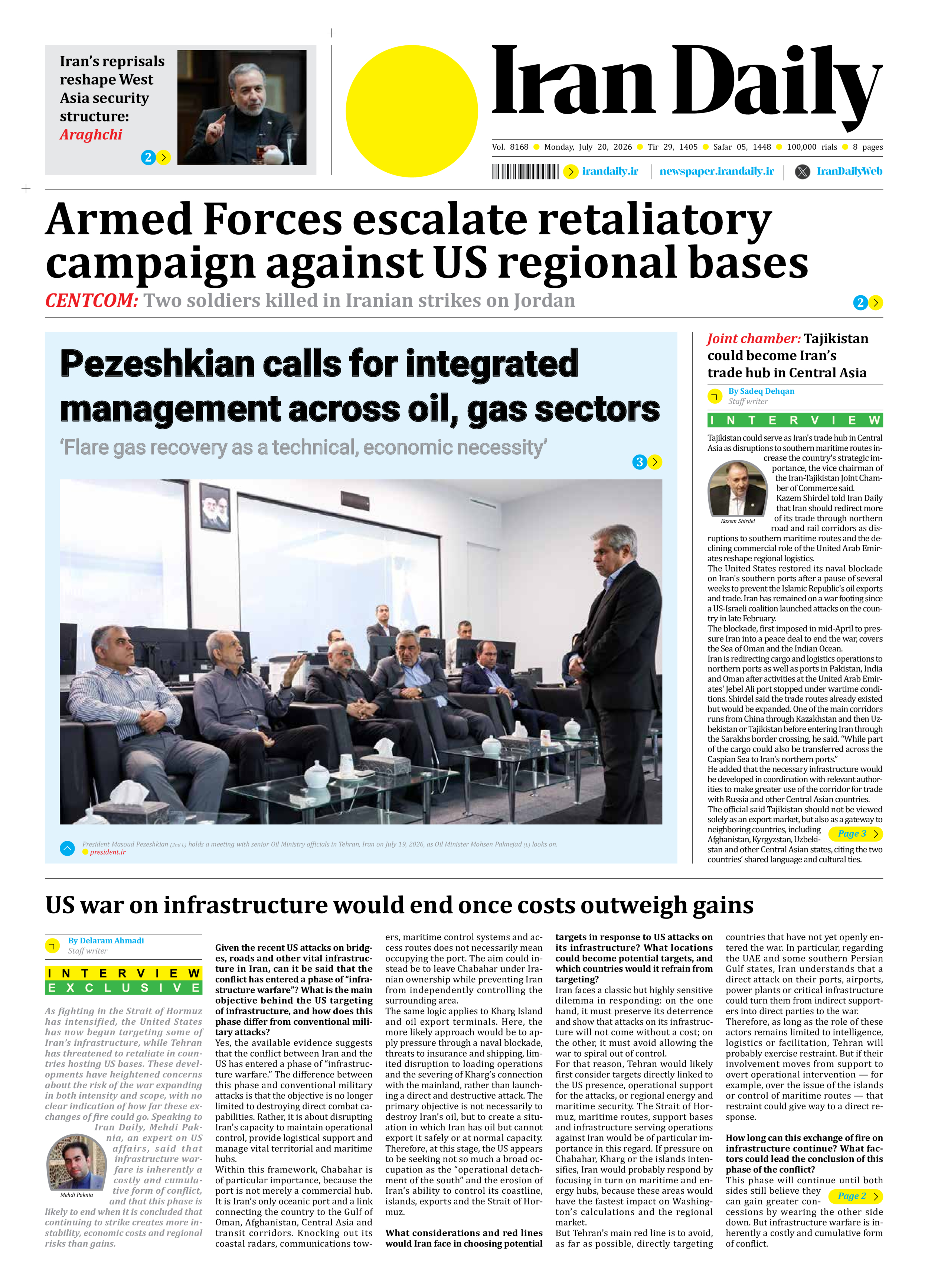
Tajikistan could serve as Iran's trade hub in Central Asia as disruptions to southern maritime routes increase the country's strategic importance, the vice chairman of the Iran-Tajikistan Joint Chamber of Commerce said.
Kazem Shirdel told Iran Daily that Iran should redirect more of its trade through northern road and rail corridors as disruptions to southern maritime routes and the declining commercial role of the United Arab Emirates reshape regional logistics.
The United States restored its naval blockade on Iran's southern ports after a pause of several weeks to prevent the Islamic Republic's oil exports and trade. Iran has remained on a war footing since a US-Israeli coalition launched attacks on the country in late February.
The blockade, first imposed in mid-April to pressure Iran into a peace deal to end the war, covers the Sea of Oman and the Indian Ocean.
Iran is redirecting cargo and logistics operations to northern ports as well as ports in Pakistan, India and Oman after activities at the United Arab Emirates' Jebel Ali port stopped under wartime conditions. Shirdel said the trade routes already existed but would be expanded. One of the main corridors runs from China through Kazakhstan and then Uzbekistan or Tajikistan before entering Iran through the Sarakhs border crossing, he said. “While part of the cargo could also be transferred across the Caspian Sea to Iran's northern ports.”
He added that the necessary infrastructure would be developed in coordination with relevant authorities to make greater use of the corridor for trade with Russia and other Central Asian countries.
The official said Tajikistan should not be viewed solely as an export market, but also as a gateway to neighboring countries, including Afghanistan, Kyrgyzstan, Uzbekistan and other Central Asian states, citing the two countries’ shared language and cultural ties.
Page 3