







Iran could become sixth-largest steel producer with policy reforms, industry chief says
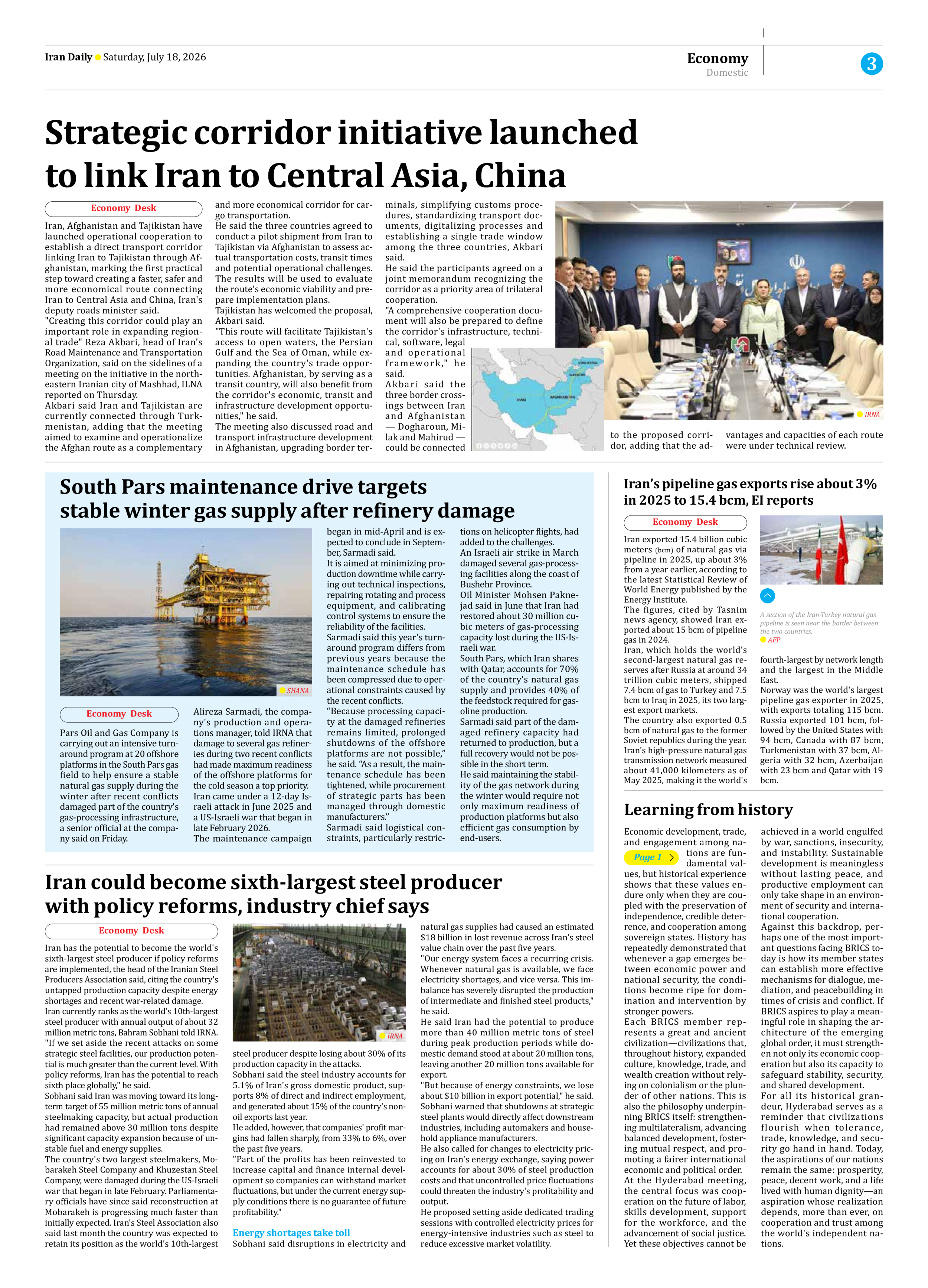
Iran has the potential to become the world's sixth-largest steel producer if policy reforms are implemented, the head of the Iranian Steel Producers Association said, citing the country's untapped production capacity despite energy shortages and recent war-related damage.
Iran currently ranks as the world's 10th-largest steel producer with annual output of about 32 million metric tons, Bahram Sobhani told IRNA.
"If we set aside the recent attacks on some strategic steel facilities, our production potential is much greater than the current level. With policy reforms, Iran has the potential to reach sixth place globally," he said.
Sobhani said Iran was moving toward its long-term target of 55 million metric tons of annual steelmaking capacity, but actual production had remained above 30 million tons despite significant capacity expansion because of unstable fuel and energy supplies.
The country's two largest steelmakers, Mobarakeh Steel Company and Khuzestan Steel Company, were damaged during the US-Israeli war that began in late February. Parliamentary officials have since said reconstruction at Mobarakeh is progressing much faster than initially expected. Iran's Steel Association also said last month the country was expected to retain its position as the world's 10th-largest steel producer despite losing about 30% of its production capacity in the attacks.
Sobhani said the steel industry accounts for 5.1% of Iran's gross domestic product, supports 8% of direct and indirect employment, and generated about 15% of the country's non-oil exports last year.
He added, however, that companies' profit margins had fallen sharply, from 33% to 6%, over the past five years.
"Part of the profits has been reinvested to increase capital and finance internal development so companies can withstand market fluctuations, but under the current energy supply conditions there is no guarantee of future profitability."
Energy shortages take toll
Sobhani said disruptions in electricity and natural gas supplies had caused an estimated $18 billion in lost revenue across Iran's steel value chain over the past five years.
"Our energy system faces a recurring crisis. Whenever natural gas is available, we face electricity shortages, and vice versa. This imbalance has severely disrupted the production of intermediate and finished steel products," he said.
He said Iran had the potential to produce more than 40 million metric tons of steel during peak production periods while domestic demand stood at about 20 million tons, leaving another 20 million tons available for export.
"But because of energy constraints, we lose about $10 billion in export potential," he said.
Sobhani warned that shutdowns at strategic steel plants would directly affect downstream industries, including automakers and household appliance manufacturers.
He also called for changes to electricity pricing on Iran's energy exchange, saying power accounts for about 30% of steel production costs and that uncontrolled price fluctuations could threaten the industry's profitability and output.
He proposed setting aside dedicated trading sessions with controlled electricity prices for energy-intensive industries such as steel to reduce excessive market volatility.