







Copy in clipboard...
Iran proposes OIC women’s relief network, shared trade label at Islamabad summit
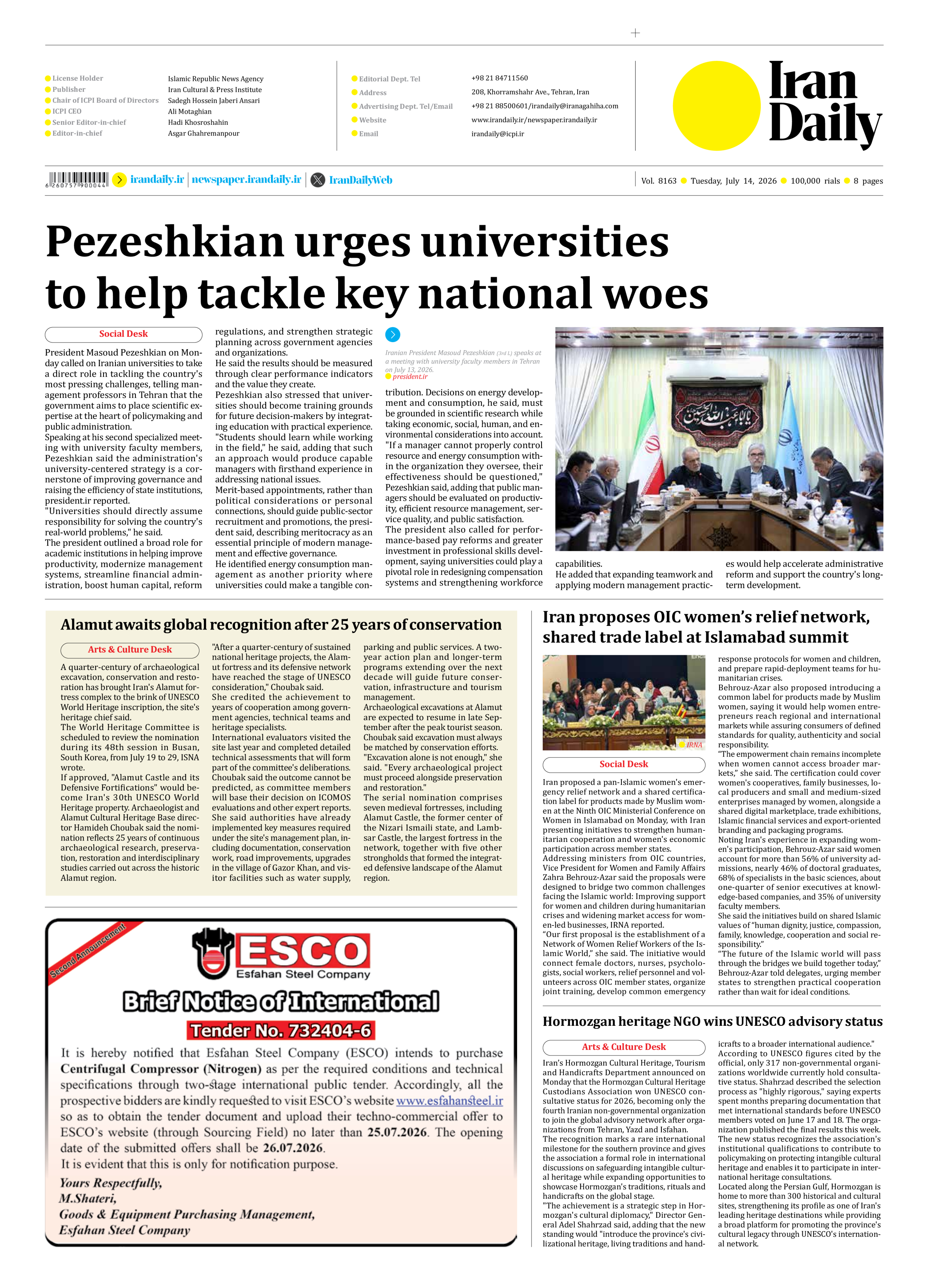
Iran proposed a pan-Islamic women's emergency relief network and a shared certification label for products made by Muslim women at the Ninth OIC Ministerial Conference on Women in Islamabad on Monday, with Iran presenting initiatives to strengthen humanitarian cooperation and women's economic participation across member states.
Addressing ministers from OIC countries, Vice President for Women and Family Affairs Zahra Behrouz-Azar said the proposals were designed to bridge two common challenges facing the Islamic world: Improving support for women and children during humanitarian crises and widening market access for women-led businesses, IRNA reported.
“Our first proposal is the establishment of a Network of Women Relief Workers of the Islamic World,” she said. The initiative would connect female doctors, nurses, psychologists, social workers, relief personnel and volunteers across OIC member states, organize joint training, develop common emergency response protocols for women and children, and prepare rapid-deployment teams for humanitarian crises.
Behrouz-Azar also proposed introducing a common label for products made by Muslim women, saying it would help women entrepreneurs reach regional and international markets while assuring consumers of defined standards for quality, authenticity and social responsibility.
“The empowerment chain remains incomplete when women cannot access broader markets,” she said. The certification could cover women's cooperatives, family businesses, local producers and small and medium-sized enterprises managed by women, alongside a shared digital marketplace, trade exhibitions, Islamic financial services and export-oriented branding and packaging programs.
Noting Iran's experience in expanding women's participation, Behrouz-Azar said women account for more than 56% of university admissions, nearly 46% of doctoral graduates, 68% of specialists in the basic sciences, about one-quarter of senior executives at knowledge-based companies, and 35% of university faculty members.
She said the initiatives build on shared Islamic values of “human dignity, justice, compassion, family, knowledge, cooperation and social responsibility.”
“The future of the Islamic world will pass through the bridges we build together today,” Behrouz-Azar told delegates, urging member states to strengthen practical cooperation rather than wait for ideal conditions.