





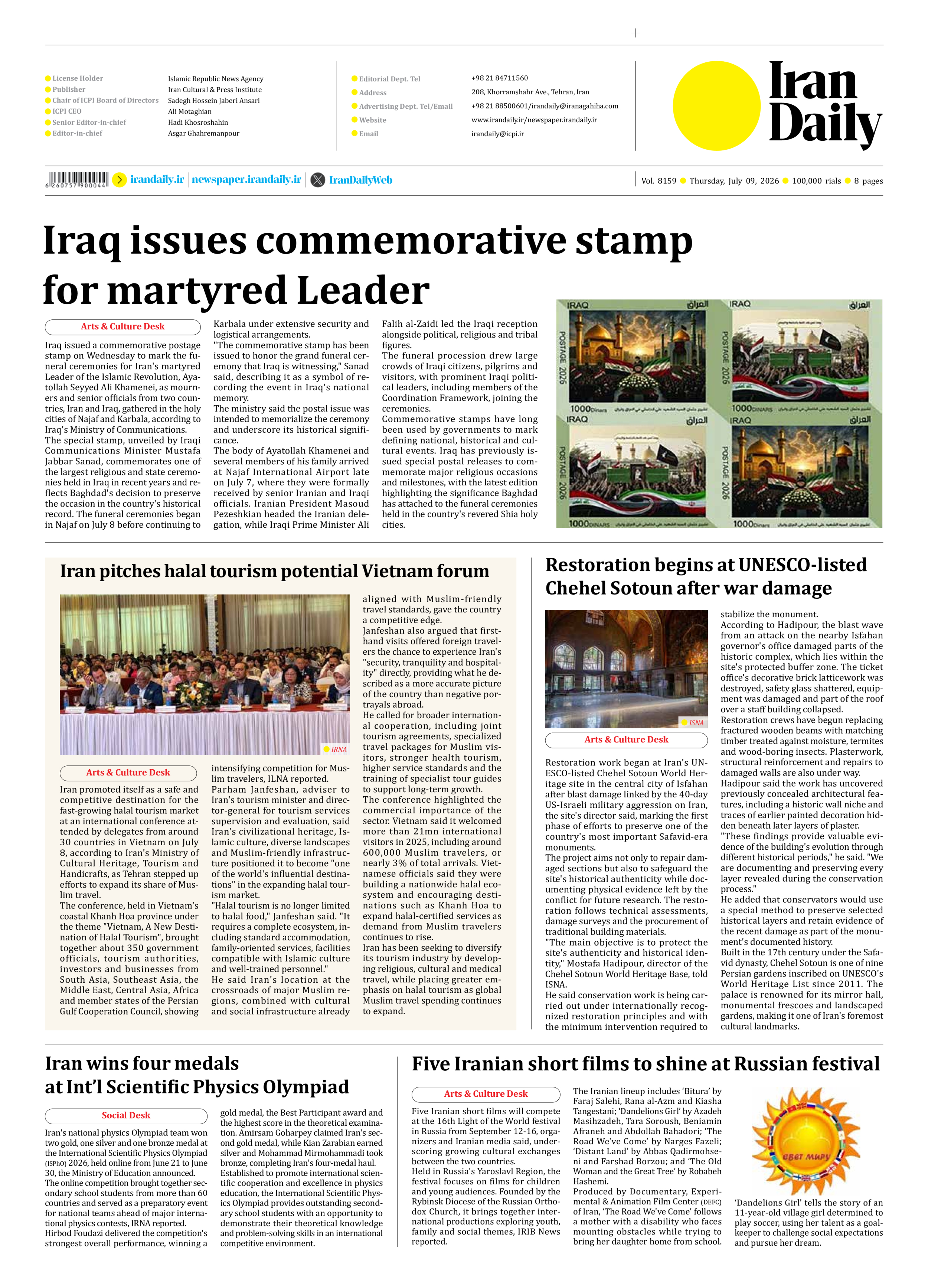


Restoration begins at UNESCO-listed Chehel Sotoun after war damage
Restoration work began at Iran's UNESCO-listed Chehel Sotoun World Heritage site in the central city of Isfahan after blast damage linked by the 40-day US-Israeli military aggression on Iran, the site's director said, marking the first phase of efforts to preserve one of the country's most important Safavid-era monuments.
The project aims not only to repair damaged sections but also to safeguard the site's historical authenticity while documenting physical evidence left by the conflict for future research. The restoration follows technical assessments, damage surveys and the procurement of traditional building materials.
"The main objective is to protect the site's authenticity and historical identity," Mostafa Hadipour, director of the Chehel Sotoun World Heritage Base, told ISNA.
He said conservation work is being carried out under internationally recognized restoration principles and with the minimum intervention required to stabilize the monument.
According to Hadipour, the blast wave from an attack on the nearby Isfahan governor's office damaged parts of the historic complex, which lies within the site's protected buffer zone. The ticket office's decorative brick latticework was destroyed, safety glass shattered, equipment was damaged and part of the roof over a staff building collapsed.
Restoration crews have begun replacing fractured wooden beams with matching timber treated against moisture, termites and wood-boring insects. Plasterwork, structural reinforcement and repairs to damaged walls are also under way.
Hadipour said the work has uncovered previously concealed architectural features, including a historic wall niche and traces of earlier painted decoration hidden beneath later layers of plaster.
"These findings provide valuable evidence of the building's evolution through different historical periods," he said. "We are documenting and preserving every layer revealed during the conservation process."
He added that conservators would use a special method to preserve selected historical layers and retain evidence of the recent damage as part of the monument's documented history.
Built in the 17th century under the Safavid dynasty, Chehel Sotoun is one of nine Persian gardens inscribed on UNESCO's World Heritage List since 2011. The palace is renowned for its mirror hall, monumental frescoes and landscaped gardens, making it one of Iran's foremost cultural landmarks.