







How Iranian folklore connects past to present
Iranian folklore is a vibrant and enduring tradition that has developed over thousands of years. It encompasses myths, legends, and cultural influences from across Greater Iran. These folktales are more than mere stories; they are deeply intertwined with Iranian identity, forging a connection between modern Iran and the ancient Persian empires and their beliefs. In this article, we will explore the captivating elements of Iranian folklore, including prominent characters, myths, mythical creatures, and the ways these stories shape Iranian culture and identity. By examining these stories and traditions, we can gain valuable insight into how the Iranian people perceive the world, differentiate right from wrong, and reflect on universal human experiences.
Storytelling traditions
Storytelling has long been a vital part of Iranian culture. During the Safavid dynasty, it became a central social activity in coffeehouses, where individuals from diverse backgrounds gathered to hear epic tales of heroes and their adventures, surfiran.com wrote.
Today, the Shahnameh, penned by Ferdowsi (940-1020 CE), one of the most influential figures of Persian literature, remains a cornerstone of Iranian folklore. It is recited and performed at national festivals, serving as a living link between generations through stories rooted in Persian mythology and legendary heroes who defended their homeland. In Iranian culture, storytelling is not merely entertainment — it is a means of transmitting values such as honor, bravery, and justice, ensuring these ideals endure through time.
National epic
The Shahnameh, composed in the 10th century, is one of Persian literature’s most significant works and is regarded as Iran’s national epic. It narrates the stories of kings and heroes from mythical times through the Sassanid era, preserving core elements of Iranian folklore. Among its characters are iconic figures like Rostam, Zal, Sohrab, Fereydun, and Zahhak, each confronting unique challenges and moral dilemmas.
The tale of Rostam and Sohrab is especially poignant. It’s a tragic story of fate, familial love, and loss: Rostam unknowingly battles and fatally wounds his own son, Sohrab, only to discover his identity too late. This narrative underscores the idea that even the greatest heroes are bound by destiny. The Shahnameh continues to inspire national pride and teaches timeless values—courage, sacrifice, and justice.
Mythical creatures in Iranian folklore
Iranian folklore is replete with mythical beings, many embodying the eternal struggle between good and evil. One of the most revered creatures is the Simorgh, a majestic bird symbolizing wisdom and healing.
In the legend of Zal, the Simorgh rescues an abandoned infant and raises him in her nest, ultimately returning him to his family. The Simorgh’s role as a protector embodies hope and guidance, reminding people that even in darkness, a higher power watches over them.
Another notable figure is Zahhak, a monstrous three-headed dragon representing deceit and tyranny. His reign ends when the hero Fereydun defeats him and imprisons him on Mount Damavand. This battle exemplifies a recurring theme in Iranian folklore — the triumph of good over evil.
The Div, a demon or devil figure, appears frequently in Persian stories, symbolizing chaos, corruption, and malevolent intent. The Divs often serve as adversaries that heroes must confront and overcome, reflecting internal and external struggles faced while upholding moral integrity.
Pari are ethereal, fairy-like beings often depicted as beautiful and benevolent yet enigmatic. They appear in romantic tales and symbolize beauty, mystery, and the complex nature of the supernatural. Stories involving Pari explore themes of love, transformation, and redemption, emphasizing the multifaceted aspects of the spiritual realm.
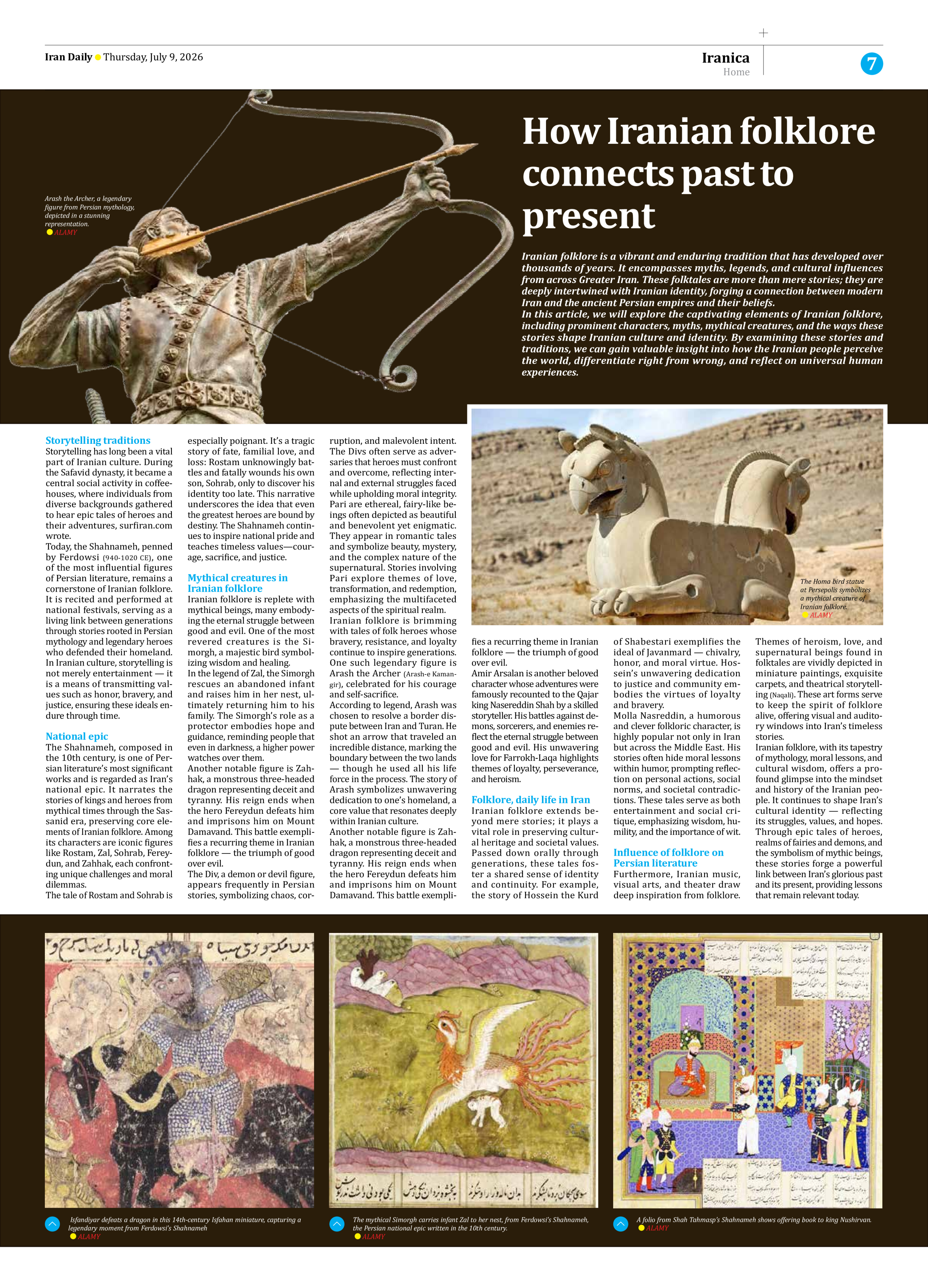
Iranian folklore is brimming with tales of folk heroes whose bravery, resistance, and loyalty continue to inspire generations. One such legendary figure is Arash the Archer (Arash-e Kamangir), celebrated for his courage and self-sacrifice.
According to legend, Arash was chosen to resolve a border dispute between Iran and Turan. He shot an arrow that traveled an incredible distance, marking the boundary between the two lands — though he used all his life force in the process. The story of Arash symbolizes unwavering dedication to one’s homeland, a core value that resonates deeply within Iranian culture.
Another notable figure is Zahhak, a monstrous three-headed dragon representing deceit and tyranny. His reign ends when the hero Fereydun defeats him and imprisons him on Mount Damavand. This battle exemplifies a recurring theme in Iranian folklore — the triumph of good over evil.
Amir Arsalan is another beloved character whose adventures were famously recounted to the Qajar king Nasereddin Shah by a skilled storyteller. His battles against demons, sorcerers, and enemies reflect the eternal struggle between good and evil. His unwavering love for Farrokh-Laqa highlights themes of loyalty, perseverance, and heroism.
Folklore, daily life in Iran
Iranian folklore extends beyond mere stories; it plays a vital role in preserving cultural heritage and societal values. Passed down orally through generations, these tales foster a shared sense of identity and continuity. For example, the story of Hossein the Kurd of Shabestari exemplifies the ideal of Javanmard — chivalry, honor, and moral virtue. Hossein’s unwavering dedication to justice and community embodies the virtues of loyalty and bravery.
Molla Nasreddin, a humorous and clever folkloric character, is highly popular not only in Iran but across the Middle East. His stories often hide moral lessons within humor, prompting reflection on personal actions, social norms, and societal contradictions. These tales serve as both entertainment and social critique, emphasizing wisdom, humility, and the importance of wit.
Influence of folklore on Persian literature
Furthermore, Iranian music, visual arts, and theater draw deep inspiration from folklore. Themes of heroism, love, and supernatural beings found in folktales are vividly depicted in miniature paintings, exquisite carpets, and theatrical storytelling (Naqali). These art forms serve to keep the spirit of folklore alive, offering visual and auditory windows into Iran’s timeless stories.
Iranian folklore, with its tapestry of mythology, moral lessons, and cultural wisdom, offers a profound glimpse into the mindset and history of the Iranian people. It continues to shape Iran’s cultural identity — reflecting its struggles, values, and hopes. Through epic tales of heroes, realms of fairies and demons, and the symbolism of mythic beings, these stories forge a powerful link between Iran’s glorious past and its present, providing lessons that remain relevant today.