







Tehran exports more than 40m barrels of oil at 20% premium since US naval blockade lifted : Qalibaf
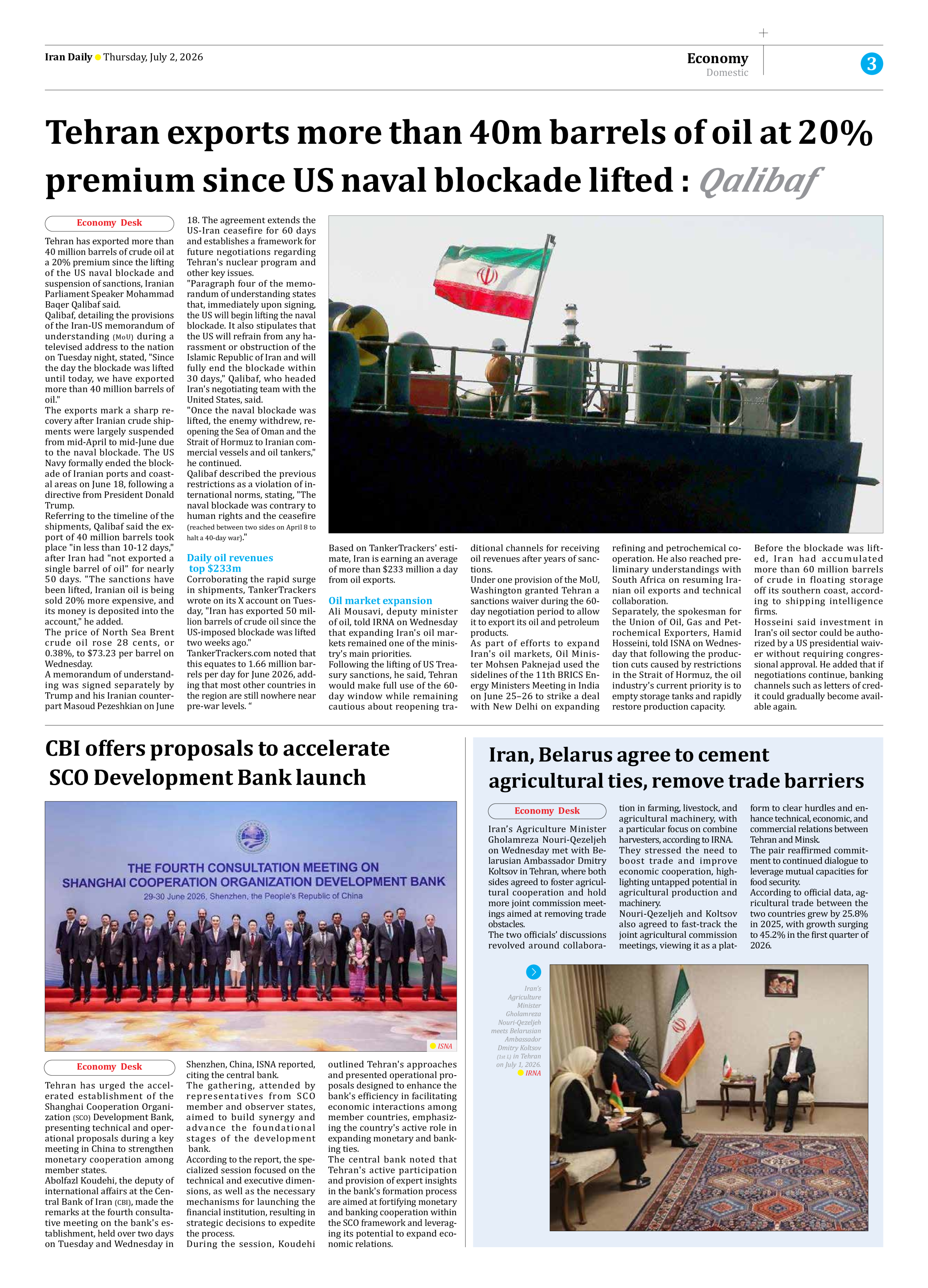
Tehran has exported more than 40 million barrels of crude oil at a 20% premium since the lifting of the US naval blockade and suspension of sanctions, Iranian Parliament Speaker Mohammad Baqer Qalibaf said.
Qalibaf, detailing the provisions of the Iran-US memorandum of understanding (MoU) during a televised address to the nation on Tuesday night, stated, "Since the day the blockade was lifted until today, we have exported more than 40 million barrels of oil."
The exports mark a sharp recovery after Iranian crude shipments were largely suspended from mid-April to mid-June due to the naval blockade. The US Navy formally ended the blockade of Iranian ports and coastal areas on June 18, following a directive from President Donald Trump.
Referring to the timeline of the shipments, Qalibaf said the export of 40 million barrels took place "in less than 10-12 days," after Iran had "not exported a single barrel of oil" for nearly 50 days. "The sanctions have been lifted, Iranian oil is being sold 20% more expensive, and its money is deposited into the account," he added.
The price of North Sea Brent crude oil rose 28 cents, or 0.38%, to $73.23 per barrel on Wednesday.
A memorandum of understanding was signed separately by Trump and his Iranian counterpart Masoud Pezeshkian on June 18. The agreement extends the US-Iran ceasefire for 60 days and establishes a framework for future negotiations regarding Tehran's nuclear program and other key issues.
"Paragraph four of the memorandum of understanding states that, immediately upon signing, the US will begin lifting the naval blockade. It also stipulates that the US will refrain from any harassment or obstruction of the Islamic Republic of Iran and will fully end the blockade within 30 days," Qalibaf, who headed Iran's negotiating team with the United States, said.
"Once the naval blockade was lifted, the enemy withdrew, reopening the Sea of Oman and the Strait of Hormuz to Iranian commercial vessels and oil tankers,"
he continued.
Qalibaf described the previous restrictions as a violation of international norms, stating, "The naval blockade was contrary to human rights and the ceasefire (reached between two sides on April 8 to halt a 40-day war)."
Daily oil revenues
top $233m
Corroborating the rapid surge in shipments, TankerTrackers wrote on its X account on Tuesday, "Iran has exported 50 million barrels of crude oil since the US-imposed blockade was lifted two weeks ago."
TankerTrackers.com noted that this equates to 1.66 million barrels per day for June 2026, adding that most other countries in the region are still nowhere near pre-war levels. “
Based on TankerTrackers' estimate, Iran is earning an average of more than $233 million a day from oil exports.
Oil market expansion
Ali Mousavi, deputy minister of oil, told IRNA on Wednesday that expanding Iran's oil markets remained one of the ministry's main priorities.
Following the lifting of US Treasury sanctions, he said, Tehran would make full use of the 60-day window while remaining cautious about reopening traditional channels for receiving oil revenues after years of sanctions.
Under one provision of the MoU, Washington granted Tehran a sanctions waiver during the 60-day negotiation period to allow it to export its oil and petroleum products.
As part of efforts to expand Iran's oil markets, Oil Minister Mohsen Paknejad used the sidelines of the 11th BRICS Energy Ministers Meeting in India on June 25–26 to strike a deal with New Delhi on expanding refining and petrochemical cooperation. He also reached preliminary understandings with South Africa on resuming Iranian oil exports and technical
collaboration.
Separately, the spokesman for the Union of Oil, Gas and Petrochemical Exporters, Hamid Hosseini, told ISNA on Wednesday that following the production cuts caused by restrictions in the Strait of Hormuz, the oil industry's current priority is to empty storage tanks and rapidly restore production capacity.
Before the blockade was lifted, Iran had accumulated more than 60 million barrels of crude in floating storage off its southern coast, according to shipping intelligence
firms.
Hosseini said investment in Iran's oil sector could be authorized by a US presidential waiver without requiring congressional approval. He added that if negotiations continue, banking channels such as letters of credit could gradually become available again.