







Copy in clipboard...
Pezeshkian says improving livelihoods remains governmentʼs top priority
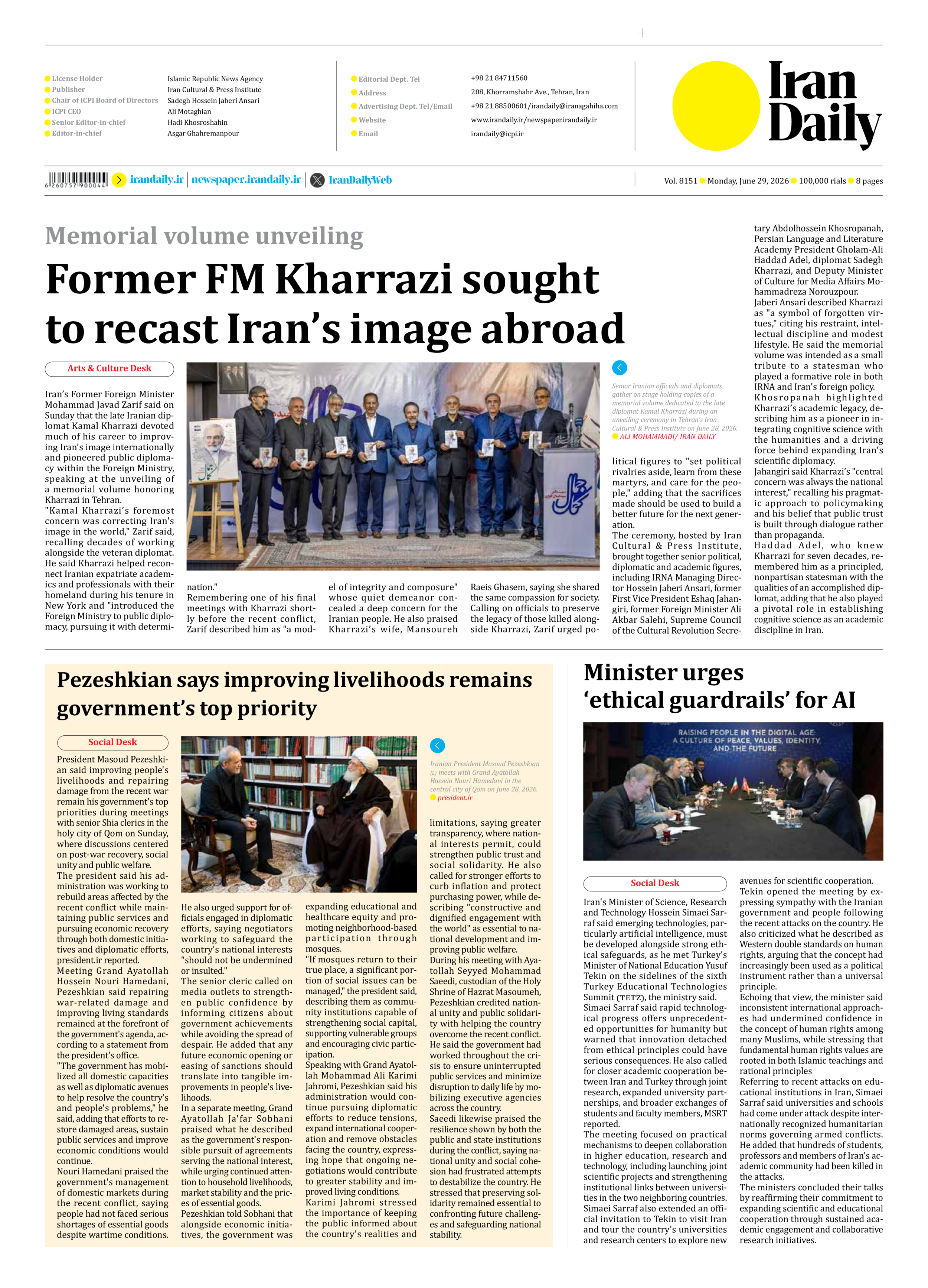
President Masoud Pezeshkian said improving people's livelihoods and repairing damage from the recent war remain his government's top priorities during meetings with senior Shia clerics in the holy city of Qom on Sunday, where discussions centered on post-war recovery, social unity and public welfare.
The president said his administration was working to rebuild areas affected by the recent conflict while maintaining public services and pursuing economic recovery through both domestic initiatives and diplomatic efforts, president.ir reported.
Meeting Grand Ayatollah Hossein Nouri Hamedani, Pezeshkian said repairing war-related damage and improving living standards remained at the forefront of the government's agenda, according to a statement from the president's office.
"The government has mobilized all domestic capacities as well as diplomatic avenues to help resolve the country's and people's problems," he said, adding that efforts to restore damaged areas, sustain public services and improve economic conditions would continue.
Nouri Hamedani praised the government's management of domestic markets during the recent conflict, saying people had not faced serious shortages of essential goods despite wartime conditions. He also urged support for officials engaged in diplomatic efforts, saying negotiators working to safeguard the country's national interests "should not be undermined or insulted."
The senior cleric called on media outlets to strengthen public confidence by informing citizens about government achievements while avoiding the spread of despair. He added that any future economic opening or easing of sanctions should translate into tangible improvements in people's livelihoods.
In a separate meeting, Grand Ayatollah Ja'far Sobhani praised what he described as the government's responsible pursuit of agreements serving the national interest, while urging continued attention to household livelihoods, market stability and the prices of essential goods.
Pezeshkian told Sobhani that alongside economic initiatives, the government was expanding educational and healthcare equity and promoting neighborhood-based participation through mosques.
"If mosques return to their true place, a significant portion of social issues can be managed," the president said, describing them as community institutions capable of strengthening social capital, supporting vulnerable groups and encouraging civic participation.
Speaking with Grand Ayatollah Mohammad Ali Karimi Jahromi, Pezeshkian said his administration would continue pursuing diplomatic efforts to reduce tensions, expand international cooperation and remove obstacles facing the country, expressing hope that ongoing negotiations would contribute to greater stability and improved living conditions.
Karimi Jahromi stressed the importance of keeping the public informed about the country's realities and limitations, saying greater transparency, where national interests permit, could strengthen public trust and social solidarity. He also called for stronger efforts to curb inflation and protect purchasing power, while describing "constructive and dignified engagement with the world" as essential to national development and improving public welfare.
During his meeting with Ayatollah Seyyed Mohammad Saeedi, custodian of the Holy Shrine of Hazrat Masoumeh, Pezeshkian credited national unity and public solidarity with helping the country overcome the recent conflict. He said the government had worked throughout the crisis to ensure uninterrupted public services and minimize disruption to daily life by mobilizing executive agencies across the country.
Saeedi likewise praised the resilience shown by both the public and state institutions during the conflict, saying national unity and social cohesion had frustrated attempts to destabilize the country. He stressed that preserving solidarity remained essential to confronting future challenges and safeguarding national stability.