







Iran’s oil exports near 18m barrels after US blockade removal
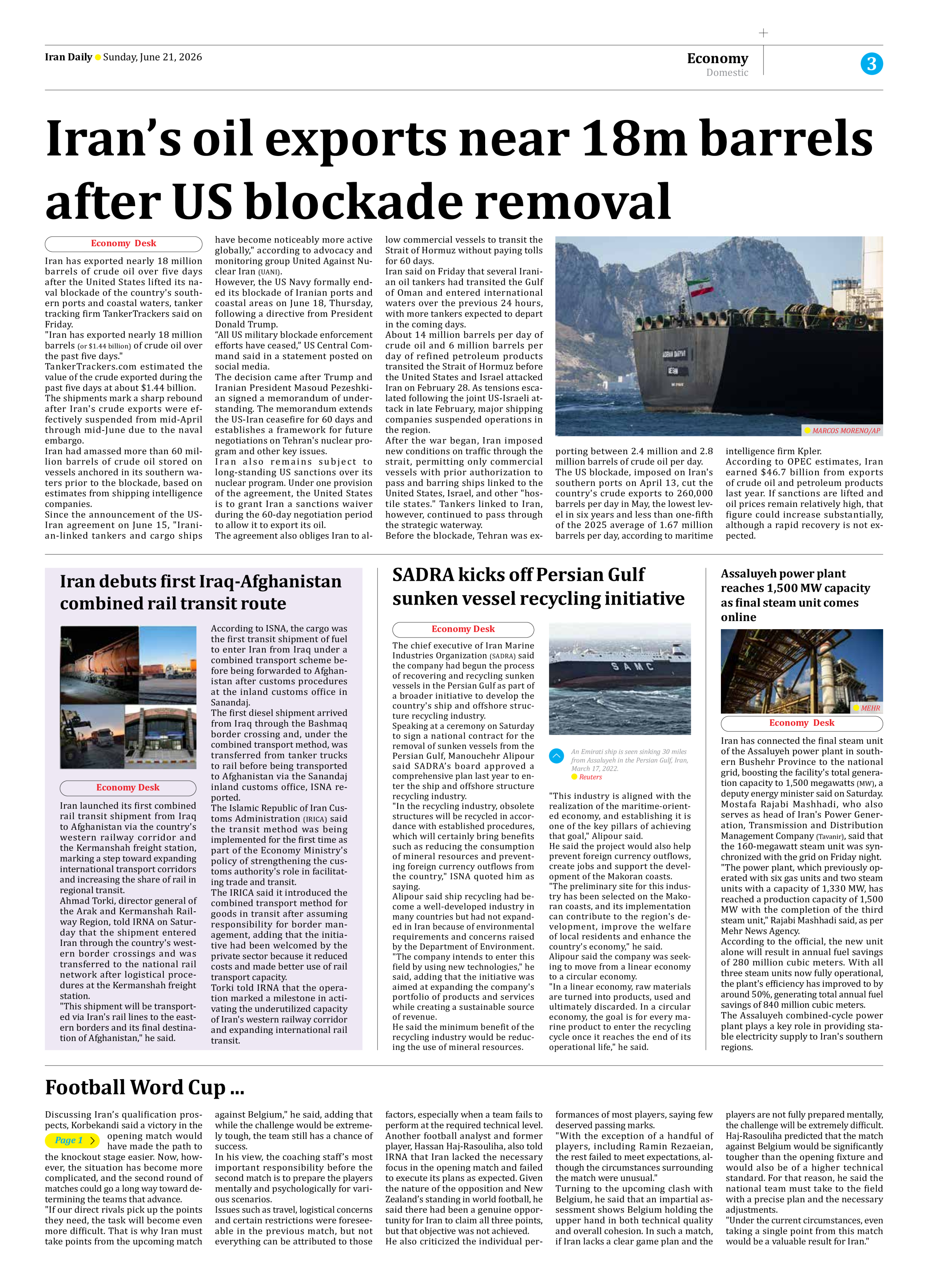
Iran has exported nearly 18 million barrels of crude oil over five days after the United States lifted its naval blockade of the country's southern ports and coastal waters, tanker tracking firm TankerTrackers said on Friday.
"Iran has exported nearly 18 million barrels (or $1.44 billion) of crude oil over the past five days."
TankerTrackers.com estimated the value of the crude exported during the past five days at about $1.44 billion.
The shipments mark a sharp rebound after Iran's crude exports were effectively suspended from mid-April through mid-June due to the naval embargo.
Iran had amassed more than 60 million barrels of crude oil stored on vessels anchored in its southern waters prior to the blockade, based on estimates from shipping intelligence companies.
Since the announcement of the US-Iran agreement on June 15, "Iranian-linked tankers and cargo ships have become noticeably more active globally," according to advocacy and monitoring group United Against Nuclear Iran (UANI).
However, the US Navy formally ended its blockade of Iranian ports and coastal areas on June 18, Thursday, following a directive from President Donald Trump.
“All US military blockade enforcement efforts have ceased,” US Central Command said in a statement posted on social media.
The decision came after Trump and Iranian President Masoud Pezeshkian signed a memorandum of understanding. The memorandum extends the US-Iran ceasefire for 60 days and establishes a framework for future negotiations on Tehran's nuclear program and other key issues.
Iran also remains subject to long-standing US sanctions over its nuclear program. Under one provision of the agreement, the United States is to grant Iran a sanctions waiver during the 60-day negotiation period to allow it to export its oil.
The agreement also obliges Iran to allow commercial vessels to transit the Strait of Hormuz without paying tolls for 60 days.
Iran said on Friday that several Iranian oil tankers had transited the Gulf of Oman and entered international waters over the previous 24 hours, with more tankers expected to depart in the coming days.
About 14 million barrels per day of crude oil and 6 million barrels per day of refined petroleum products transited the Strait of Hormuz before the United States and Israel attacked Iran on February 28. As tensions escalated following the joint US-Israeli attack in late February, major shipping companies suspended operations in the region.
After the war began, Iran imposed new conditions on traffic through the strait, permitting only commercial vessels with prior authorization to pass and barring ships linked to the United States, Israel, and other "hostile states." Tankers linked to Iran, however, continued to pass through the strategic waterway.
Before the blockade, Tehran was exporting between 2.4 million and 2.8 million barrels of crude oil per day.
The US blockade, imposed on Iran's southern ports on April 13, cut the country's crude exports to 260,000 barrels per day in May, the lowest level in six years and less than one-fifth of the 2025 average of 1.67 million barrels per day, according to maritime intelligence firm Kpler.
According to OPEC estimates, Iran earned $46.7 billion from exports of crude oil and petroleum products last year. If sanctions are lifted and oil prices remain relatively high, that figure could increase substantially, although a rapid recovery is not expected.