







Mashhad stone carving art in need of revival
A handicrafts expert says reviving the art of stone carving is not only a cultural responsibility toward citizens, but also an opportunity to introduce it at national and international levels.
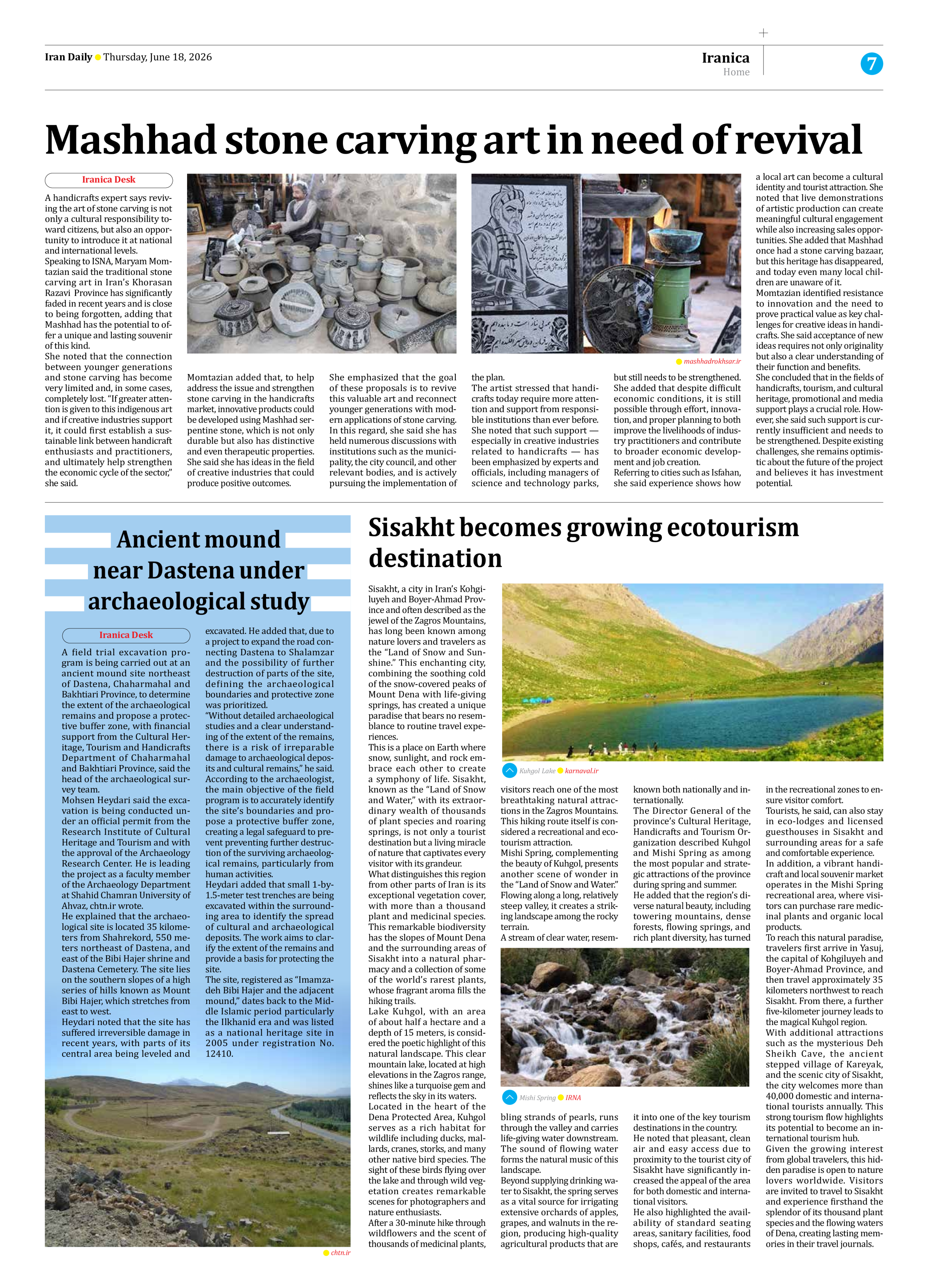
Speaking to ISNA, Maryam Momtazian said the traditional stone carving art in Iran’s Khorasan Razavi Province has significantly faded in recent years and is close to being forgotten, adding that Mashhad has the potential to offer a unique and lasting souvenir of this kind.
She noted that the connection between younger generations and stone carving has become very limited and, in some cases, completely lost. “If greater attention is given to this indigenous art and if creative industries support it, it could first establish a sustainable link between handicraft enthusiasts and practitioners, and ultimately help strengthen the economic cycle of the sector,” she said.
Momtazian added that, to help address the issue and strengthen stone carving in the handicrafts market, innovative products could be developed using Mashhad serpentine stone, which is not only durable but also has distinctive and even therapeutic properties. She said she has ideas in the field of creative industries that could produce positive outcomes.
She emphasized that the goal of these proposals is to revive this valuable art and reconnect younger generations with modern applications of stone carving. In this regard, she said she has held numerous discussions with institutions such as the municipality, the city council, and other relevant bodies, and is actively pursuing the implementation of the plan.
The artist stressed that handicrafts today require more attention and support from responsible institutions than ever before. She noted that such support — especially in creative industries related to handicrafts — has been emphasized by experts and officials, including managers of science and technology parks, but still needs to be strengthened.
She added that despite difficult economic conditions, it is still possible through effort, innovation, and proper planning to both improve the livelihoods of industry practitioners and contribute to broader economic development and job creation.
Referring to cities such as Isfahan, she said experience shows how a local art can become a cultural identity and tourist attraction. She noted that live demonstrations of artistic production can create meaningful cultural engagement while also increasing sales opportunities. She added that Mashhad once had a stone carving bazaar, but this heritage has disappeared, and today even many local children are unaware of it.
Momtazian identified resistance to innovation and the need to prove practical value as key challenges for creative ideas in handicrafts. She said acceptance of new ideas requires not only originality but also a clear understanding of their function and benefits.
She concluded that in the fields of handicrafts, tourism, and cultural heritage, promotional and media support plays a crucial role. However, she said such support is currently insufficient and needs to be strengthened. Despite existing challenges, she remains optimistic about the future of the project and believes it has investment potential.