







Iran, US signal optimism as peace deal draws closer
Iran is cautiously pursuing a possible peace agreement with the United States as both sides expressed optimism about the chances of concluding the deal in the coming days.
While Pakistan’s prime minister, whose country has mediated the agreement, said on Saturday that Tehran and Washington could finalize the deal within as little as 24 hours, Iran’s Foreign Ministry’s spokesman Esmael Baqaei underlined that the expected memorandum would not be signed on Sunday.
"We have to wait and see about the exact time of signing; although it will not be tomorrow," Baqaei said during a press conference in Hamedan on Saturday.
“We are responsible for pursuing this diplomatic process with skepticism; because the experience of a year and a half of negotiations with the American side, along with their breaches of commitment and atrocities during previous talks, necessitates that we take every step with caution and extreme prudence”, the Iranian official said.
He added that the memorandum focuses on the ending the war on all fronts and it has been decided that there will be no discussion on the Iranian nuclear issue at this stage.
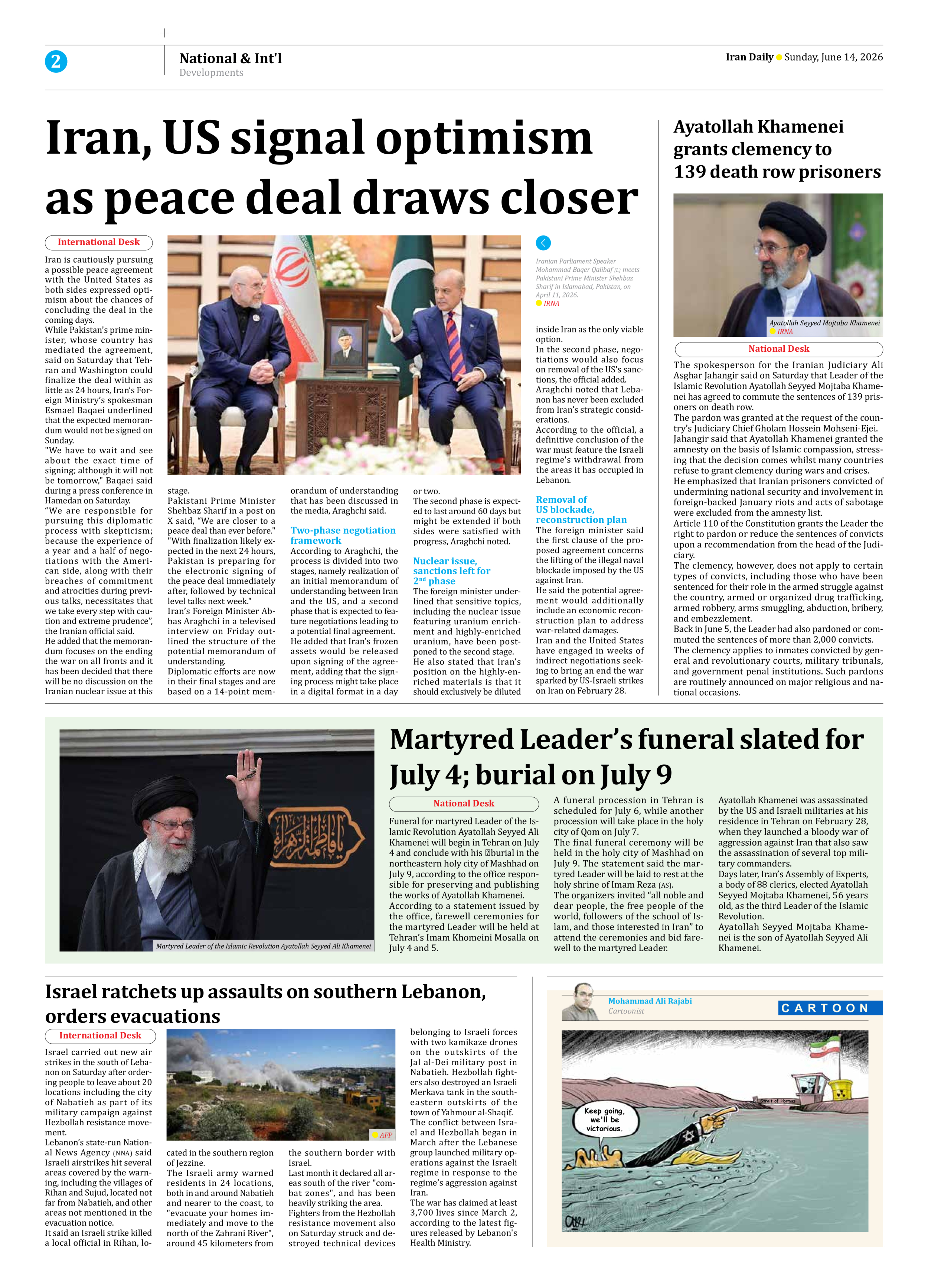
Pakistani Prime Minister Shehbaz Sharif in a post on X said, “We are closer to a peace deal than ever before."
"With finalization likely expected in the next 24 hours, Pakistan is preparing for the electronic signing of the peace deal immediately after, followed by technical level talks next week."
Iran’s Foreign Minister Abbas Araghchi in a televised interview on Friday outlined the structure of the potential memorandum of understanding.
Diplomatic efforts are now in their final stages and are based on a 14-point memorandum of understanding that has been discussed in the media, Araghchi said.
Two-phase negotiation framework
According to Araghchi, the process is divided into two stages, namely realization of an initial memorandum of understanding between Iran and the US, and a second phase that is expected to feature negotiations leading to a potential final agreement.
He added that Iran’s frozen assets would be released upon signing of the agreement, adding that the signing process might take place in a digital format in a day or two.
The second phase is expected to last around 60 days but might be extended if both sides were satisfied with progress, Araghchi noted.
Nuclear issue, sanctions left for
2nd phase
The foreign minister underlined that sensitive topics, including the nuclear issue featuring uranium enrichment and highly-enriched uranium, have been postponed to the second stage.
He also stated that Iran’s position on the highly-enriched materials is that it should exclusively be diluted inside Iran as the only viable option.
In the second phase, negotiations would also focus on removal of the US's sanctions, the official added.
Araghchi noted that Lebanon has never been excluded from Iran’s strategic considerations.
According to the official, a definitive conclusion of the war must feature the Israeli regime's withdrawal from the areas it has occupied in Lebanon.
Removal of US blockade, reconstruction plan
The foreign minister said the first clause of the proposed agreement concerns the lifting of the illegal naval blockade imposed by the US against Iran.
He said the potential agreement would additionally include an economic reconstruction plan to address war-related damages.
Iran and the United States have engaged in weeks of indirect negotiations seeking to bring an end the war sparked by US-Israeli strikes on Iran on February 28.