







First motorcycle licenses to be issued for Iranian women within weeks
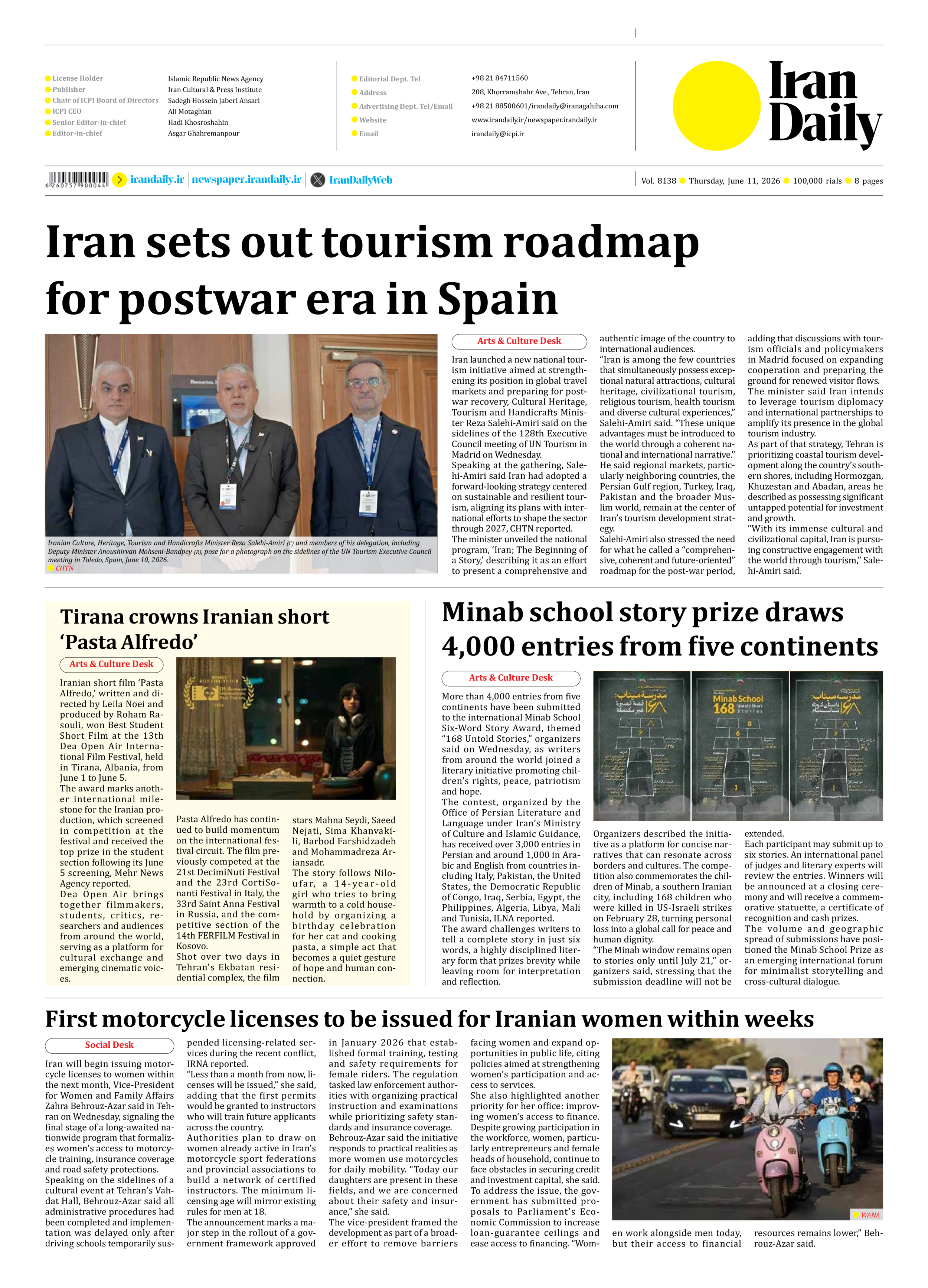
Iran will begin issuing motorcycle licenses to women within the next month, Vice-President for Women and Family Affairs Zahra Behrouz-Azar said in Tehran on Wednesday, signaling the final stage of a long-awaited nationwide program that formalizes women's access to motorcycle training, insurance coverage and road safety protections.
Speaking on the sidelines of a cultural event at Tehran’s Vahdat Hall, Behrouz-Azar said all administrative procedures had been completed and implementation was delayed only after driving schools temporarily suspended licensing-related services during the recent conflict, IRNA reported.
“Less than a month from now, licenses will be issued,” she said, adding that the first permits would be granted to instructors who will train future applicants across the country.
Authorities plan to draw on women already active in Iran’s motorcycle sport federations and provincial associations to build a network of certified instructors. The minimum licensing age will mirror existing rules for men at 18.
The announcement marks a major step in the rollout of a government framework approved in January 2026 that established formal training, testing and safety requirements for female riders. The regulation tasked law enforcement authorities with organizing practical instruction and examinations while prioritizing safety standards and insurance coverage.
Behrouz-Azar said the initiative responds to practical realities as more women use motorcycles for daily mobility. “Today our daughters are present in these fields, and we are concerned about their safety and insurance,” she said.
The vice-president framed the development as part of a broader effort to remove barriers facing women and expand opportunities in public life, citing policies aimed at strengthening women’s participation and access to services.
She also highlighted another priority for her office: improving women’s access to finance. Despite growing participation in the workforce, women, particularly entrepreneurs and female heads of household, continue to face obstacles in securing credit and investment capital, she said.
To address the issue, the government has submitted proposals to Parliament’s Economic Commission to increase loan-guarantee ceilings and ease access to financing. “Women work alongside men today, but their access to financial resources remains lower,” Behrouz-Azar said.