







National security impossible without environmental security: DoE chief
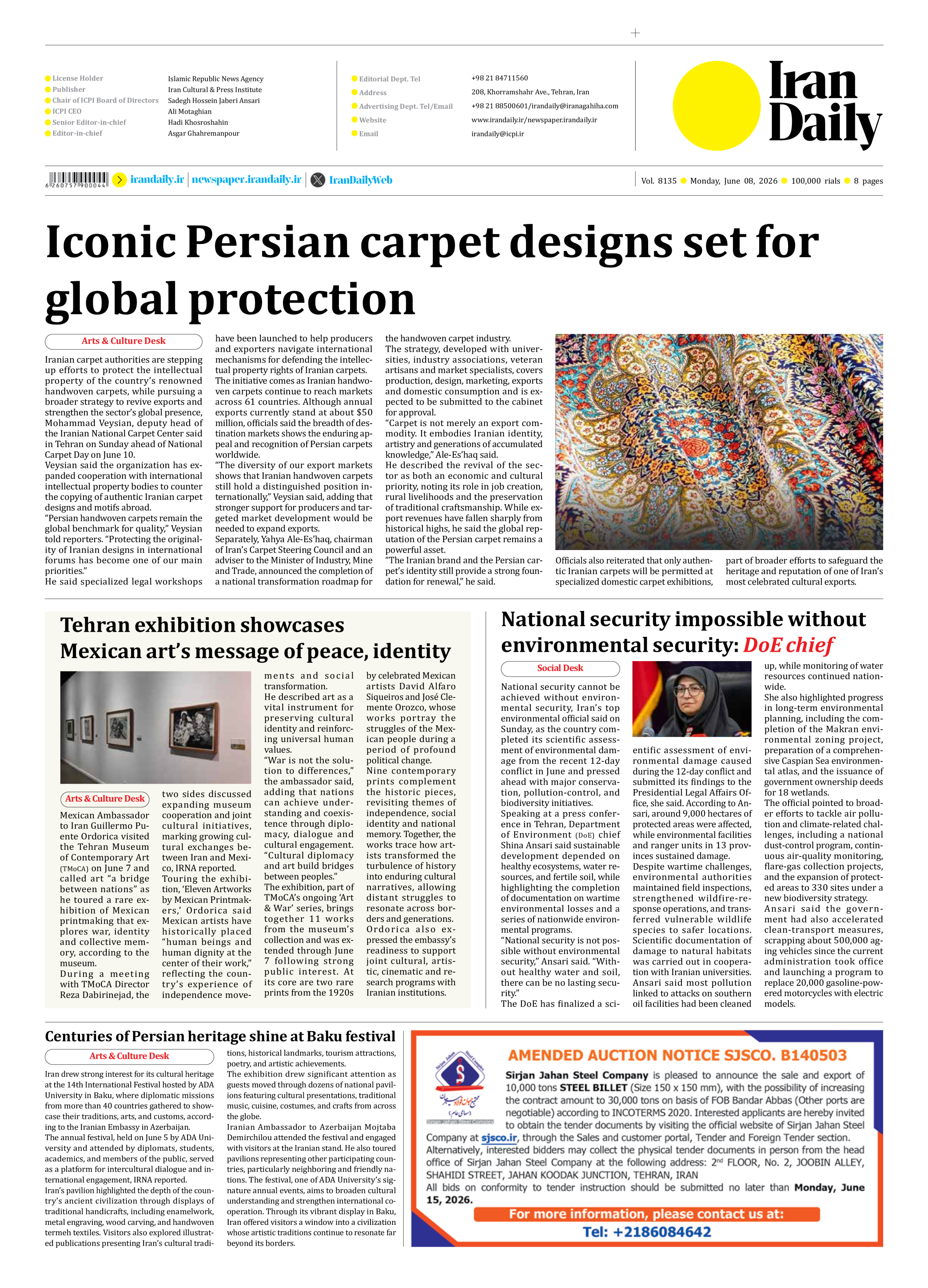
National security cannot be achieved without environmental security, Iran’s top environmental official said on Sunday, as the country completed its scientific assessment of environmental damage from the recent 12-day conflict in June and pressed ahead with major conservation, pollution-control, and biodiversity initiatives.
Speaking at a press conference in Tehran, Department of Environment (DoE) chief Shina Ansari said sustainable development depended on healthy ecosystems, water resources, and fertile soil, while highlighting the completion of documentation on wartime environmental losses and a series of nationwide environmental programs.
“National security is not possible without environmental security,” Ansari said. “Without healthy water and soil, there can be no lasting security.”
The DoE has finalized a scientific assessment of environmental damage caused during the 12-day conflict and submitted its findings to the Presidential Legal Affairs Office, she said. According to Ansari, around 9,000 hectares of protected areas were affected, while environmental facilities and ranger units in 13 provinces sustained damage.
Despite wartime challenges, environmental authorities maintained field inspections, strengthened wildfire-response operations, and transferred vulnerable wildlife species to safer locations. Scientific documentation of damage to natural habitats was carried out in cooperation with Iranian universities.
Ansari said most pollution linked to attacks on southern oil facilities had been cleaned up, while monitoring of water resources continued nationwide.
She also highlighted progress in long-term environmental planning, including the completion of the Makran environmental zoning project, preparation of a comprehensive Caspian Sea environmental atlas, and the issuance of government ownership deeds for 18 wetlands.
The official pointed to broader efforts to tackle air pollution and climate-related challenges, including a national dust-control program, continuous air-quality monitoring, flare-gas collection projects, and the expansion of protected areas to 330 sites under a new biodiversity strategy.
Ansari said the government had also accelerated clean-transport measures, scrapping about 500,000 aging vehicles since the current administration took office and launching a program to replace 20,000 gasoline-powered motorcycles with electric models.