







Israel bombs Beirut’s southern suburbs despite Iran warnings
Qalibaf: ‘Our Armed Forces are poised to strike, as always’
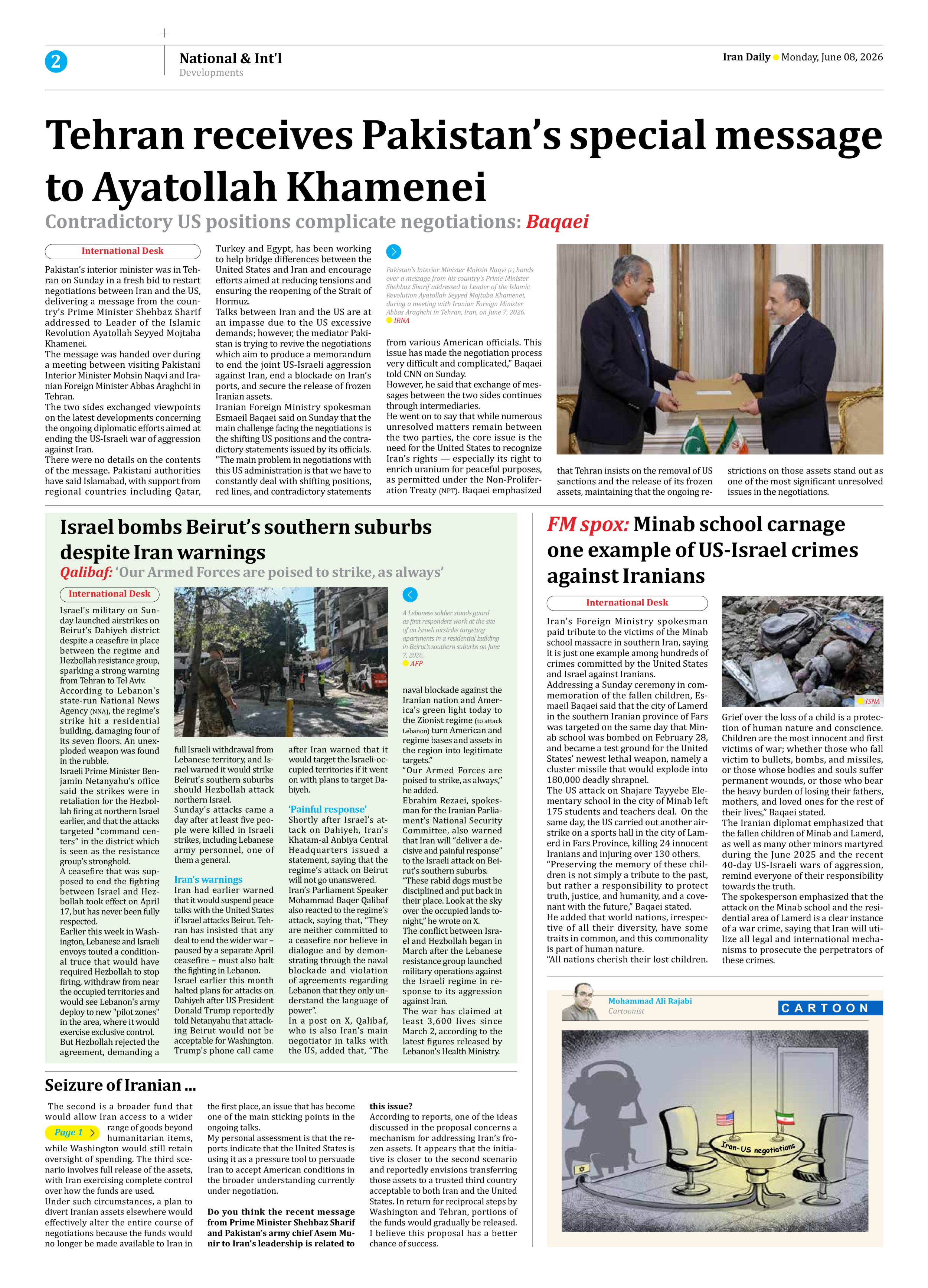
Israel's military on Sunday launched airstrikes on Beirut’s Dahiyeh district despite a ceasefire in place between the regime and Hezbollah resistance group, sparking a strong warning from Tehran to Tel Aviv.
According to Lebanon's state-run National News Agency (NNA), the regime’s strike hit a residential building, damaging four of its seven floors. An unexploded weapon was found in the rubble.
Israeli Prime Minister Benjamin Netanyahu’s office said the strikes were in retaliation for the Hezbollah firing at northern Israel earlier, and that the attacks targeted “command centers” in the district which is seen as the resistance group’s stronghold.
A ceasefire that was supposed to end the fighting between Israel and Hezbollah took effect on April 17, but has never been fully respected.
Earlier this week in Washington, Lebanese and Israeli envoys touted a conditional truce that would have required Hezbollah to stop firing, withdraw from near the occupied territories and would see Lebanon's army deploy to new "pilot zones" in the area, where it would exercise exclusive control.
But Hezbollah rejected the agreement, demanding a full Israeli withdrawal from Lebanese territory, and Israel warned it would strike Beirut's southern suburbs should Hezbollah attack northern Israel.
Sunday's attacks came a day after at least five people were killed in Israeli strikes, including Lebanese army personnel, one of them a general.
Iran’s warnings
Iran had earlier warned that it would suspend peace talks with the United States if Israel attacks Beirut. Tehran has insisted that any deal to end the wider war – paused by a separate April ceasefire – must also halt the fighting in Lebanon.
Israel earlier this month halted plans for attacks on Dahiyeh after US President Donald Trump reportedly told Netanyahu that attacking Beirut would not be acceptable for Washington.
Trump's phone call came after Iran warned that it would target the Israeli-occupied territories if it went on with plans to target Dahiyeh.
‘Painful response’
Shortly after Israel’s attack on Dahiyeh, Iran’s Khatam-al Anbiya Central Headquarters issued a statement, saying that the regime’s attack on Beirut will not go unanswered.
Iran’s Parliament Speaker Mohammad Baqer Qalibaf also reacted to the regime’s attack, saying that, “They are neither committed to a ceasefire nor believe in dialogue and by demonstrating through the naval blockade and violation of agreements regarding Lebanon that they only understand the language of power”.
In a post on X, Qalibaf, who is also Iran’s main negotiator in talks with the US, added that, “The naval blockade against the Iranian nation and America’s green light today to the Zionist regime (to attack Lebanon) turn American and regime bases and assets in the region into legitimate targets.”
“Our Armed Forces are poised to strike, as always,” he added.
Ebrahim Rezaei, spokesman for the Iranian Parliament’s National Security Committee, also warned that Iran will “deliver a decisive and painful response” to the Israeli attack on Beirut’s southern suburbs.
“These rabid dogs must be disciplined and put back in their place. Look at the sky over the occupied lands tonight,” he wrote on X.
The conflict between Israel and Hezbollah began in March after the Lebanese resistance group launched military operations against the Israeli regime in response to its aggression against Iran.
The war has claimed at least 3,600 lives since March 2, according to the latest figures released by Lebanon's Health Ministry.