







Mesr village advances toward global tourism recognition
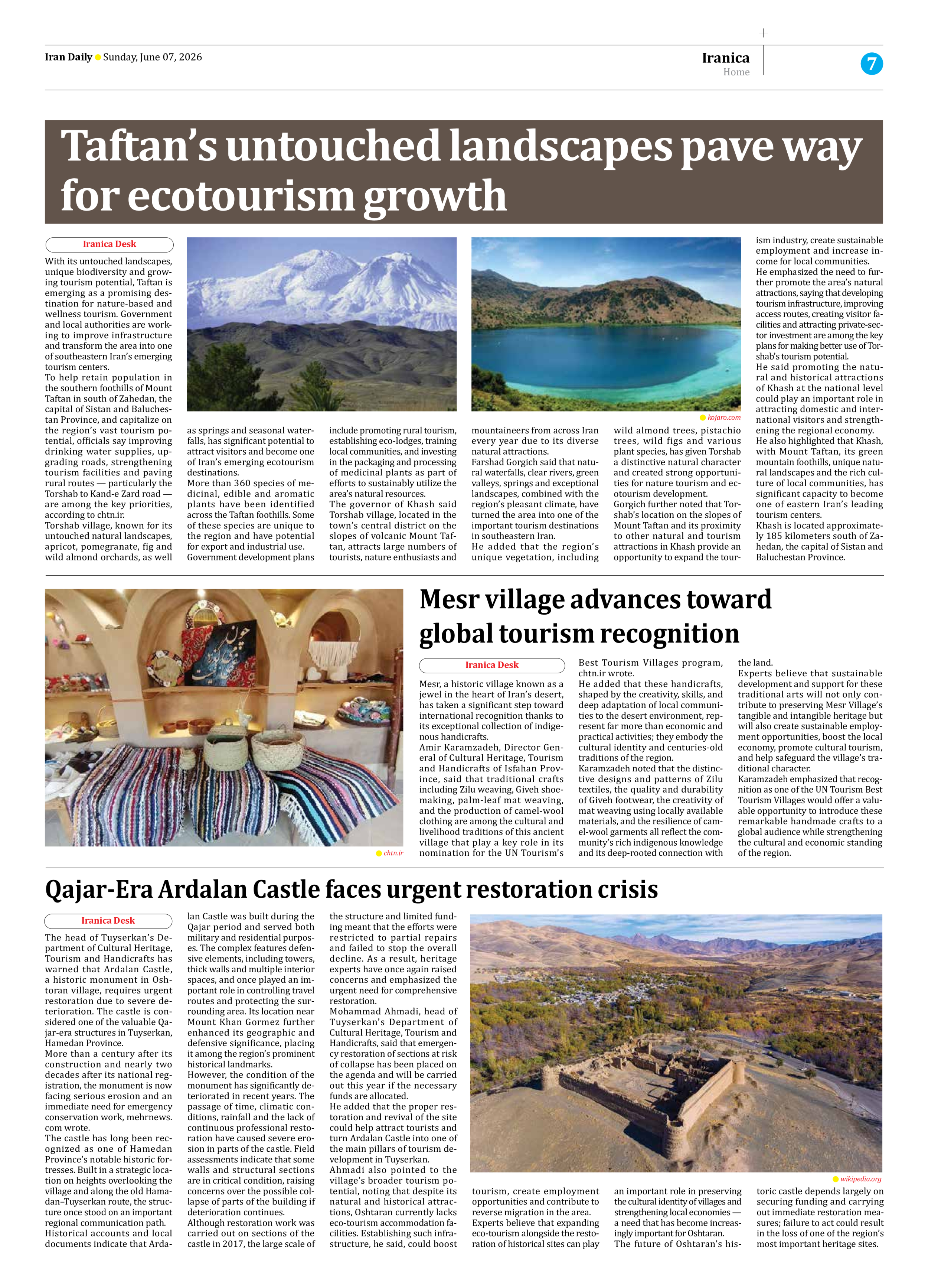
Mesr, a historic village known as a jewel in the heart of Iran’s desert, has taken a significant step toward international recognition thanks to its exceptional collection of indigenous handicrafts.
Amir Karamzadeh, Director General of Cultural Heritage, Tourism and Handicrafts of Isfahan Province, said that traditional crafts including Zilu weaving, Giveh shoemaking, palm-leaf mat weaving, and the production of camel-wool clothing are among the cultural and livelihood traditions of this ancient village that play a key role in its nomination for the UN Tourism’s Best Tourism Villages program, chtn.ir wrote.
He added that these handicrafts, shaped by the creativity, skills, and deep adaptation of local communities to the desert environment, represent far more than economic and practical activities; they embody the cultural identity and centuries-old traditions of the region.
Karamzadeh noted that the distinctive designs and patterns of Zilu textiles, the quality and durability of Giveh footwear, the creativity of mat weaving using locally available materials, and the resilience of camel-wool garments all reflect the community’s rich indigenous knowledge and its deep-rooted connection with the land.
Experts believe that sustainable development and support for these traditional arts will not only contribute to preserving Mesr Village’s tangible and intangible heritage but will also create sustainable employment opportunities, boost the local economy, promote cultural tourism, and help safeguard the village’s traditional character.
Karamzadeh emphasized that recognition as one of the UN Tourism Best Tourism Villages would offer a valuable opportunity to introduce these remarkable handmade crafts to a global audience while strengthening the cultural and economic standing of the region.