







Copy in clipboard...
Leader’s aide casts Trump as main obstacle to Iran-US talks
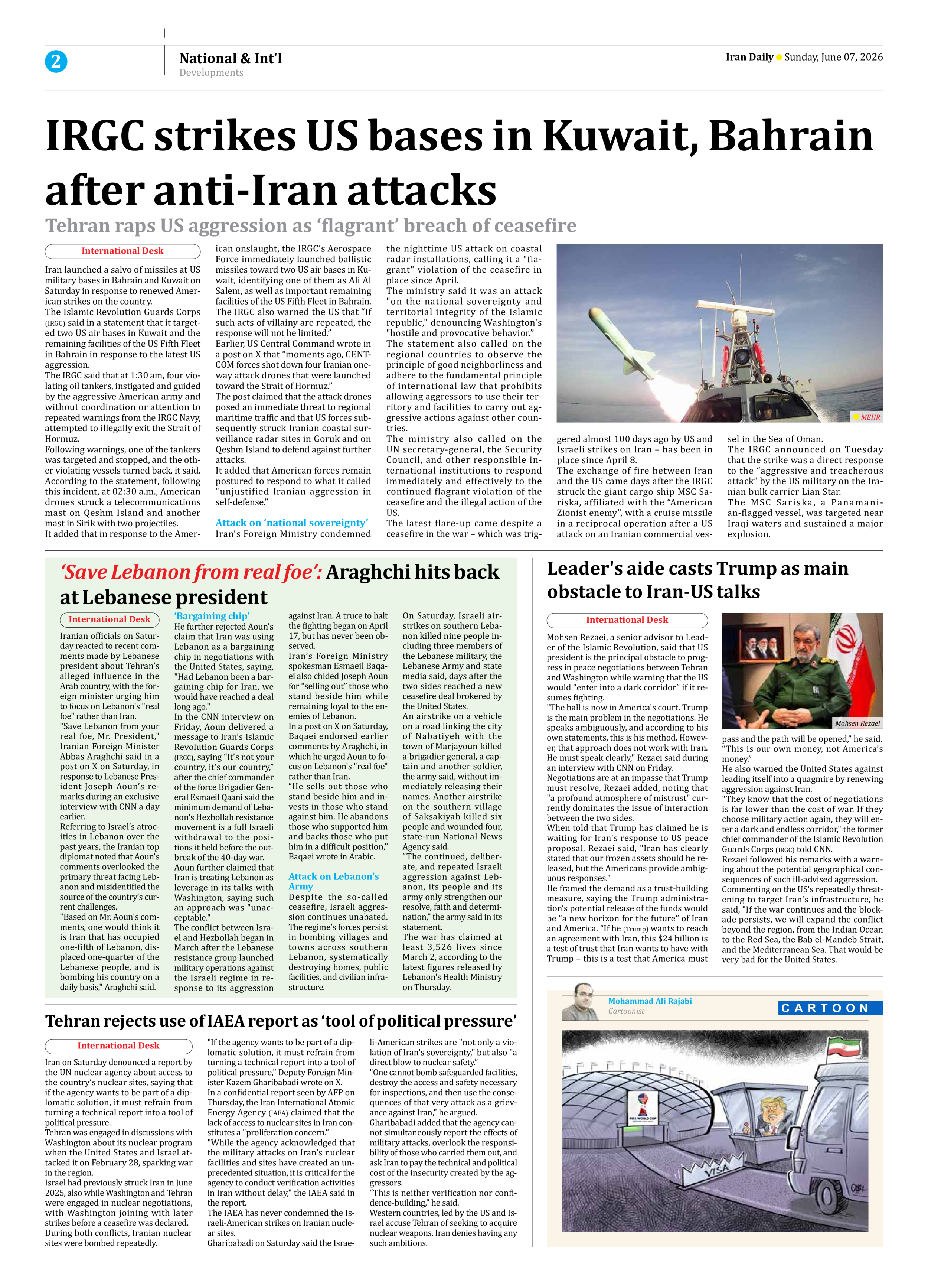
Mohsen Rezaei, a senior advisor to Leader of the Islamic Revolution, said that US president is the principal obstacle to progress in peace negotiations between Tehran and Washington while warning that the US would “enter into a dark corridor” if it resumes fighting.
"The ball is now in America's court. Trump is the main problem in the negotiations. He speaks ambiguously, and according to his own statements, this is his method. However, that approach does not work with Iran. He must speak clearly," Rezaei said during an interview with CNN on Friday.
Negotiations are at an impasse that Trump must resolve, Rezaei added, noting that "a profound atmosphere of mistrust" currently dominates the issue of interaction between the two sides.
When told that Trump has claimed he is waiting for Iran's response to US peace proposal, Rezaei said, "Iran has clearly stated that our frozen assets should be released, but the Americans provide ambiguous responses."
He framed the demand as a trust-building measure, saying the Trump administration’s potential release of the funds would be “a new horizon for the future” of Iran and America. “If he (Trump) wants to reach an agreement with Iran, this $24 billion is a test of trust that Iran wants to have with Trump – this is a test that America must pass and the path will be opened,” he said.
“This is our own money, not America’s money.”
He also warned the United States against leading itself into a quagmire by renewing aggression against Iran.
"They know that the cost of negotiations is far lower than the cost of war. If they choose military action again, they will enter a dark and endless corridor," the former chief commander of the Islamic Revolution Guards Corps (IRGC) told CNN.
Rezaei followed his remarks with a warning about the potential geographical consequences of such ill-advised aggression.
Commenting on the US's repeatedly threatening to target Iran's infrastructure, he said, "If the war continues and the blockade persists, we will expand the conflict beyond the region, from the Indian Ocean to the Red Sea, the Bab el-Mandeb Strait, and the Mediterranean Sea. That would be very bad for the United States.