







Pezeshkian promotes preventive healthcare, empowerment of vulnerable children
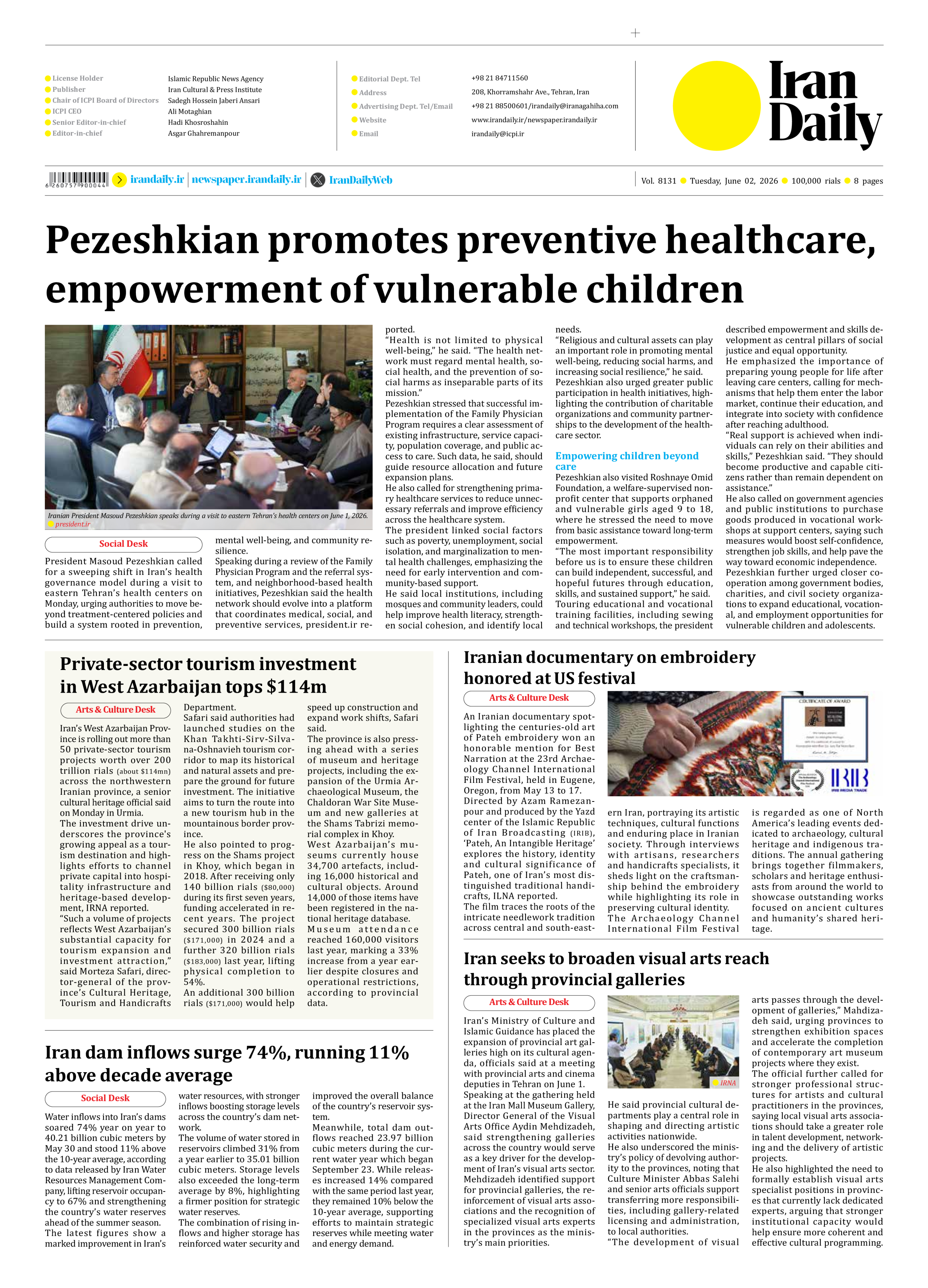
President Masoud Pezeshkian called for a sweeping shift in Iran’s health governance model during a visit to eastern Tehran’s health centers on Monday, urging authorities to move beyond treatment-centered policies and build a system rooted in prevention, mental well-being, and community resilience.
Speaking during a review of the Family Physician Program and the referral system, and neighborhood-based health initiatives, Pezeshkian said the health network should evolve into a platform that coordinates medical, social, and preventive services, president.ir reported.
“Health is not limited to physical well-being,” he said. “The health network must regard mental health, social health, and the prevention of social harms as inseparable parts of its mission.”
Pezeshkian stressed that successful implementation of the Family Physician Program requires a clear assessment of existing infrastructure, service capacity, population coverage, and public access to care. Such data, he said, should guide resource allocation and future expansion plans.
He also called for strengthening primary healthcare services to reduce unnecessary referrals and improve efficiency across the healthcare system.
The president linked social factors such as poverty, unemployment, social isolation, and marginalization to mental health challenges, emphasizing the need for early intervention and community-based support.
He said local institutions, including mosques and community leaders, could help improve health literacy, strengthen social cohesion, and identify local needs.
“Religious and cultural assets can play an important role in promoting mental well-being, reducing social harms, and increasing social resilience,” he said.
Pezeshkian also urged greater public participation in health initiatives, highlighting the contribution of charitable organizations and community partnerships to the development of the healthcare sector.
Empowering children beyond care
Pezeshkian also visited Roshnaye Omid Foundation, a welfare-supervised nonprofit center that supports orphaned and vulnerable girls aged 9 to 18, where he stressed the need to move from basic assistance toward long-term empowerment.
“The most important responsibility before us is to ensure these children can build independent, successful, and hopeful futures through education, skills, and sustained support,” he said.
Touring educational and vocational training facilities, including sewing and technical workshops, the president described empowerment and skills development as central pillars of social justice and equal opportunity.
He emphasized the importance of preparing young people for life after leaving care centers, calling for mechanisms that help them enter the labor market, continue their education, and integrate into society with confidence after reaching adulthood.
“Real support is achieved when individuals can rely on their abilities and skills,” Pezeshkian said. “They should become productive and capable citizens rather than remain dependent on assistance.”
He also called on government agencies and public institutions to purchase goods produced in vocational workshops at support centers, saying such measures would boost self-confidence, strengthen job skills, and help pave the way toward economic independence.
Pezeshkian further urged closer cooperation among government bodies, charities, and civil society organizations to expand educational, vocational, and employment opportunities for vulnerable children and adolescents.