







Copy in clipboard...
Israel seizes castle in Lebanon as it expands ground offensive
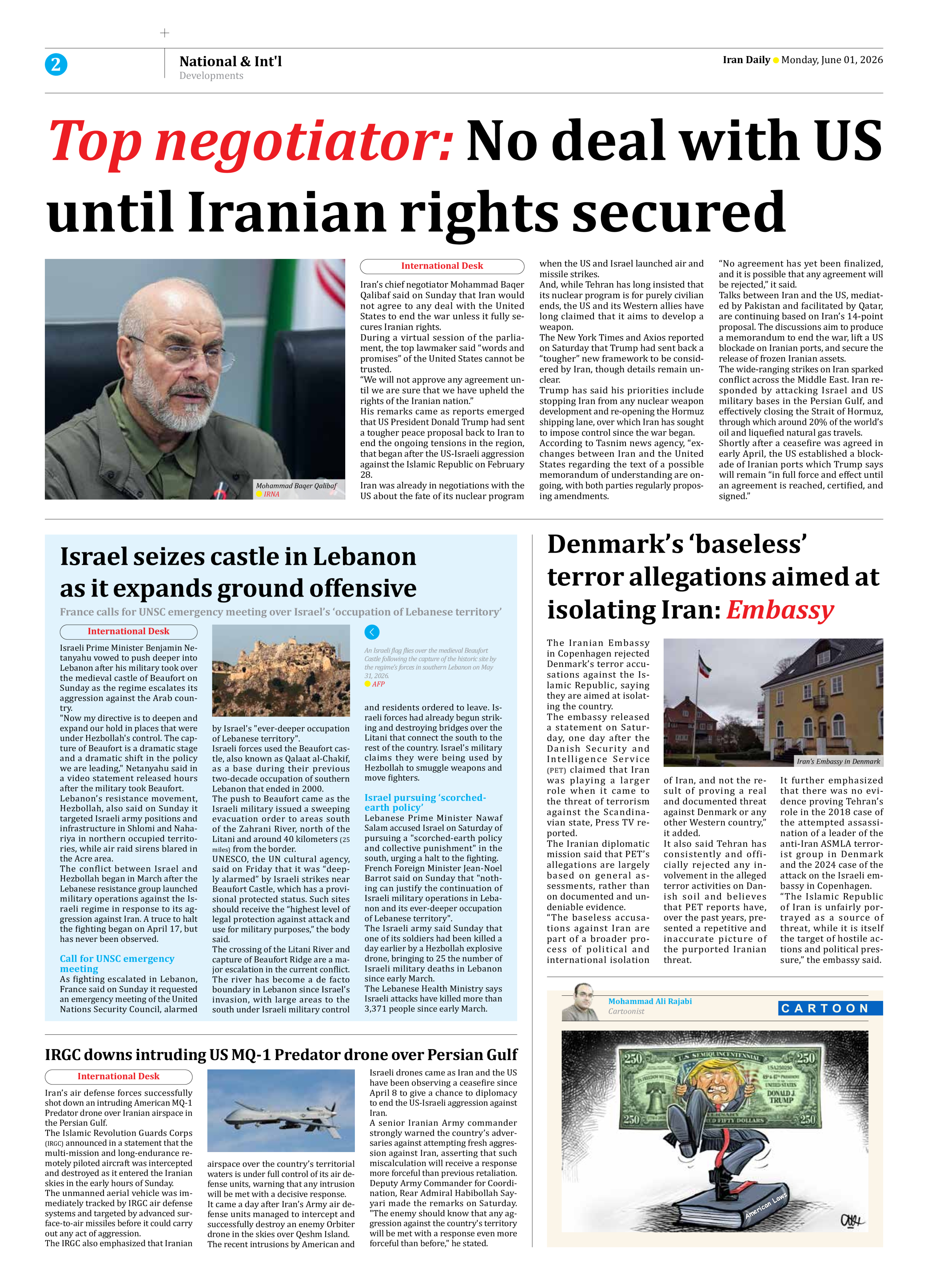
Israeli Prime Minister Benjamin Netanyahu vowed to push deeper into Lebanon after his military took over the medieval castle of Beaufort on Sunday as the regime escalates its aggression against the Arab country.
"Now my directive is to deepen and expand our hold in places that were under Hezbollah's control. The capture of Beaufort is a dramatic stage and a dramatic shift in the policy we are leading," Netanyahu said in a video statement released hours after the military took Beaufort.
Lebanon’s resistance movement, Hezbollah, also said on Sunday it targeted Israeli army positions and infrastructure in Shlomi and Nahariya in northern occupied territories, while air raid sirens blared in the Acre area.
The conflict between Israel and Hezbollah began in March after the Lebanese resistance group launched military operations against the Israeli regime in response to its aggression against Iran. A truce to halt the fighting began on April 17, but has never been observed.
Call for UNSC emergency meeting
As fighting escalated in Lebanon, France said on Sunday it requested an emergency meeting of the United Nations Security Council, alarmed by Israel's "ever-deeper occupation of Lebanese territory".
Israeli forces used the Beaufort castle, also known as Qalaat al-Chakif, as a base during their previous two-decade occupation of southern Lebanon that ended in 2000.
The push to Beaufort came as the Israeli military issued a sweeping evacuation order to areas south of the Zahrani River, north of the Litani and around 40 kilometers (25 miles) from the border.
UNESCO, the UN cultural agency, said on Friday that it was “deeply alarmed” by Israeli strikes near Beaufort Castle, which has a provisional protected status. Such sites should receive the “highest level of legal protection against attack and use for military purposes,” the body said.
The crossing of the Litani River and capture of Beaufort Ridge are a major escalation in the current conflict.
The river has become a de facto boundary in Lebanon since Israel’s invasion, with large areas to the south under Israeli military control and residents ordered to leave. Israeli forces had already begun striking and destroying bridges over the Litani that connect the south to the rest of the country. Israel’s military claims they were being used by Hezbollah to smuggle weapons and move fighters.
Israel pursuing ‘scorched-earth policy’
Lebanese Prime Minister Nawaf Salam accused Israel on Saturday of pursuing a "scorched-earth policy and collective punishment" in the south, urging a halt to the fighting.
French Foreign Minister Jean-Noel Barrot said on Sunday that "nothing can justify the continuation of Israeli military operations in Lebanon and its ever-deeper occupation of Lebanese territory".
The Israeli army said Sunday that one of its soldiers had been killed a day earlier by a Hezbollah explosive drone, bringing to 25 the number of Israeli military deaths in Lebanon since early March.
The Lebanese Health Ministry says Israeli attacks have killed more than 3,371 people since early March.